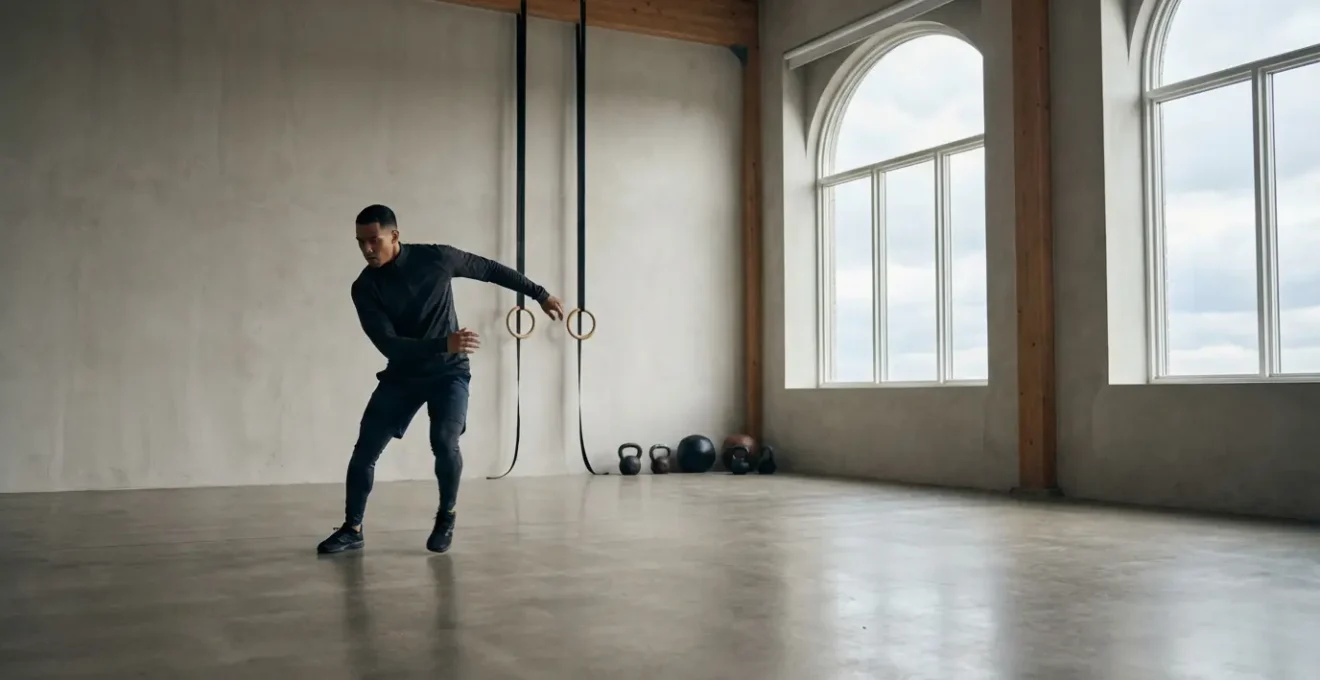
Your training environment isn’t neutral; it’s either an accelerant or a brake on your skill acquisition.
- Eliminating sensory ‘noise’ (auditory and visual) drastically reduces extraneous cognitive load, freeing up mental resources for skill development.
- Manipulating environmental factors like light color temperature can directly influence alertness and performance, turning your space into a precision tool.
Recommendation: Treat your practice space as a piece of equipment to be designed, tuned, and optimized for deep work.
You’ve put in the hours. You follow the program. Yet, progress stalls. You feel that your training time is diluted, that each session yields less than it should. The common advice is to “just focus harder” or “turn off your phone,” but for the serious athlete, these are superficial fixes to a much deeper problem. The issue isn’t a lack of willpower; it’s a failure of environmental design.
Most athletes are passive victims of their training spaces. They accept the ambient noise, the visual clutter, and the poor lighting as unchangeable constants. This is a critical error. What if the key to unlocking the next level of performance wasn’t just in what you do, but where you do it? What if you could architect a ‘performance sanctuary’—a space meticulously engineered to eliminate distractions and maximize the efficiency of every single repetition?
This guide rejects the platitudes of simple mental toughness. Instead, we will adopt the mindset of a performance architect. We will deconstruct the environmental factors that kill skill acquisition and provide a systematic blueprint for building a zone optimized for deep, deliberate practice. We will explore how to manipulate sound, sight, and light to create an environment where focus is not a struggle, but the default state. This is not about finding a quiet corner; it’s about building a high-performance machine.
For those who prefer a visual summary of an elite athlete’s dedication to routine and preparation, the following video offers a glimpse into how champions like Giannis Antetokounmpo control their environment to prepare for peak performance. It’s a powerful real-world example of the principles we are about to deconstruct.
To guide you through this architectural process, we have structured this article as a blueprint. Each section tackles a critical element of your training environment, providing the scientific principles and actionable strategies needed to build your ultimate performance sanctuary.
Table of Contents: Architecting Your High-Performance Sanctuary
- Why open-plan training areas kill skill acquisition speed?
- How to soundproof your practice environment for under $500?
- Solo Studio vs. Public Court: Where to fix a broken serve mechanics?
- The visual clutter mistake that reduces reaction time training effectiveness
- What color temperature maximizes alertness during technical drills?
- How blue-light dominance in screens affects wakefulness during training?
- Why training near ancient woodlands improves focus retention?
- Can Digital Analysis Spot Micro-Errors Invisible to the Naked Eye?
Why open-plan training areas kill skill acquisition speed?
The modern trend of open-plan gyms and shared training facilities is fundamentally at odds with the principles of deep practice. While promoted for community and energy, these environments are a primary source of extraneous cognitive load. This refers to the mental effort wasted on processing irrelevant information—the clang of a dropped weight, a conversation nearby, or the movement of another athlete in your peripheral vision. Every ounce of brainpower dedicated to filtering this noise is an ounce stolen from motor pattern development.
Your brain has a finite bandwidth for processing information. When you are learning or refining a complex skill, you want to dedicate as much of that bandwidth as possible to germane cognitive load—the deep processing that builds and solidifies neural pathways. Open-plan areas force a constant, subconscious battle for attentional resources. This mental friction doesn’t make you tougher; it makes you less efficient. In fact, the link between high cognitive load and negative outcomes is well-documented. For instance, in demanding professional fields, research has shown a 76% correlation between high cognitive load and burnout rates.
This constant, low-level distraction erodes the quality of each repetition. It prevents the state of full immersion required to “feel” the nuances of a movement and make micro-adjustments. Skill acquisition is not just about the number of reps, but the quality and focus of each one. An open-plan area, by its very design, degrades that quality, slowing your rate of improvement and introducing a ceiling on your potential.
How to soundproof your practice environment for under $500?
Controlling the auditory environment is the first step in architecting your performance sanctuary. It’s crucial to understand the distinction between soundproofing (blocking external noise from entering your space) and acoustic treatment (controlling how sound behaves inside your space). For most athletes, a hybrid approach focusing on acoustic treatment yields the best results for a limited budget.
Soundproofing often requires structural changes, like adding mass-loaded vinyl (MLV) to walls, which can be expensive and complex. Acoustic treatment, however, is about absorbing reflections (echo and reverb) that create a chaotic soundscape. Porous materials like acoustic foam or DIY rockwool panels are highly effective at this. The goal is to create a “dead” or controlled acoustic space where the only sounds are the ones relevant to your practice—the bounce of a ball, the swish of a club, the feedback from your body.
A cost-effective strategy involves identifying the primary reflection points in your room (the spots on the walls midway between you and your speakers or primary sound source) and placing absorbent panels there. Additionally, bass traps in the corners are essential for controlling low-frequency buildup, which can be particularly distracting. For a final layer of control, a pink noise generator can be used for sound masking. Unlike music, which can be a cognitive distraction itself, pink noise provides a consistent, non-intrusive auditory backdrop that masks sudden, jarring sounds, creating a stable sonic environment.
The following table breaks down material types, providing a framework for a budget-conscious architectural decision.
| Material Type | Purpose | Cost Range | Effectiveness |
|---|---|---|---|
| Dense Mass (MLV) | Block external noise | $100-200 | High for transmission |
| Porous Materials (Foam) | Control internal reverb | $50-150 | High for reflection |
| Hybrid Solutions | Combined approach | $200-300 | Optimal overall |
Solo Studio vs. Public Court: Where to fix a broken serve mechanics?
When a core mechanic, like a tennis serve or a golf swing, has broken down, the worst place to fix it is in a performance environment. A public court or course is saturated with triggers for competition, social evaluation, and outcome-oriented thinking. This is where the Progressive De-isolation Training Model becomes essential. The principle is simple: to rebuild a motor pattern, you must first retreat to a completely sterile environment, free from all external pressures and distractions.
This “solo studio” is your laboratory. Here, the only goal is the process. By removing the net, the opponent, and the scoreboard, you eliminate the intrinsic cognitive load associated with performance outcomes. This frees up 100% of your mental bandwidth for the task at hand: deconstructing and reconstructing the movement. You can slow down, focus on a single component (e.g., the toss, the hip rotation), and execute reps with pure, mindful attention. This is where real change happens.
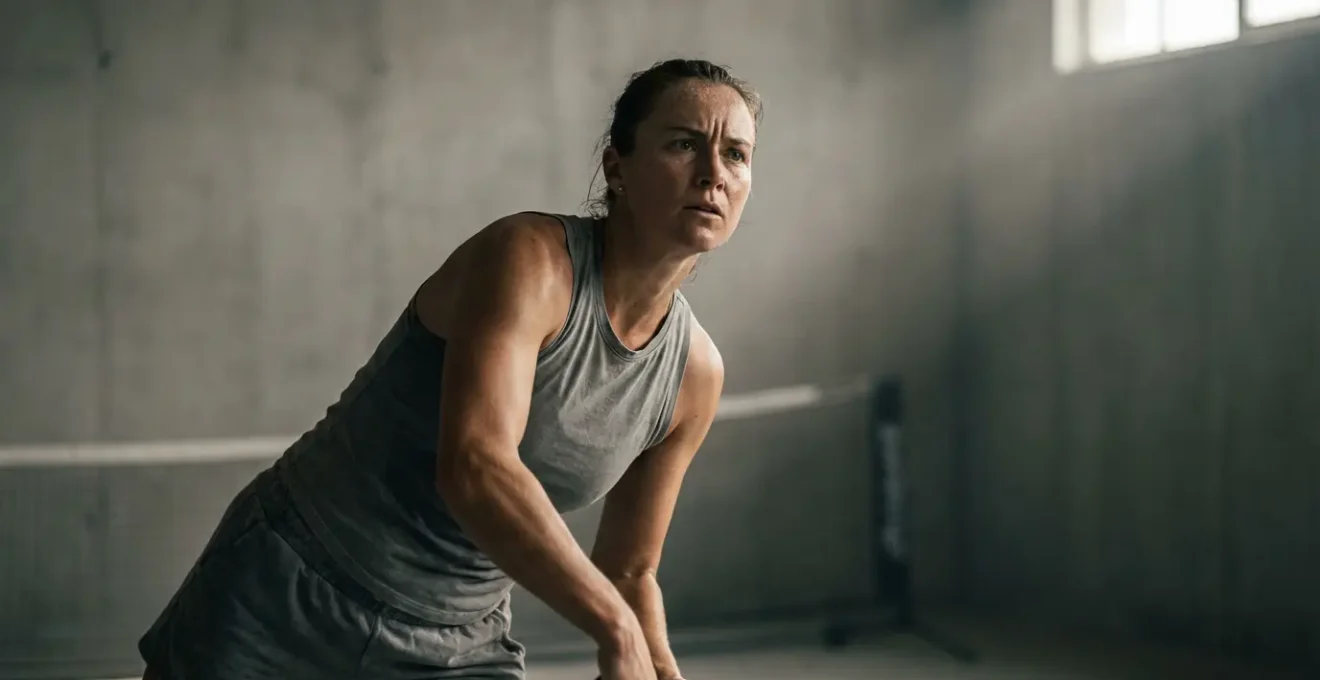
Once the mechanic feels solid and automatic in isolation, you begin the re-integration process. You add one element of complexity at a time: first the net, then target areas, then a non-competitive partner, and finally, a full game situation. This gradual re-introduction of stimuli allows the new motor pattern to be stress-tested and solidified at each stage, preventing a regression to old habits under pressure. As experts in mental performance coaching note, this internal control is a skill built over time. The Success Starts Within Research team highlights this in their “Focus Training for Athletes Study”:
Once you begin practicing mindfulness meditation, you will notice your focus becoming easier to control. You’ll especially recognize when you lose focus quicker, though you’ll still face distractions during games.
– Success Starts Within Research, Focus Training for Athletes Study
The visual clutter mistake that reduces reaction time training effectiveness
Your visual system is a finely tuned instrument for detecting threats and opportunities. In a training context, it should be focused exclusively on relevant cues. However, most athletes train in environments filled with visual clutter: stray equipment, colorful posters, open doorways, or even reflections in mirrors. Each of these items is a piece of data your brain must subconsciously process and dismiss, consuming valuable cognitive resources.
This constant, low-level visual noise directly impacts reaction time. When your brain is busy filtering out irrelevant background information, its ability to detect and respond to a key stimulus—like the spin on a ball or the feint of an opponent—is delayed. To maximize training effectiveness, you must create a ‘zone of visual sterility.’ This means engineering your practice axis so that your primary field of view is as neutral as possible.
This involves more than just tidying up. It means being strategic. Remove any dynamic objects (like a television screen or a person walking in the background) from your peripheral vision. If possible, practice facing a plain, neutral-colored wall. The ideal background for optimal visual processing is not white, which can cause glare and eye fatigue, but a neutral 18% grey. This is the standard used in photography and cinematography to calibrate light and color because it allows the human eye to perceive other colors and details with maximum accuracy and minimum strain.
By systematically de-cluttering your visual field, you are not just cleaning your space; you are sharpening your focus and reducing the cognitive load that sabotages performance. To implement this, a systematic audit is required.
Action Plan: Your Visual Environment Audit
- Points of Contact: Identify all primary and peripheral sightlines from your main practice position(s).
- Collecte: Inventory all objects within these sightlines. Differentiate between static (posters, equipment) and dynamic (screens, windows with movement).
- Coherence: Confront each item with a single question: “Does this object provide a necessary cue for my current drill?” If the answer is no, it’s clutter.
- Mémorabilité/émotion: Assess the visual ‘weight’ of remaining objects. A brightly colored, complex object is more distracting than a simple, neutral one.
- Plan d’intégration: Systematically remove or cover all identified clutter. Prioritize the removal of dynamic and high-contrast objects first.
What color temperature maximizes alertness during technical drills?
Light is not just for illumination; it is a powerful biological signal that can be architected to enhance performance. The color temperature of your lighting, measured in Kelvin (K), has a direct impact on your brain’s production of hormones like cortisol and melatonin, which regulate alertness and sleep. Using the wrong light at the wrong time can either make you sluggish or interfere with your recovery.
A performance architect uses light as a precision tool. The key is to match the color temperature to the specific demand of the training session. For high-intensity drills requiring maximum alertness and fast reaction times, a cool, blue-ish light in the 6000-6500K range is optimal. This mimics the quality of midday sun and signals to your brain that it’s time for peak performance, triggering a cortisol increase. However, this type of lighting should be used for limited durations (30-45 minutes) to avoid over-stimulation.
For longer sessions focused on technical analysis and motor learning, a more neutral light around 4000K is ideal. It provides clear visibility without being overly stimulating, allowing for sustained focus. For any evening sessions, it is critical to switch to a warm light below 3000K. This warm, amber hue minimizes the suppression of melatonin, ensuring that your intense training doesn’t sabotage your crucial sleep and recovery later that night. As the Lighting Research Center points out, quality is as important as color:
High CRI (>90) is as important as temperature – it ensures colors appear natural, reducing cognitive load.
– Lighting Research Center, Chronobiology and Athletic Performance Study 2024
The following framework provides a clear guide for implementing a task-dependent lighting strategy.
| Drill Type | Color Temperature | Cortisol Impact | Duration Limit |
|---|---|---|---|
| High-intensity reaction | 6000-6500K (cool) | Increases | 30-45 min |
| Technical analysis | 4000K (neutral) | Stable | 60-90 min |
| Evening sessions | 3000K (warm) | Decreases | No limit |
How blue-light dominance in screens affects wakefulness during training?
In the modern athlete’s toolkit, screens are ubiquitous—for video analysis, data tracking, or virtual coaching. While invaluable, these devices are also potent sources of high-frequency blue light, a specific wavelength that powerfully influences our alertness systems. Understanding how to manage this exposure is a critical component of environmental architecture.
The primary mechanism is blue light’s effect on the suprachiasmatic nucleus (SCN) in the brain, our master clock. Exposure to blue light, especially from screens held close to the face, strongly suppresses the production of melatonin, the hormone that signals sleepiness. During a daytime or morning session, this can be strategically advantageous. A short burst of screen time for analysis between sets can act like a shot of caffeine, spiking alertness for the next task.
However, the same mechanism becomes a liability during evening training. Unfiltered blue light exposure late in the day can significantly delay the onset of sleep and reduce its quality, directly impairing physical recovery, hormonal regulation, and cognitive function for the following day. This creates a vicious cycle where the tool used to improve performance actively sabotages the recovery required to realize those gains. Furthermore, prolonged screen use can lead to digital eyestrain, causing physical tension in the neck and shoulders that interferes with the proprioceptive awareness crucial for fluid motor execution.
Why training near ancient woodlands improves focus retention?
While much of performance architecture involves creating sterile, controlled environments, there is a powerful, opposing principle: the restorative effect of nature. This is explained by Attention Restoration Theory (ART), which posits that natural environments can help replenish our reserves of directed attention, the kind of deep focus required for deliberate practice.
Directed attention is a finite resource. Every time we force ourselves to concentrate, especially amidst distractions, we deplete it. Urban and artificial environments are filled with stimuli that require this kind of effortful focus (e.g., navigating traffic, ignoring advertisements). In contrast, natural environments like woodlands are rich in “soft fascinations”—things like the rustling of leaves or the pattern of light through the canopy. These elements capture our attention effortlessly and involuntarily, allowing our directed-attention capabilities to rest and recover.
Training in or near a natural setting, or even taking short “nature breaks,” can act as a cognitive reset button. It lowers cortisol levels, reduces mental fatigue, and restores the capacity for deep focus. This is not a mystical concept but a documented psychological phenomenon. The cost of not having this restoration is significant, as pointed out by experts in human performance. As the Red Bull Performance Team states:
Every time we break our focus, it takes extra time to return to the task. A focused person is more efficient at whatever task is at hand.
– Red Bull Performance Team, Focus Exercises for Improving Concentration
The silence of a sterile studio is for building a skill; the soft fascination of a woodland is for rebuilding the mind that wields it. An intelligent performance architect designs for both intense work and strategic recovery, leveraging the power of both artificial and natural sanctuaries.
Key Takeaways
- Your environment is not a passive backdrop; it is an active tool that must be engineered for performance.
- Systematically control sensory inputs—sound, sight, and light—to eliminate extraneous cognitive load and free up mental resources for skill acquisition.
- Use a “Progressive De-isolation” model: retreat to a sterile sanctuary to fix mechanics, then gradually re-introduce complexity to make skills robust under pressure.
Can Digital Analysis Spot Micro-Errors Invisible to the Naked Eye?
The final piece of the architectural puzzle is measurement. Creating a distraction-free sanctuary is the first step; verifying its effectiveness is the next. A perfectly silent and visually sterile environment serves a critical purpose: it makes micro-errors in your technique more apparent, both to your own senses and, more importantly, to digital analysis tools.
In a noisy, cluttered environment, your focus is split, and you lack the sensitivity to detect subtle flaws. But in the void you’ve created, you can feel the slight imbalance, the minor timing issue, the fractional deviation from the optimal path. This is where technology becomes a powerful amplifier. AI-powered motion tracking software can use a simple camera to quantify joint angles and rotational speeds, revealing inefficiencies the naked eye would miss. This data provides objective, actionable feedback, transforming subjective feelings into concrete numbers.
For even greater precision, wearable sensors like Inertial Measurement Units (IMUs) can be placed on the body or equipment. These devices provide real-time, quantitative data on movement patterns and can even be programmed to give immediate haptic feedback (a vibration) the instant you deviate from a pre-set parameter. Similarly, force plate analysis can reveal invisible weight distribution imbalances during a swing or jump, pinpointing the root cause of power leaks or instability. These tools are not a replacement for a coach, but a powerful supplement, providing a layer of objective data that was previously inaccessible.
Stop being a victim of your environment. Start architecting your performance sanctuary today. The blueprint is in your hands; the only remaining step is execution.
Frequently Asked Questions About Training Environments and Focus
Should I use blue light filters during technical training sessions?
It depends on the time of day. During daytime sessions, unfiltered blue light can boost alertness. For evening sessions, filters are essential to prevent the suppression of melatonin, which is crucial for recovery. Research shows blue light impacts three dimensions: the demand on your attentional resources, the supply of those resources, and your overall understanding during task performance.
How does screen-induced eyestrain affect motor learning?
Digital eyestrain is not just an issue of eye comfort. It creates physical tension in the neck and shoulders, which directly interferes with proprioceptive awareness—your body’s ability to sense its position in space. This sensory “noise” is a significant hindrance to executing precise and fluid motor patterns.
Can blue light exposure between sets improve performance?
Yes, this can be a valid strategy. Short, intense bursts of blue light exposure from a screen between sets can create temporary spikes in alertness. This can help you maximize focus for the next task or lift, but it should be used judiciously and avoided entirely during training sessions late in the evening.