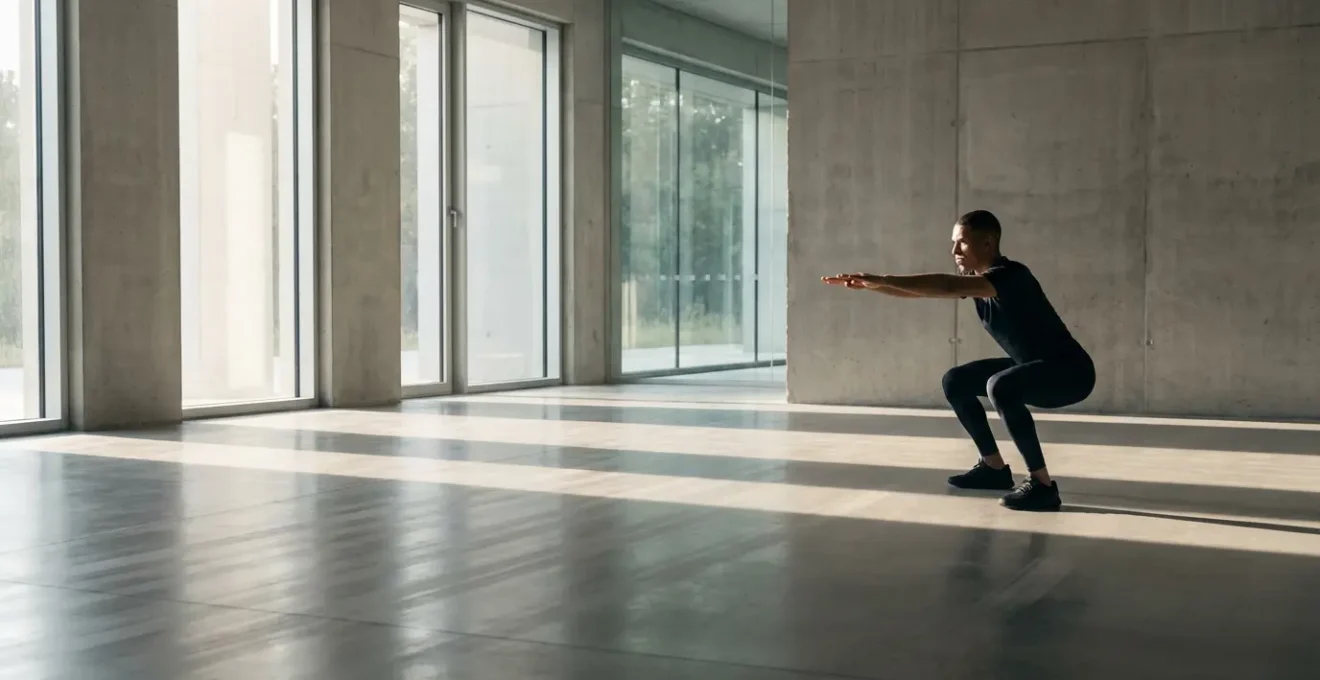
The greatest myth in skill acquisition is that time and repetition alone can fix a bad habit. The truth is, overwriting a faulty motor pattern is a project in precise neuro-engineering, not brute force.
- Effective change requires deconstructing the old habit with slow-motion drills before rebuilding a new, correct pattern.
- Sleep and strategic rest (like a 20-minute nap) are non-negotiable parts of the process, responsible for consolidating the new skill in your brain.
- There is a measurable point of fatigue where more practice actively reinforces the old, incorrect movement.
Recommendation: Stop measuring progress in hours and start measuring it by the quality of your repetitions, the precision of your rest, and your ability to stop before fatigue compromises your form.
Every dedicated athlete knows the profound frustration: a persistent flaw in your technique—a hitch in your golf swing, a faulty tennis grip, a drop of the shoulder when shooting—that refuses to disappear, no matter how many hours you pour into practice. You feel the incorrect movement happen, you know it’s wrong, yet under pressure, your body defaults to the same old, inefficient pattern. It’s a battle against your own ‘muscle memory,’ a term that is both widely used and deeply misunderstood.
The common advice is to simply ‘practice more’ or to chase the elusive ‘10,000 hours’ of mastery. But this approach often leads to burnout and reinforces the very mistakes you’re trying to eliminate. What if the key isn’t the volume of practice, but the *method*? The process of rewriting a motor pattern is less about willpower and more about understanding the brain’s operating system. It’s a scientific process of deconstruction, encoding, and consolidation that follows specific rules.
This guide abandons the platitudes. Instead, we will explore the science-backed timeline and methodology for effectively overwriting bad habits. We will break down why mindlessly grinding out repetitions is a flawed strategy, how to use specific drills to build new neural pathways, the critical role of sleep in locking in skills, and how to structure your training to ensure every minute of practice is productive. It’s time to stop fighting your brain and start working with it.
This article provides a structured roadmap for any athlete looking to make a permanent technical change. Each section tackles a critical component of the motor learning process, giving you the tools to architect your own path to better movement.
Summary: Overwriting Bad Muscle Memory: A Scientific Approach
- Why “10,000 hours” is a myth without deliberate correction strategies?
- How to use slow-motion drills to map new neural pathways?
- Practice vs. Naps: Which is more important for locking in new skills?
- The exhaustion threshold where practice starts reinforcing bad habits
- Spaced Repetition: When to revisit a skill to ensure it sticks forever?
- How to position IMUs (Inertial Measurement Units) for accurate jump height data?
- Leg Drive vs. Arm Extension: What does slow-motion reveal first?
- Integrating Precision Modules into a Weekly 10-Hour Training Plan?
Why “10,000 hours” is a myth without deliberate correction strategies?
The ‘10,000-hour rule,’ popularized from studies on expert performers, is one of the most persistent myths in skill acquisition. It suggests that a massive volume of practice is the sole prerequisite for mastery. However, for an athlete trying to overwrite a bad habit, this advice is not just unhelpful—it’s actively harmful. Practicing an incorrect movement for 10,000 hours only creates a world-class expert in performing that movement incorrectly. The brain doesn’t distinguish between ‘good’ and ‘bad’ practice; it simply strengthens the pathways that are used most often through a process called myelination.
The real currency of change isn’t hours, but the number of *correct* and *deliberate* repetitions. It’s about quality, not just quantity. Research from the US Navy, for instance, found it takes a specific volume of focused attempts to truly ingrain a new pattern. While the exact number varies, one study found it took approximately 670 repetitions to ingrain a movement pattern. This highlights that change is a finite, targeted project, not an endless grind. Furthermore, there’s a point of diminishing returns within a single session.
After a certain point, the brain’s ability to form strong new connections, a process known as Long-Term Potentiation (LTP), actually decreases. According to the Science for Sport Research Team, this neurological fatigue means that continuing to practice past this point provides little benefit for learning the new skill and can even cause a reversion to the old, more energy-efficient bad habit. The focus must shift from accumulating hours to executing high-quality, targeted repetitions within a productive neurological window.
Therefore, the first step in rewriting muscle memory is to reject the idea of brute-force repetition and embrace a more strategic, neuro-aware approach to practice.
How to use slow-motion drills to map new neural pathways?
To overwrite a faulty motor program, you must first make the brain aware of a better alternative. The old habit is fast, automatic, and subconscious. Trying to fight it at full speed is like trying to edit a document while it’s scrolling by at 100 miles per hour. Slow-motion practice is the essential tool for pattern deconstruction and re-mapping. By dramatically slowing down the movement, you shift control from the automatic, subconscious parts of the brain to the deliberate, conscious prefrontal cortex. This allows you to feel every part of the sequence, identify the exact moment the error occurs, and consciously insert the correct pattern.
This isn’t just about moving slowly; it’s about exaggerated correctness. At 25% speed, you should be able to feel the precise joint angles, muscle activations, and timing that define the new, desired movement. The goal is to provide the brain with a crystal-clear, high-fidelity signal of what ‘correct’ feels like. As you build this foundation, you can progressively increase the speed in a structured way, a method known as the Scaffolding Speed Training Protocol. This protocol involves a gradual hand-off from conscious control back to subconscious automation.
Case Study: Volleyball Spike Correction with Trampoline Training
To give athletes more time to process complex movements, Italian volleyball coach Alessandro Licata developed a protocol using trampolines. This method increases an athlete’s flight time during a spike approach, effectively creating a real-world slow-motion environment. The extended airtime allows the brain to process and fix the multi-joint coordination of the arm swing and core rotation before having to apply it with the speed of a real ball. Athletes practice the complete, fluid motion while bouncing, which ingrains the correct motor pattern through enhanced kinesthetic feedback.
This conscious, slow-motion work is akin to drawing the blueprint for a new neural superhighway. Each correct, slow repetition lays down the initial traces, and as you increase speed, you begin to pave and myelinate that pathway, making it faster and more efficient than the old one. The key is to never sacrifice form for speed. If the old habit reappears at 75% speed, you must immediately return to 50% until the correct pattern is stable again.
Patience during this phase is paramount; you are not just practicing a movement, you are actively re-engineering the neural circuits that control it.
Practice vs. Naps: Which is more important for locking in new skills?
You’ve just finished a focused, 45-minute session of slow-motion drills, and you finally nailed three perfect repetitions in a row. What’s the most productive next step? Many athletes would assume it’s to do more reps. However, neuroscience offers a counter-intuitive answer: the most critical part of your practice might actually be the 20-minute nap you take immediately after.
The practice session itself is about encoding—introducing the new pattern to your brain. But the process of making that pattern permanent, known as consolidation, happens most effectively during sleep. Specifically, during non-REM sleep, the brain generates rapid bursts of activity called “sleep spindles.” These spindles are believed to be the mechanism by which the brain transfers a fragile, short-term motor memory from the hippocampus to the more permanent storage of the motor cortex. A practice session without subsequent sleep is like saving a document on a temporary file that gets wiped clean; the gains are fleeting.
Neuroscience research shows that even a short period of sleep can have a profound impact. Studies have demonstrated that a 20-minute nap post-practice can be the most critical part of the session for long-term retention. It’s during this offline period that the brain solidifies the neural architecture you worked so hard to build. Simply staying awake, even while resting quietly, does not produce the same level of consolidation.
The following table, based on findings from motor learning research, illustrates the dramatic difference in outcomes.
| Factor | Practice Alone | Practice + Sleep | Practice + Wakeful Rest |
|---|---|---|---|
| Skill Retention Rate | 40-50% | 70-85% | 55-65% |
| Neural Consolidation | Partial encoding | Full consolidation via sleep spindles | Moderate consolidation |
| Time Required | 60 min session | 60 min + 20 min nap | 60 min + 15 min rest |
| Long-term Retention | Requires more repetitions | Stronger memory formation | Better than practice alone |
Athletes should start viewing sleep and naps not as passive recovery, but as an active and indispensable part of their training protocol for skill acquisition.
The exhaustion threshold where practice starts reinforcing bad habits
When the prefrontal cortex responsible for deliberate control is fatigued, the brain defaults to its most energy-efficient motor programs – the old, ingrained bad habits
– Dr. Arthur L. Jenkins III, Board-certified neurosurgeon, Jenkins NeuroSpine
There is a dangerous tipping point in every practice session—a cognitive threshold where your training shifts from being productive to counter-productive. Pushing through physical fatigue can build endurance, but pushing through mental fatigue while learning a new skill actively reinforces the very habit you want to erase. As Dr. Jenkins explains, the prefrontal cortex, which you rely on for the conscious control needed in slow-motion drills, is an energy-hungry part of the brain. When it gets tired, your brain doesn’t just stop; it outsources the task to older, more efficient pathways—your ingrained bad habits.
This is why you might feel your form breaking down at the end of a long session, or why an old flaw suddenly reappears when you’re tired. It’s not a failure of willpower; it’s a predictable feature of brain function. Continuing to practice beyond this exhaustion threshold means you are, neurologically speaking, practicing your mistake. You are strengthening the old, unwanted pathway, making your problem worse. The best athletes and coaches are not those who can grind the longest, but those who can recognize the early warning signs of this mental fatigue and have the discipline to stop.

Recognizing this threshold is itself a skill. It requires high self-awareness and a shift in focus from the outcome (e.g., making the shot) to the quality of the process (e.g., executing the movement correctly). Paying attention to these subtle cues is critical for ensuring every repetition counts positively towards your goal.
Key Warning Signs of Counter-Productive Practice:
- Attentional blinks: Moments of lost focus or “zoning out” during the execution of the movement.
- Outcome fixation: You stop thinking about the quality of the movement and start focusing only on the result.
- Increased movement variability: The form of each repetition starts to look different from the last one.
- Reversion to old patterns: The old mistake starts creeping back in, especially when you try to add speed or load.
- Physical signs: Your breathing becomes heavy and affects your stability, or key muscles begin to tremble.
The mantra should be: “Practice only as long as you can practice perfectly.” Ending a session on a series of correct repetitions, even if it’s a shorter session than planned, is infinitely more valuable than pushing through fatigue and ending on a series of mistakes.
Spaced Repetition: When to revisit a skill to ensure it sticks forever?
You’ve established a new pattern with slow-motion drills and consolidated it with sleep. Now, how do you make it permanent? The key is not to drill it into oblivion in one massive block of practice. Instead, you must strategically revisit the skill at increasing intervals—a technique known as spaced repetition. This principle is one of the most robust findings in cognitive science. Forgetting is not the enemy of learning; it is an essential part of it. The act of recalling a skill after a period of slight forgetting sends a powerful signal to the brain that this information is important and should be stored more permanently.
Blocked practice—doing 100 repetitions of the same thing in a row—is effective for short-term performance but very poor for long-term retention. A far superior method is interleaved or “wide bandwidth” training, where you mix in practice of other skills between attempts at your target skill. This process feels harder and you may perform worse during the session, but motor learning research demonstrates that wide bandwidth training leads to 40% better long-term skill retention. This “desirable difficulty” forces your brain to work harder to reconstruct the pattern each time, strengthening it significantly more than mindless repetition would.
The timing of these spaced intervals is crucial. Revisiting the skill too soon provides no benefit, as it hasn’t been forgotten enough. Waiting too long makes the act of recall too difficult, leading to frustration. While the optimal schedule can vary, a general framework can guide your practice to maximize long-term automation.
The following schedule provides a research-based template for applying spaced repetition to a new motor skill, ensuring it transitions from a fragile, conscious action to a robust, automatic habit.
| Time Point | Practice Duration | Focus | Success Indicator |
|---|---|---|---|
| Initial Learning | 30-45 min | Form establishment | 3 correct reps in sequence |
| After 1 hour | 10 min | Pattern verification | Immediate recall of form |
| After 3 hours | 10 min | Consolidation test | 75% accuracy |
| Next day | 15 min | Retention check | No major form breakdown |
| After 2 days | 15 min | Integration | Can perform with variations |
| After 4 days | 20 min | Automation test | Minimal conscious effort needed |
This structured approach transforms practice from a game of chance into a predictable process of building lasting, automatic skill.
How to position IMUs (Inertial Measurement Units) for accurate jump height data?
While slow-motion video provides excellent qualitative feedback, elite athletes and coaches are increasingly turning to quantitative tools to dissect movement. Inertial Measurement Units (IMUs) are small, wearable sensors containing accelerometers and gyroscopes that provide objective, data-driven insights into an athlete’s mechanics. For movements like jumping, they can reveal subtle inefficiencies in the kinetic chain that are invisible to the naked eye. However, the value of this data is entirely dependent on correct sensor placement.
For analyzing jump mechanics, a dual-IMU setup is often optimal. The primary sensor should be placed on the lower back, near the L5/S1 junction of the spine. This location provides a reliable approximation of the body’s center of mass, crucial for accurately measuring vertical displacement (jump height) and overall movement strategy. A secondary IMU is typically placed on the shin (lateral tibial plateau) of one leg. This sensor captures lower limb kinematics, such as the speed of knee extension and any asymmetries between legs.
This dual setup allows for a sophisticated analysis of timing and sequencing. For example, by comparing the acceleration data from the torso and shin, a coach can objectively determine if an athlete is firing their arms before their legs, a common power leak. The gyroscope data is also invaluable for diagnosing issues on landing.
Case Study: Using a Dual-IMU Setup for Kinetic Chain Analysis
Research at Concordia University, St. Paul (CSP) utilized a dual-IMU system to diagnose jumping flaws. By placing one sensor on the torso and another on the shin, they could identify common sequencing errors in the kinetic chain. The data clearly showed athletes whose arms fired before their legs, leaking power. Furthermore, the gyroscopes were sensitive enough to detect a 10-degree valgus knee collapse (inward knee movement) upon landing in test subjects, providing concrete, objective feedback that even experienced coaches might miss through visual observation alone.
To ensure you’re collecting valid and reliable data, following a strict placement and calibration protocol is essential. Inaccurate data is worse than no data at all, as it can lead to incorrect training interventions.
Your Checklist: IMU Placement for Movement Quality Assessment
- Primary IMU Placement: Securely fasten the main sensor at the L5/S1 junction (the small of the back) to track the body’s center of mass.
- Secondary IMU Placement: Position the second sensor on the flat part of the shinbone just below the outside of the knee (lateral tibial plateau) for lower limb kinematics.
- Calibration Protocol: Once sensors are placed, have the athlete perform a static standing pose for at least 5 seconds before beginning any movement to zero the sensors.
- Data Analysis Focus: Prioritize analysis of acceleration patterns to understand force production timing and look for asymmetries greater than 10% between the left and right sides.
- Interpretation of Data: Correlate gyroscope data with video to confirm and diagnose issues like knee collapse on landing or premature torso rotation.
Using IMUs transforms movement coaching from an art based on observation to a science based on objective, millisecond-by-millisecond data.
Leg Drive vs. Arm Extension: What does slow-motion reveal first?
Efficient, powerful movements start from the core and large muscles (proximal) and transfer energy outward to the limbs (distal). Slow-motion video analysis is used to diagnose any break in this sequence
– Human Kinetics Research Team, Training Better Movement Patterns Guide
In any powerful athletic motion—a throw, a punch, a jump—the sequence of movement is paramount. The principle of proximal-to-distal sequencing dictates that power is generated from the ground up, starting with the largest, most central muscles (legs and core) and flowing outward to the smaller muscles of the limbs (arms). When this kinetic chain is perfectly timed, energy is transferred and amplified at each link. When it’s broken, power leaks and the risk of injury increases. A common error is initiating movement with the arms before the leg drive is complete.
Slow-motion video analysis is the definitive tool for diagnosing these sequencing errors. At full speed, the entire movement may take less than a second, making it impossible to see the subtle timing flaws. But when slowed down to 240 frames per second (fps) or more, the sequence becomes clear. What you will almost always see first in a faulty pattern is an error in the lower body or core. The arm extension flaw is often a *symptom*, a compensation for a problem that originated milliseconds earlier.
For example, in a pitcher’s throw, the first visible deviation is rarely the arm itself. It might be the front foot landing on the heel instead of the ball of the foot, or the hips opening too early or too late. The arm then has to adjust its path or speed to compensate for this initial break in the chain, leading to reduced velocity and increased stress on the shoulder and elbow.
Case Study: Error-Based Learning in Baseball Throwing
ArmCare’s high-speed video analysis of baseball pitchers revealed a common root cause for poor mechanics. They found that a pitcher who heel-strikes upon landing creates braking forces that disrupt the entire kinetic chain. Video at 240fps showed the first deviation occurs at hip rotation timing, with the throwing arm attempting to compensate for this lack of ground-up force 50-80 milliseconds later. By focusing coaching interventions on correcting this initial foot-strike and hip-sequencing error, the studied athletes saw a 3-5 mph improvement in velocity, as the arm was no longer forced to ‘play catch up’.
The lesson for any athlete is to stop focusing solely on the limb that seems to be making the mistake. Instead, use slow-motion analysis to trace the problem back to its origin, which is almost always closer to your center of mass.
Key Takeaways
- Brute-force repetition of a new skill is ineffective; quality, deliberate practice within a productive neurological window is what builds new pathways.
- Sleep is not passive recovery; it is an active and essential training tool for consolidating new motor patterns and making them permanent.
- Every practice session has a cognitive threshold where mental fatigue causes you to revert to old habits, making further practice counter-productive.
Integrating Precision Modules into a Weekly 10-Hour Training Plan?
Understanding the science is one thing; applying it is another. How do you integrate these principles—slow-motion drills, nap consolidation, and spaced repetition—into a practical weekly schedule? The key is to move away from long, monolithic practice sessions and adopt a “micro-dosing” approach. This involves structuring your week around short, high-intensity precision modules focused exclusively on correcting your target motor pattern.
Instead of one 60-minute session, you might perform five 12-minute sessions spread throughout the day or week. This approach has two major neurological advantages. First, it keeps your prefrontal cortex fresh, ensuring you never cross the exhaustion threshold where practice becomes harmful. Second, it naturally incorporates the principles of spaced repetition, forcing your brain to recall and reconstruct the pattern more frequently. Research on distributed practice consistently shows that this method is superior for long-term retention; in some cases, five 12-minute sessions outperform single 60-minute sessions by 35%.
A 10-hour training week can be re-architected to support this. Instead of two hours of generic practice five days a week, your plan becomes more varied and targeted. It includes dedicated time for diagnostics (video analysis), high-intensity correction modules, consolidation (visualization and naps), and active recovery where you perform the skill in a variable, game-like context without overthinking the mechanics.
Here is a template for how a weekly plan might be structured to maximize motor learning:
Weekly Micro-Dosing Practice Protocol
- Monday – Diagnostic Day (90 min): Warm-up, then perform the skill under various conditions while recording with high-speed video. Review the footage to identify the exact point of failure in the kinetic chain.
- Tuesday/Thursday – High-Intensity Correction (3×12 min each day): Perform three separate, 12-minute precision modules. Focus exclusively on slow-motion drills targeting the specific error identified on Monday. Take long rests between modules.
- Wednesday/Saturday – Consolidation Days: Begin with 20 minutes of visualization of the perfect movement. If possible, follow this with a 20-minute nap. Later in the day, engage in 45 minutes of variable context practice (e.g., playing a game) where the goal is to perform, not to think.
- Friday/Sunday – Active Recovery: Engage in light, playful movement exploration related to your sport. The goal is to move freely without the pressure of perfect technique, allowing the subconscious to integrate the new pattern.
- Deload Week (every 4th week): Cease all specific drilling. Only practice the skill in variable, game-like contexts to test for automation and true learning.
By adopting this neuro-engineering mindset, you can stop battling your old habits and start building new, superior ones with scientific precision. The path to permanent change is not about more hours, but better hours.