Blog
Whether it’s a local running group, a board game cafe, or a recreational sports league, the most memorable experiences rarely come from the activity alone. They emerge from the connections we forge, the sense of belonging we discover, and the shared journey of growth alongside others. Yet creating these vibrant communities doesn’t happen by accident. It requires thoughtful design, cultural awareness, and an understanding of the invisible forces that either bring people together or push them apart.
This exploration delves into the fundamental principles that transform ordinary clubs into extraordinary social ecosystems. From understanding why certain spaces naturally foster friendship to navigating the delicate challenges of cliques and newcomer integration, we’ll uncover the building blocks that make communities not just functional, but truly flourishing. Whether you’re launching a new club, revitalizing an existing one, or simply curious about what makes some groups magnetically inclusive while others struggle, these insights will provide the foundation you need.
Why Clubs Serve as Essential Social Anchors
In an increasingly digital world, the need for physical spaces where people can gather around shared interests has never been more critical. Sociologist Ray Oldenburg introduced the concept of the “third place”—those crucial environments that exist beyond home (first place) and work (second place). Sports clubs, hobby groups, and recreational leagues perfectly embody this principle, offering neutral ground where hierarchies fade and genuine connection can flourish.
What distinguishes a true third place from a mere meeting location? Several characteristics stand out:
- Accessibility and regularity: Members know when and where to show up, creating reliable rhythms for interaction
- Leveling effect: Professional titles and social status matter less than participation and enthusiasm
- Conversation as the main activity: Even in sports clubs, the social interaction surrounding the activity often becomes as valuable as the activity itself
- Low barrier to entry: Newcomers feel welcome rather than intimidated by established dynamics
Consider a weekly volleyball pickup game. The sport provides the structure, but the lasting value comes from the jokes shared between sets, the encouragement offered to struggling players, and the friendships that extend beyond the court. This social infrastructure creates resilience—members show up not just for the activity, but for each other.
Cultivating Connections and Shared Growth
The most successful clubs recognize that fostering meaningful relationships requires more than simply gathering people in the same space. Connection happens through intentional design that creates multiple points of contact and varying depths of engagement.
Creating Natural Interaction Opportunities
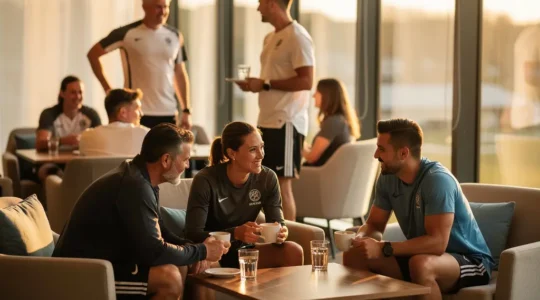
Structured activities provide a foundation, but the margins matter enormously. Arriving fifteen minutes early, lingering after sessions, or organizing post-game meals transforms acquaintances into friends. Smart club organizers build these transition moments into their rhythms—perhaps through pre-session coffee, designated social areas, or regular decompression times where conversation flows naturally.
Physical space design plays a subtle but powerful role. Circular seating arrangements encourage group conversation rather than one-on-one pairings. Standing-height tables at social events keep energy high and allow people to move between conversations. Even something as simple as removing barriers between skill-level groups during breaks can spark cross-pollination of friendships.
Embracing Collective Learning
Communities deepen when members grow together. Clubs that emphasize shared progression rather than individual achievement create powerful bonds. A climbing gym that celebrates everyone’s personal records, a chess club where stronger players mentor newcomers, or a running group with pace groups for all abilities—these approaches signal that everyone’s journey matters equally.
The beauty of recreational settings is that expertise becomes democratized. The veteran player shares technique tips; the newcomer asks questions that help everyone think differently. This reciprocal teaching builds interdependence and mutual respect, transforming what could be transactional participation into genuine investment in each other’s success.
Designing Events That Strengthen Community Bonds
While regular sessions form the backbone of club life, special events serve as catalysts that accelerate relationship-building and inject fresh energy into established groups. However, not all events serve this purpose equally well.
The most effective community-building events balance structure with flexibility. Too rigid, and they feel like obligations; too loose, and people drift into existing friendship clusters without forming new connections. Consider a tournament format that randomly assigns partners, ensuring people work with different teammates. Or a themed night that gives conversation natural starting points beyond the usual small talk.
Event frequency and variety also matter. Monthly social gatherings create anticipation without becoming burdensome. Mixing competitive events with purely social ones accommodates different personality types—some members crave the adrenaline of competition, while others simply want low-pressure fun. A healthy event calendar might include:
- Skill showcases or friendly competitions that let members demonstrate growth
- Social celebrations tied to seasons, holidays, or club milestones
- Community service or collaborative projects that build purpose beyond recreation
- Educational workshops that introduce new dimensions to the shared interest
The goal isn’t simply entertainment—it’s creating shared memories that become part of the club’s story, the inside jokes and “remember when” moments that signal true community.
Overcoming Barriers to Inclusion
Even well-intentioned communities face predictable challenges that can undermine their inclusive aspirations. Recognizing these patterns early allows clubs to address them before they calcify into exclusionary dynamics.
The Clique Problem
As clubs mature, friendship clusters naturally form. This isn’t inherently problematic—close friendships enrich community life. The issue arises when these groups become closed systems that newcomers can’t penetrate. A chess club where the same four people always play together, side conversations that reference shared experiences outsiders can’t access, or social events planned through private channels all create invisible walls.
Breaking down these barriers requires both cultural messaging and structural intervention. Publicly celebrating bridge-builders—members who actively welcome newcomers—signals valued behavior. Implementing rotation systems, assigned partnerships, or icebreaker activities at each session prevents calcification. Some clubs adopt a “no permanent tables” rule during social time, encouraging circulation.
Leadership modeling matters tremendously. When organizers make a point of greeting every person, introducing people across groups, and distributing their attention broadly, members follow suit. Conversely, leaders who only socialize with their inner circle inadvertently bless exclusionary behavior.
Mastering Onboarding Timing
The first three visits represent a critical window when newcomers decide whether they belong. Counterintuitively, the best onboarding often happens before the first visit. Clear communication about what to expect, what to bring, and where to meet reduces anxiety. Some clubs assign “first-day buddies” or send welcome messages from current members.
During those initial visits, the goal isn’t overwhelming newcomers with information but making them feel seen and valued. A simple “I’m glad you’re here” carries more weight than a fifteen-minute explanation of club history. Follow-up also matters—a quick message after the first session asking about their experience shows genuine investment in their journey.
Timing extends to skill development too. Newcomers often experience sharp growth initially, then plateau. Acknowledging this natural rhythm and offering appropriate challenges at each stage prevents frustration and premature departure.
Navigating Cultural Differences in Community Building
Sports and leisure transcend cultural boundaries, yet the social expectations surrounding them vary considerably. A club’s approach to time, communication directness, individual versus collective focus, and social hierarchy all carry cultural dimensions that impact member experience.
Some cultures emphasize punctuality as respect; others view flexible timing as normal. Certain backgrounds expect direct feedback; others prefer indirect communication that preserves harmony. Understanding these differences prevents misinterpreting behavior—is someone quiet because they’re uninterested, or because their cultural background values listening before speaking?
Rather than assuming one “correct” approach, thriving multicultural communities develop cultural fluidity—explicit conversations about norms and conscious accommodation of different styles. This might mean offering both structured feedback sessions and informal check-ins, respecting both those who arrive precisely on time and those operating on more flexible schedules, or creating space for both competitive intensity and recreational playfulness.
The richness of diverse communities lies precisely in this multiplicity of perspectives. A hiking club with members from various backgrounds might discover new trail traditions, food customs, or celebration styles that enrich everyone’s experience. The key is approaching difference with curiosity rather than judgment, asking questions rather than making assumptions.
Building vibrant communities in sports and leisure settings is both art and science. It requires understanding foundational principles like the third place theory while remaining responsive to the unique personalities and dynamics of each group. By thoughtfully designing events, proactively addressing inclusion barriers, respecting cultural differences, and always prioritizing genuine human connection over mere participation numbers, clubs transform from simple activity providers into essential social anchors. The investment pays dividends not just in retention and growth, but in the meaningful relationships and lasting memories that make recreational pursuits truly enriching.
How a Strong Community Reduces Attrition Rates in Sports Clubs?
Contrary to popular belief, member attrition isn’t solved with better equipment or lower fees; it’s solved by transforming your club into a genuine ‘Third Place’ where human connection is engineered. The biggest mistake is leaving new member integration to chance,…
Read more