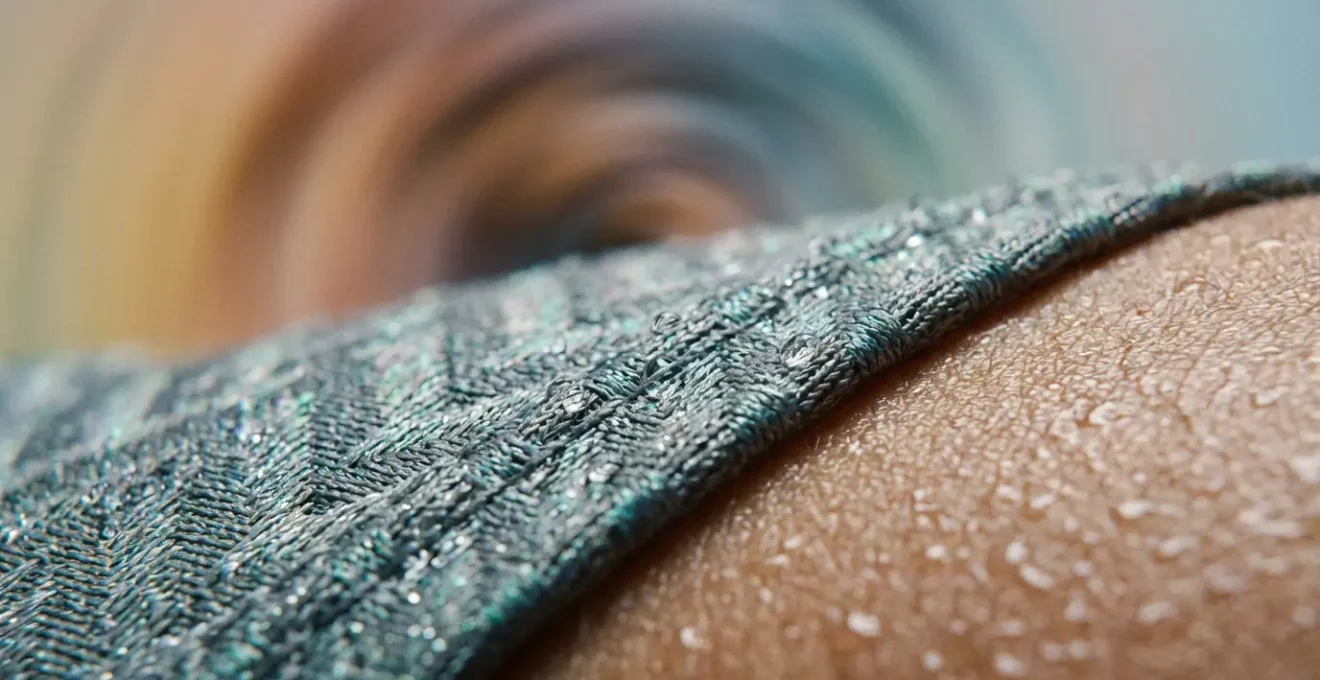
The claim that cooling fabrics lower heart rate is a simplification; in reality, they manage the body’s thermal dynamics to prevent the cardiovascular strain that *causes* heart rate to spike.
- Effective fabrics are not just “moisture-wicking” but part of an engineered system that optimizes evaporative cooling, radiative heat loss, and convective airflow.
- Construction details like bonded seams and body-mapped ventilation are as critical as the fiber itself in preventing performance degradation from chafing and heat buildup.
Recommendation: Evaluate athletic apparel as a performance-regulating system, focusing on its material matrix and construction in relation to your specific activity and environment, rather than on a single marketing claim.
For any serious competitor, the sensation is dangerously familiar: the oppressive wave of heat that saps strength, blurs focus, and sends your heart rate soaring. In these moments, performance isn’t just about training; it’s about thermal management. The market is flooded with apparel promising to keep you “cool” and “dry,” often citing advanced moisture-wicking properties. The common advice is to ditch cotton and embrace synthetics. But this only scratches the surface of a complex materials science challenge.
The true measure of a “cooling fabric” isn’t a single feature but its role within an integrated performance system. We must move beyond the marketing and analyze the apparel from an engineering perspective. What if the key to regulating heart rate in the heat lies not in one magical fiber, but in the intricate interplay of material structure, garment construction, and environmental interaction? This is not just about wicking sweat away; it’s about managing your personal microclimate to reduce physiological load before it even begins.
This analysis will deconstruct the engineering behind high-performance textiles. We will explore why traditional materials fail, how advanced synthetics manage moisture and fatigue, and why details like seam construction and layering are non-negotiable for serious athletes. By understanding the physics of heat transfer through fabric, you can make informed decisions that have a direct impact on your body’s ability to perform under thermal stress.
Table of Contents: Deconstructing Performance Fabrics
- Why cotton acts as a “sweat trap” that chills muscles during breaks?
- How to choose compression gear to reduce muscle oscillation fatigue?
- Bonded vs. Stitched: Which construction prevents chafing in marathons?
- The sun protection mistake: Why thin white shirts offer zero SPF?
- The 3-layer system: How to dress for winter outdoor training without overheating?
- How to structure the 45 minutes before kickoff to hit peak body temperature?
- Indoor vs. Outdoor: Preparing for wind and sun glare distractions
- How Wearable Sensors Detect Fatigue Before You Feel It?
Why cotton acts as a “sweat trap” that chills muscles during breaks?
From a material science perspective, cotton is a classic example of a hydrophilic fiber, meaning it readily absorbs water. During intense activity, it efficiently soaks up sweat. However, unlike engineered hydrophobic synthetics, it does not facilitate rapid evaporation. Instead, it holds moisture against the skin, creating a “sweat trap.” This saturated material loses all its insulating properties and clings to the body, restricting airflow and halting the body’s primary cooling mechanism: evaporation.
The problem is twofold. While you are active, the trapped moisture can lead to a sensation of being bogged down and heavy. But the real danger for an athlete occurs during breaks in play or rest periods. The wet, cold fabric rapidly conducts heat away from your warm muscles, causing a sudden chill. This “cold-shock” can lead to muscle tightness and an increased risk of injury when you resume activity. Furthermore, the structural integrity of the fabric is compromised when wet. For instance, research from 2002 demonstrates that the UV protection of a cotton fabric can be reduced by 50-70% when it becomes saturated with water, exposing you to sun damage when you feel most covered.
This fundamental flaw in cotton is what drove early textile innovation in performance wear. The challenge, first explored in applications as demanding as spacesuits, was to create a material matrix that could manage moisture actively. Modern athletic fabrics like polyester and nylon are engineered to be hydrophobic. They absorb very little water into the fiber itself. Instead, their structure is designed with capillary action in mind, pulling moisture from the skin to the fabric’s outer surface where it can spread out and evaporate quickly, thus maintaining the body’s natural cooling process.
How to choose compression gear to reduce muscle oscillation fatigue?
Compression gear is not merely “tight clothing”; it’s an engineered textile system designed to apply specific mechanical pressure to muscle groups. The primary benefit in the context of fatigue is the reduction of muscle oscillation. During high-impact activities like running, every foot strike sends vibrations up through the leg. Muscles naturally contract to dampen these vibrations, an action that consumes energy and contributes to metabolic fatigue. Properly fitted compression gear acts as an exoskeleton, physically containing the muscle and significantly reducing this oscillation.
When selecting compression gear, the key is to look for “body-mapped” or “engineered” compression. This is where the garment is not uniformly tight but features a material matrix with varying levels of pressure and ventilation. Tighter, more rigid panels will be placed over the belly of large muscles like the quadriceps and calves to provide maximum support and oscillation reduction. Simultaneously, areas like the back of the knee or the groin will have lighter, more flexible, or even mesh-like panels to allow for unrestricted range of motion and enhanced breathability. This is textile engineering at its most functional.
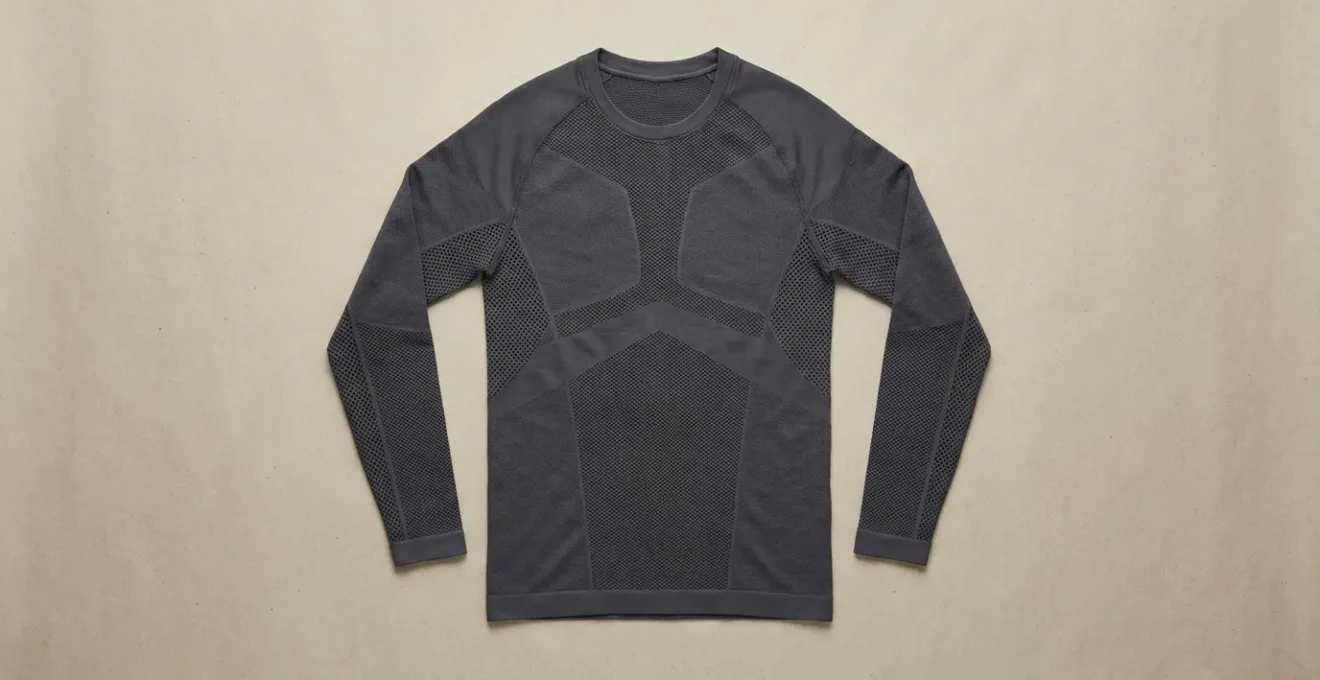
Beyond mechanical support, there is growing evidence for physiological benefits. The applied pressure can enhance proprioception—your brain’s awareness of your body’s position in space—leading to more efficient movement. Furthermore, while effects on immediate performance can be debated, benefits during recovery are more established. For example, a 2022 controlled study demonstrated that compression showed consistent improvements in muscle soreness and Total Quality Recovery, which is consistent with proposed mechanisms of enhanced blood flow. This suggests that by improving circulation during the post-exercise period, compression gear helps clear metabolic waste products more efficiently, reducing delayed onset muscle soreness (DOMS).
Bonded vs. Stitched: Which construction prevents chafing in marathons?
Chafing is the enemy of the endurance athlete. It’s a simple problem of mechanical engineering: friction, exacerbated by moisture and salt from sweat, creates abrasion that can derail a performance. The construction of a garment, specifically its seams, is the primary culprit. A traditional stitched seam, even a “flatlock” one, creates a raised profile on the interior of the garment. Over thousands of repetitive motions in a marathon, this tiny ridge acts like fine-grit sandpaper against the skin.
The most advanced solution to this problem is to eliminate stitching altogether in high-friction zones. This is achieved through bonded or welded seams. This technology uses heat and adhesive pressure to fuse two pieces of fabric together, creating a seam that is completely flat and often more flexible than the fabric itself. There is no thread to cause irritation and no raised profile to catch on the skin. For endurance sports like marathons or triathlons, where movement is constant and prolonged, garments with bonded seams in critical areas (underarms, inner thighs, waistband) offer a supreme advantage in comfort and performance.
The following table breaks down the different seam constructions and their suitability for athletic use, a critical consideration for any gear intended for prolonged wear.
| Seam Type | Chafe Risk | Best Use Case | Moisture Impact |
|---|---|---|---|
| Basic Stitched | High | Light activity | Worsens with sweat |
| Flatlock Stitching | Medium | Moderate activity | Some irritation when wet |
| Bonded/Welded | Minimal | Marathon/endurance | No raised profile |
| Offset Seams | Low | High-friction zones | Strategic placement away from chafe points |
This focus on construction is pushing the boundaries of material science itself. In a compelling example of innovative thinking, Stanford researchers created a nanoporous polyethylene film that kept simulated skin temperature 2.7°C lower than cotton. By using battery industry techniques, they engineered a material that is not only effective at radiative cooling but is also wearable, pointing to a future where the material itself is so advanced that construction methods may be entirely re-imagined.
The sun protection mistake: Why thin white shirts offer zero SPF?
A common and dangerous misconception among athletes is that any light-colored shirt provides adequate sun protection. The logic seems sound: white reflects sunlight, so it should keep you cool and protected. From a materials engineering standpoint, this is a flawed assumption. The sun protection offered by a fabric is measured by its Ultraviolet Protection Factor (UPF), not its color alone. A standard, thin, white cotton T-shirt has a notoriously low UPF, often as low as 5, and this is when it’s dry.
The problem is magnified exponentially when the fabric gets wet. As we’ve established, cotton absorbs moisture. This water fills the spaces between the fibers, reducing the amount of UV radiation that is scattered and reflected. The fabric effectively becomes more transparent to UV rays. In fact, textile research shows that a typical cotton T-shirt’s UPF drops from around 5-9 when dry to a meager 3-4.5 when wet. This offers virtually no protection against harmful UVA and UVB radiation during a sweaty summer workout.
Engineered UPF fabrics, by contrast, achieve their rating through a combination of factors that go far beyond color. These include:
- Fiber Type: Synthetic fibers like polyester and nylon are inherently better at absorbing UV radiation than natural fibers due to their chemical structure, which often includes benzene rings that act as UV absorbers.
- Weave Density: A tighter, denser weave physically blocks more UV rays from reaching the skin. Many UPF fabrics are a knit construction specifically designed to minimize gaps.
- UV-Absorbing Treatments: Many high-UPF fabrics are treated with specific compounds (like titanium dioxide) that are colorless but highly effective at absorbing or blocking UV radiation.
These engineered materials are also designed to maintain their UPF rating even when wet, making them a far more reliable choice for athletic activity. Relying on a simple white shirt for sun protection is a critical performance and health mistake.
The 3-layer system: How to dress for winter outdoor training without overheating?
Winter training presents a unique thermal regulation challenge: you need to stay warm in a cold environment but also manage the intense heat and sweat generated during exercise to avoid overheating and subsequent chilling. The solution is not a single thick garment, but a dynamic, engineered 3-layer system, where each layer serves a distinct physical purpose.
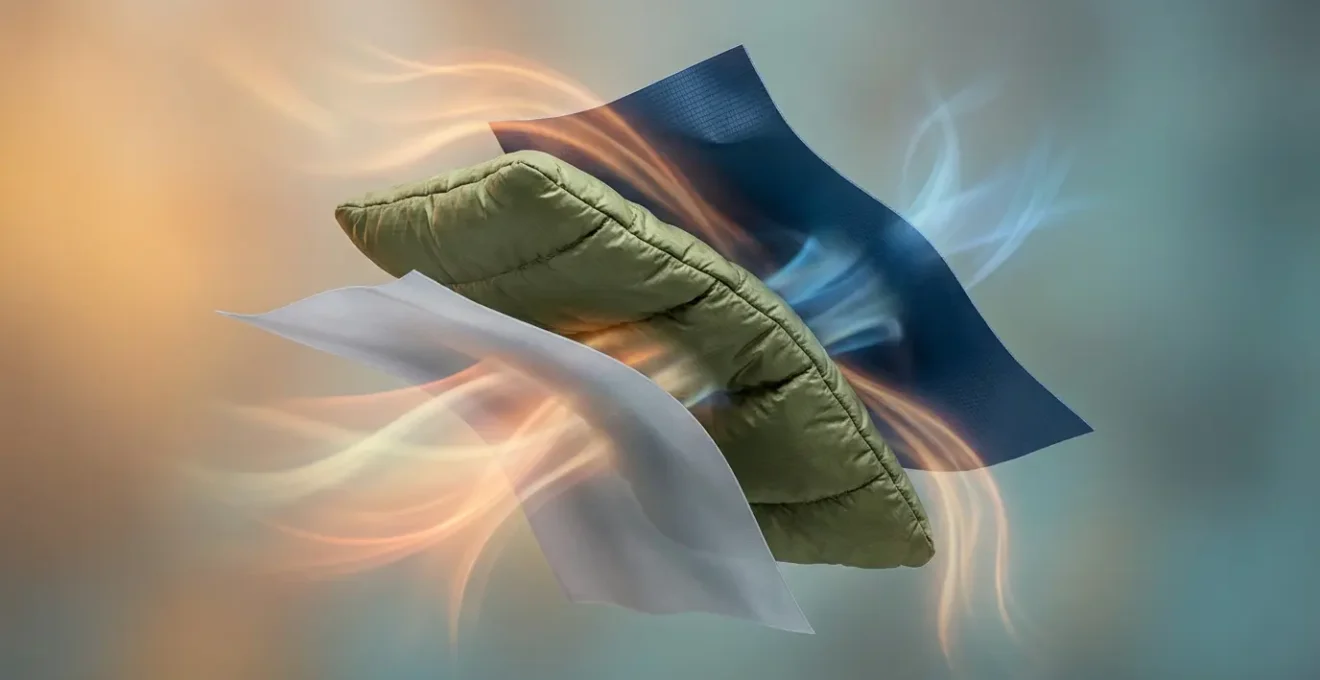
The system is composed of:
- The Base Layer: This is the layer in direct contact with your skin. Its sole purpose is moisture management. It must be made of a hydrophobic, wicking material (like polyester or merino wool) that pulls sweat away from the skin and transfers it to the next layer. A wet base layer will make you cold, no matter what else you’re wearing.
- The Mid Layer: This is your insulation layer. Its job is to trap air, which is then warmed by your body heat. The key here is to choose a material that provides warmth without bulk and remains insulating even if it becomes slightly damp from transferred sweat. Materials like fleece, down, or synthetic fills are common. Advanced mid-layers may even incorporate phase-change materials that absorb and release heat to maintain an optimal temperature.
- The Outer Layer (Shell): This layer is your shield against the elements. It must be windproof to prevent convective heat loss and water-resistant or waterproof to protect you from rain and snow. Crucially, it must also be breathable. A non-breathable shell will trap all the moisture transferred by the base and mid layers, leaving you soaked in sweat from the inside out.
The true genius of this system is its adaptability. As you warm up, you can remove the mid-layer to prevent overheating. If the wind dies down, you might shed the outer shell. This modular approach allows an athlete to actively manage their thermal microclimate. The efficacy of such systems is proven; for instance, in tests on fabrics with phase-change technology, Cranfield University tests showed a reduction in sweat production by up to 40% along with significant reductions in heart rate, demonstrating a lower physiological strain on the body.
How to structure the 45 minutes before kickoff to hit peak body temperature?
The 45 minutes before a match are a critical window for physiological preparation. The goal is not simply to “get warm,” but to systematically raise core and muscle temperature to an optimal state for performance while avoiding premature fatigue or overheating, especially in high-heat conditions. As noted by the MISSION Performance Gear Research Team, “Elevated body temperature and skin temperature can quickly cascade into serious health risks.” Structuring this period based on ambient temperature is a hallmark of a professional approach.
The process should be a gradual ramp-up, combining dynamic movement with strategic apparel choices. A static stretch in the cold does little to prepare muscles; what’s needed is movement that increases blood flow and activates the neuromuscular system. The warm-up should progress from general, low-intensity movements (like jogging) to more specific, higher-intensity dynamic stretches and drills that mimic the actions of the sport (e.g., leg swings, high knees, agility ladder work).
Your apparel during this phase is a tool. In hot weather, you may warm up in your playing kit to acclimate, staying in the shade as much as possible. In cooler weather, a lightweight warm-up suit is used to trap initial body heat, but it must be easily removable as your internal temperature rises to prevent early sweating, which can lead to chilling later. The key is to finish the warm-up feeling warm, loose, and invigorated, not tired and sweaty.
Your Pre-Kickoff Temperature Regulation Checklist
- Assess Environment: Check the temperature, humidity, wind, and sun exposure. Your protocol must adapt to these conditions.
- Select Warm-Up Kit: Above 25°C, use playing kit with cooling fabric and stay in the shade. Between 15-25°C, use a lightweight, breathable jacket. Below 15°C, use a traditional suit to retain heat.
- Start with General Movement: Begin with 5-10 minutes of light jogging or cycling to increase heart rate and blood flow gradually.
- Progress to Dynamic Stretching: Spend 10-15 minutes on dynamic movements like leg swings, torso twists, and walking lunges to improve mobility.
- Incorporate Sport-Specific Drills: Use the final 15 minutes for drills that mimic game intensity—sprints, cutting, jumping—to prime the neuromuscular system for competition.
Indoor vs. Outdoor: Preparing for wind and sun glare distractions
An athlete’s apparel system must be adapted to the specific environmental challenges they face. The demands of an outdoor field with wind and sun are fundamentally different from those of a climate-controlled indoor arena. A textile engineer approaches this by selecting a material matrix optimized for managing either external environmental forces or internal heat buildup.
Outdoors, the two primary factors are convective heat loss (wind) and radiative heat gain (sun). Wind can rapidly strip away the thin layer of warm air next to your skin (the boundary layer), making you feel colder and forcing your body to work harder to stay warm. A fabric with a tighter weave, like a lightweight windbreaker, is essential to block this convective cooling. For sun, the challenge is twofold: UV protection and managing infrared (heat) radiation. Dark fabrics are better at blocking UV but can absorb more heat, whereas advanced treatments like coldblack® allow dark fabrics to reflect a significant portion of heat rays, offering the best of both worlds.
Indoors, wind is a non-issue. The primary challenge becomes dissipating heat in still air. Without airflow to aid evaporative cooling, the fabric’s intrinsic properties are paramount. This is where materials with enhanced thermal conductivity excel. Some advanced fabrics infuse yarns with minerals like mica or graphene. These materials have a high capacity to pull heat away from the skin and spread it across a larger surface area of the fabric, facilitating faster dissipation into the surrounding air and creating a noticeable cooling sensation to the touch. This technology, sometimes using far-infrared yarns, is designed purely for managing the body’s internal heat load in a stable environment.
This table illustrates how fabric choice should be dictated by the specific competitive environment:
| Environment | Temperature | Ideal Fabric Type | Key Features |
|---|---|---|---|
| Outdoor/Windy | Hot | Open-mesh polyester | Advanced moisture-wicking technology pulls sweat away from skin, dries quickly |
| Indoor/Still Air | Hot | Mineral-infused yarns | Far infrared yarns and graphene fabrics enhance heat dissipation |
| Outdoor/Sunny | Variable | Dark UPF with coldblack | High UV protection with infrared reflection |
| Indoor/AC | Cool | Phase-change materials | Temperature regulation for comfort transitions |
Key Takeaways
- Material Is Foundational: The choice between a hydrophilic fiber like cotton and a hydrophobic one like polyester dictates the entire moisture management capability of a garment.
- Construction Defines Comfort: How a garment is assembled, particularly its seams (stitched vs. bonded), has a greater impact on chafing and endurance comfort than the fabric alone.
- The System Is the Solution: True thermal regulation comes from a layered, adaptable system where each component—base, mid, and shell—serves a specific engineering purpose.
How Wearable Sensors Detect Fatigue Before You Feel It?
The proliferation of wearable sensors—from smartwatches to chest straps and even integrated “smart clothing”—promises to provide athletes with real-time data on their physiological state, including early warnings of fatigue. These devices primarily track metrics like heart rate, heart rate variability (HRV), and sometimes skin temperature. The core idea is that deviations from your baseline can signal impending fatigue long before you consciously perceive it. For example, if your heart rate is unusually high for a given power output or pace, it indicates increased cardiovascular strain, a classic sign of fatigue or insufficient recovery.
However, the accuracy of these sensors, particularly those measuring skin temperature or galvanic skin response, is profoundly influenced by the wearer’s apparel. This is where the world of textile engineering and wearable tech collide. As a research team noted in a study on thermophysiological comfort, “Heart rate, rectal temperature, and skin temperature increases were attributed to limited fabric permeability under various ambient temperatures.” In essence, a non-breathable fabric can create an artificial microclimate around a sensor. It traps heat and moisture, leading to a localized increase in skin temperature and sweat that may not reflect the body’s true core state. This can cause a sensor to report that you are overheating or under greater strain than you actually are, providing misleading data.
Therefore, for wearable technology to be truly effective, it must be paired with an apparel system that functions correctly. The fabric must be highly breathable and efficient at wicking moisture to ensure the skin surface environment is as close to natural as possible. This allows sensors to gather clean, accurate data that truly reflects the body’s systemic response to exercise. A “smart” sensor becomes useless if it’s operating within a “dumb” microclimate created by poor fabric choice. The future of performance monitoring lies in the seamless integration of these two technologies, where the clothing not only enhances performance but also serves as a reliable interface for data collection.
Armed with this engineering perspective, your next step is to critically evaluate your gear not just as clothing, but as a performance-regulating system. Analyze the material, scrutinize the construction, and match the system to your environment to unlock your true potential.
Frequently Asked Questions on Performance Fabrics
How does water affect UV protection in fabrics?
When wet, many textiles—especially cotton—absorb water, which increases UV transmission by reducing the light-scattering effect of the fibers and lowers overall protection levels. Engineered UPF materials, particularly those made from polyester and nylon, are designed to be hydrophobic and maintain a much more stable UV performance when exposed to sweat or water.
What’s the difference between fabric color and UV protection?
While dark colors generally absorb more UV rays than light colors, the material itself is far more important. Synthetic fibers like polyester naturally absorb UV radiation due to their chemical structure (containing benzene rings), making them more protective than natural fibers like cotton, wool, or silk, regardless of color. A dark polyester shirt will almost always be more protective than a light cotton one.
What UPF rating is actually needed for protection?
The required UPF rating depends on the intensity of the sun and duration of exposure. A UPF of 30 is generally considered the minimum for good protection, blocking about 97% of UV radiation. For all-day exposure in tropical or high-altitude environments, a UPF of 40 or 50+ is recommended. As Professor Brian Diffey notes, even a UPF of 15 can provide sufficient protection for many vacation activities in the tropics.