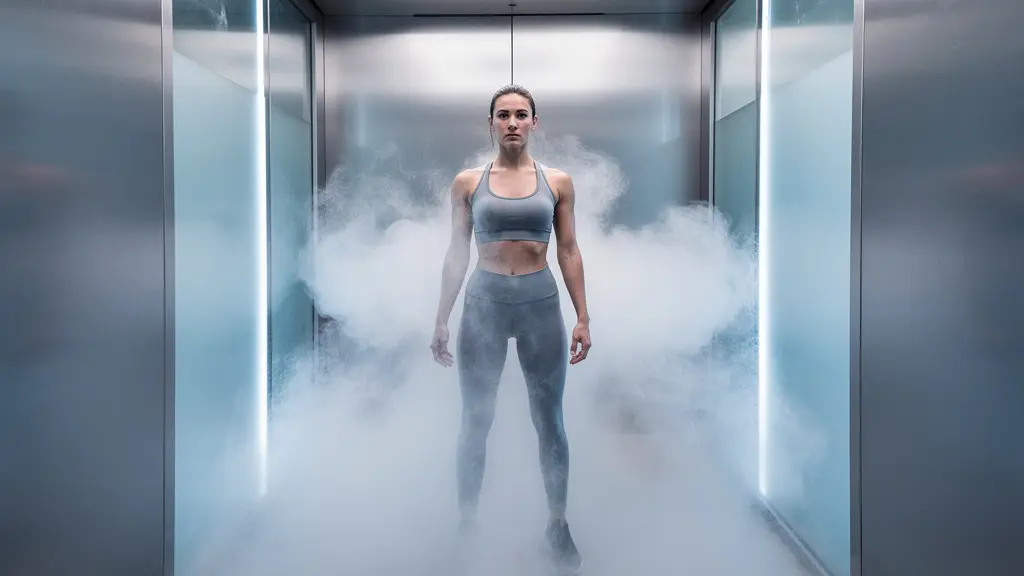
Cryotherapy’s primary benefit for muscle repair is not simply ‘freezing’ inflammation, but triggering a powerful systemic neurohormonal response that must be precisely timed.
- Applying cold immediately after resistance training can blunt anabolic signaling, actively reducing muscle protein synthesis and hindering growth.
- Whole-body cryotherapy is superior to ice baths for reducing perceived soreness (DOMS), but its true value lies in nervous system recovery and pre-competition priming.
Recommendation: Use cryotherapy as a strategic tool for systemic recovery and performance enhancement on non-training days or well before a competition, not as a blanket post-workout fix.
The allure of whole-body cryotherapy (WBC) is undeniable. For a steep price, athletes are promised accelerated recovery, obliterated soreness, and a competitive edge, all in under three minutes. The prevailing logic seems simple: extreme cold constricts blood vessels, reduces inflammation, and thus speeds up muscle repair. This narrative has propelled cryotherapy from a niche treatment to a staple in elite sports facilities. But for the discerning athlete questioning the high cost, a critical look at the evidence is warranted.
The common understanding that cryotherapy is just a faster, colder version of an ice bath misses the point entirely. The real mechanism is far more complex and systemic. It’s less about mechanically “flushing” tissues and more about inducing a controlled, hormetic stress that triggers a powerful neurohormonal cascade. This distinction is crucial, because misunderstanding it can lead to a critical timing mistake that doesn’t just waste money—it can actively sabotage your hard-earned muscle gains.
This evidence-based analysis moves beyond the marketing hype to dissect the physiological realities of cryotherapy. We will explore the science behind the vasoconstriction-dilation cycle, the critical safety protocols required, and a data-driven comparison to traditional ice baths. Most importantly, we will pinpoint the precise timing windows that determine whether cryotherapy helps or harms muscle adaptation, empowering you to make an informed decision about its role in your recovery protocol.
To navigate this complex topic, this article breaks down the science and practical application of cryotherapy into distinct, evidence-based sections. The following summary outlines the key areas we will investigate to determine its true value for muscle repair.
Summary: A Researcher’s Guide to Cryotherapy and Muscle Repair
- Why extreme vasoconstriction followed by dilation flushes toxins?
- How to protect extremities to avoid frostnip during sessions?
- Cryo Chamber vs. Ice Bath: Which is more effective for acute soreness?
- The timing mistake: Why doing cryo immediately after lifting kills muscle gains?
- When to schedule cryo sessions during a tournament week?
- Compression Boots vs. Active Jogging: Which clears waste products faster?
- Why suppressing low-grade heat might slow down tendon repair?
- How to Lower C-Reactive Protein Levels Through Lifestyle Changes?
Why extreme vasoconstriction followed by dilation flushes toxins?
The common explanation for cryotherapy’s effectiveness is a simple “flushing” mechanism: extreme cold causes blood vessels to narrow (vasoconstriction), and upon rewarming, they rapidly widen (vasodilation), supposedly flushing out metabolic waste and inflammatory byproducts. While this mechanical effect occurs, it’s a dramatic oversimplification. The primary benefit is not mechanical, but systemic and neurohormonal. The intense cold exposure acts as a powerful hormetic stressor, triggering a robust release of specific chemicals throughout the body.
The most significant of these is norepinephrine. Research demonstrates that proper cold exposure induces what experts call “a robust release of norepinephrine into the bloodstream and brain,” with levels increasing up to five-fold. This is not a localized effect; it’s a systemic shock to the sympathetic nervous system that has profound anti-inflammatory consequences far beyond simple blood flow changes. This surge in norepinephrine helps downregulate inflammatory pathways and modulate the immune response on a whole-body level.
Furthermore, the body’s response isn’t limited to just one hormone. The systemic shock also prompts a change in cytokine profiles. A 2025 meta-analysis confirmed that IL-10 anti-inflammatory levels increase significantly after whole-body cryotherapy, while proinflammatory markers decrease. Therefore, the real value isn’t in “flushing toxins” from a single muscle group, but in triggering a body-wide shift toward an anti-inflammatory state, driven by a powerful neurohormonal cascade.
How to protect extremities to avoid frostnip during sessions?
Exposing the body to temperatures of -110°C (-166°F) or lower, even for just a few minutes, requires strict adherence to safety protocols to prevent cold-related injuries like frostnip or frostbite. The primary danger comes from moisture, as water freezes rapidly at these temperatures, causing severe damage to skin tissue. Extremities like fingers, toes, ears, and the nose are most vulnerable due to their higher surface-area-to-volume ratio and distance from the body’s core.
The protocol for protection is straightforward and non-negotiable. All jewelry must be removed, as metal conducts cold extremely quickly. Clothing worn inside the chamber must be minimal and, most critically, completely dry. The protective gear for extremities is designed to insulate and prevent moisture contact. This includes thick, dry socks and slippers or boots, dry gloves (wool or synthetic materials are superior to cotton, which retains moisture), a headband covering the ears, and a mask over the nose and mouth to warm the air slightly before inhalation.
When these protocols are followed meticulously, the procedure has a strong safety profile. Data from studies using modern electric whole-body chambers is reassuring, showing that there have been zero reported incidents in over 500,000 sessions when proper guidelines are followed. This underscores that the risk is not inherent to the cold itself, but to improper preparation and execution. Ensuring all protective gear and clothing are bone-dry is the single most important factor in preventing adverse events.
Pre-Session Safety Audit: Your Checklist for a Safe Cryotherapy Experience
- Skin & Body Scan: Check your entire body for any moisture, including residual sweat from a recent workout. Skin must be completely dry. Remove all metal jewelry and piercings.
- Gear Inspection: Inventory all required protective equipment: dry wool/synthetic gloves, dry socks, dry footwear, ear-covering headband, and face mask. Confirm all items are free of moisture.
- Apparel Check: Verify that the minimal clothing you will wear (e.g., shorts, sports bra) is also 100% dry. Do not enter with damp workout clothes.
- Extremity Coverage: Before entering, double-check that gloves, socks, and headband are positioned to completely cover the skin of your fingers, toes, and ears.
- Duration Confirmation: Verbally confirm the session duration (typically 2-3 minutes) with the operator and commit to exiting immediately if you feel any sharp, stinging pain, which is a precursor to frostnip.
Cryo Chamber vs. Ice Bath: Which is more effective for acute soreness?
The classic ice bath, or cold-water immersion (CWI), has been a recovery staple for decades. Cryotherapy is often marketed as its high-tech, superior successor. While both utilize cold to aid recovery, they operate via different mechanisms and excel in different areas. The choice between them depends on the specific goal, budget, and tolerance of the athlete.
An ice bath combines two therapeutic elements: cold and hydrostatic pressure. Submersion in water (typically 5-15°C for 10-20 minutes) exerts pressure on the limbs, which can assist in reducing swelling and promoting fluid movement. Cryotherapy, in contrast, uses extremely cold, dry air (-110°C to -140°C for 2-3 minutes) and lacks the compressive effect of water. Its primary advantage is the intensity of the temperature drop, which triggers a more potent systemic hormonal response, particularly the norepinephrine surge discussed earlier.

When it comes to reducing acute muscle soreness (DOMS), a growing body of evidence suggests cryotherapy has an edge. A recent network meta-analysis that compared multiple recovery modalities provides a clear hierarchy. The data, summarized in the table below, shows that while both methods are effective, whole-body cryotherapy consistently ranks higher for subjective recovery and performance metrics like jump height. This is likely due to the more powerful central nervous system effect.
However, this enhanced effectiveness comes at a significant financial cost. As the data shows, an ice bath is nearly free, whereas a single cryotherapy session can be expensive. For an athlete managing a budget, this is a major consideration. The decision is a trade-off: cryotherapy offers a faster, more potent, and often more tolerable experience for reducing DOMS, but CWI provides significant benefits at a fraction of the cost, with the added bonus of hydrostatic pressure.
This comparison is detailed in a 2024 network meta-analysis, which provides a comprehensive ranking of different recovery methods.
| Method | Temperature | Duration | DOMS Reduction | Mechanism |
|---|---|---|---|---|
| Whole-Body Cryotherapy | -110°C to -140°C | 2-3 minutes | Most effective (SUCRA ranking #1) | Systemic norepinephrine release |
| Cold Water Immersion | 5°C-15°C | 10-20 minutes | Effective (SUCRA ranking #2) | Hydrostatic pressure + cooling |
| Cost per session | $50-75 | Nearly free | – | – |
The timing mistake: Why doing cryo immediately after lifting kills muscle gains?
The most common and detrimental misconception about cryotherapy is that it should be used immediately after a workout to blunt inflammation. While it is effective at reducing inflammation, doing so right after a resistance training session can directly interfere with the very processes that signal muscle growth. This is the critical timing mistake that can turn a costly recovery tool into a saboteur of your progress.
Muscle hypertrophy (growth) is triggered by the stress of exercise, which creates micro-tears in muscle fibers. This damage initiates a necessary and productive inflammatory response. This acute, short-term inflammation is a crucial signal that tells the body to start the repair and rebuilding process, ultimately making the muscle stronger. This process is governed by specific molecular pathways, most notably the mTOR pathway, which is a central regulator of muscle protein synthesis (MPS).
Applying intense cold immediately post-exercise aggressively suppresses this vital inflammatory signal. By doing so, you are essentially cutting off the communication that tells your body to build muscle. The evidence for this is stark. Studies on cold-water immersion applied immediately after exercise have shown a significant 30% reduction in muscle protein synthesis over the subsequent hours. You are actively short-circuiting the anabolic signaling cascade. The very thing you did the workout for—to stimulate growth—is being inhibited by your recovery method.
Therefore, the use of cryotherapy must be strategic. It should be separated from resistance training sessions by several hours, or ideally, used on separate days. The goal is to allow the initial, productive anabolic signaling to occur unimpeded. Once that window has passed (at least 4-6 hours post-exercise), cryotherapy can then be used to manage excessive, lingering inflammation and promote systemic recovery without killing your gains.
When to schedule cryo sessions during a tournament week?
For an athlete in the middle of a competitive season or a multi-day tournament, recovery is paramount. The goal shifts from long-term muscle adaptation to short-term performance readiness. In this context, cryotherapy becomes an invaluable tool, but its scheduling must be deliberate to maximize benefits and minimize fatigue. The “strategic adaptation window” is key.
Here at the Center for Sports Performance and Research, we recognize that elite athletes are looking to harness the power of cryotherapy to gain a competitive edge before an important competition.
– Brian George, Mass General Brigham Performance Recovery Specialist
During a tournament, there are two primary opportunities to use cryotherapy effectively. The first is between events or at the end of a competition day to manage systemic fatigue and soreness. After a game or match, the primary goal is to be ready for the next one, not to stimulate maximum muscle growth. Here, cryotherapy can be used to downregulate excessive inflammation, calm the central nervous system, and improve sleep quality, which are all critical for next-day performance.
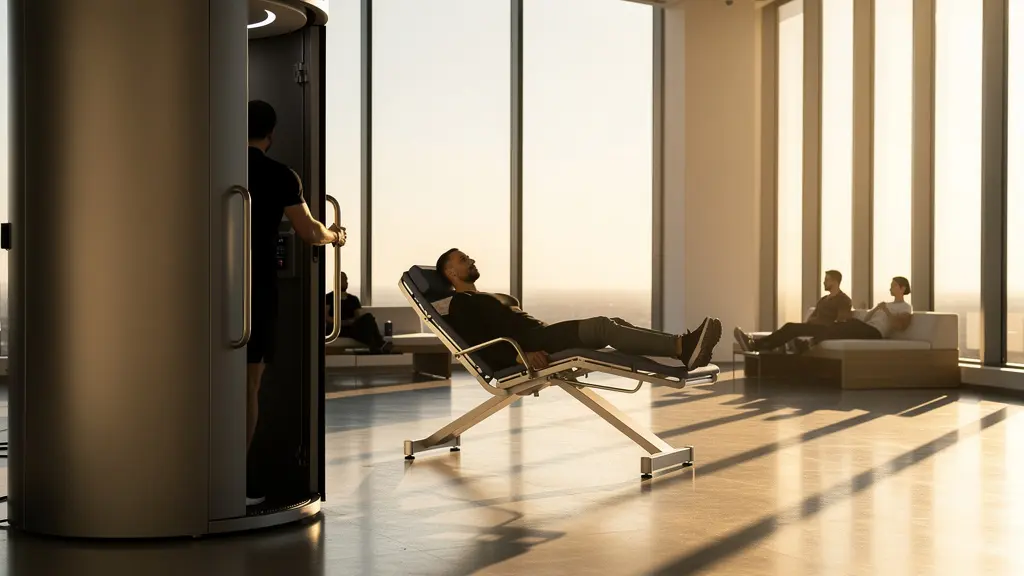
The second, and perhaps more powerful, use is as a pre-competition primer. The potent norepinephrine release from a cryotherapy session has been shown to increase alertness, reduce the perception of pain, and improve power output. It acts as a legal performance enhancer by priming the nervous system for action. However, the timing is critical. Studies and expert consensus suggest that scheduling a session about three hours before competition may yield optimal benefits. This allows the body to experience the peak of the hormonal and analgesic effects without any lingering chill or fatigue from the procedure itself.
Therefore, during a tournament week, an athlete might use cryotherapy in the evening to recover from one day’s exertion and then again on the morning of a key event to prime for peak performance. This dual-purpose scheduling transforms it from a simple recovery tool into a strategic competitive weapon.
Compression Boots vs. Active Jogging: Which clears waste products faster?
When discussing recovery, the conversation often extends beyond cold therapy to other popular modalities like pneumatic compression boots and active recovery (e.g., a light jog or cycle). All three aim to accelerate the body’s natural repair processes, but they target different physiological systems. The question of which is “faster” at clearing waste products depends on what specific outcome you are trying to achieve.
Active recovery, like a slow jog, promotes circulation through gentle muscle contraction, helping to move metabolic byproducts like lactate out of the muscles and into the bloodstream for processing. It is a time-tested method for reducing stiffness and promoting blood flow. Compression boots work by applying sequential, dynamic pressure to the limbs, mechanically squeezing fluid and metabolic waste from the extremities back towards the body’s core. This passive method is appealing for its low-effort nature.
However, recent comprehensive research suggests that the most effective recovery strategy is a multi-faceted one, where different tools are used for different jobs. A 2024 network meta-analysis that evaluated numerous recovery methods found that no single modality is superior for all metrics. For instance, the analysis concluded that contrast water therapy (alternating hot and cold) was the most effective method for reducing creatine kinase levels (a marker of muscle damage), while whole-body cryotherapy was the undisputed champion for reducing perceived muscle soreness (DOMS) and improving subsequent jump performance.
This highlights a crucial point: “clearing waste products” is not a single, monolithic goal. Different modalities influence different biomarkers of recovery. Instead of asking which is fastest, the more strategic question is: “What is the limiting factor in my recovery right now?” If it’s debilitating soreness and nervous system fatigue, cryotherapy is likely the superior choice. If it’s muscle damage and swelling, contrast therapy or compression may be more targeted. An optimal recovery protocol often involves a combination of these methods, tailored to the specific demands of the training or competition.
Why suppressing low-grade heat might slow down tendon repair?
The instinct to apply cold to any injury is deeply ingrained in athletes. The RICE (Rest, Ice, Compression, Elevation) protocol has been doctrine for decades. However, a growing body of research is challenging the “ice everything” mentality, particularly for soft tissue injuries like tendonitis or ligament sprains. The low-grade inflammation and associated heat that accompany these injuries are not just a symptom of damage; they are a fundamental part of the healing cascade.
When a tendon is injured, the body initiates a complex, three-stage healing process: inflammation, proliferation, and remodeling. The initial inflammatory stage is critical. It signals the body to send specialized cells (like macrophages and fibroblasts) to the injury site. These cells clear out damaged tissue and, more importantly, lay down the initial scaffold of new collagen, which will eventually become new, healthy tendon tissue. The localized heat is a byproduct of this increased metabolic activity and blood flow.
Aggressively suppressing this initial inflammatory response with intense or prolonged cold therapy can be counterproductive. It may provide short-term pain relief, but it can also slow down the arrival of those crucial repair cells and delay the transition to the proliferation stage. While some studies on intermittent cryotherapy have shown benefits like a 25% reduction in the overall injury area, there is a critical caveat: this reduction in swelling does not necessarily equate to enhanced or faster tissue repair. It may simply be masking the symptoms while slowing the underlying biological process.
This does not mean cold has no place in tendon injury management. It can be invaluable for managing acute pain and excessive swelling in the first 24-48 hours. However, the modern, evidence-based approach favors more judicious use. The goal should be to manage debilitating pain without completely shutting down the productive inflammation required for healing. Suppressing the body’s natural, low-grade heat signal may feel good in the moment but could ultimately prolong the total time to recovery.
Key takeaways
- Cryotherapy’s primary benefit is a systemic neurohormonal response (norepinephrine surge), not just localized cooling.
- Using cryotherapy immediately after resistance training can reduce muscle protein synthesis by up to 30%, sabotaging growth.
- For reducing perceived soreness (DOMS), cryotherapy is more effective than an ice bath, but comes at a much higher cost.
How to Lower C-Reactive Protein Levels Through Lifestyle Changes?
C-Reactive Protein (CRP) is a key biomarker measured in blood tests to assess the level of systemic inflammation in the body. While acute, localized inflammation is a necessary part of exercise adaptation and injury healing, chronic, low-grade systemic inflammation is linked to a host of negative health outcomes and can impair athletic recovery and performance. Lowering elevated CRP levels is a critical goal for both health and longevity, and lifestyle interventions are the most powerful tools to achieve this.
A range of lifestyle factors directly influences CRP. These include:
- Diet: An anti-inflammatory diet rich in omega-3 fatty acids (found in fatty fish), antioxidants (from fruits and vegetables), and fiber, while low in processed foods, sugar, and unhealthy fats, is foundational.
- Exercise: Regular, moderate-intensity exercise has a powerful anti-inflammatory effect over the long term.
- Sleep: Quality sleep is essential for regulating inflammatory processes. Chronic sleep deprivation is a major driver of elevated CRP.
- Stress Management: Chronic psychological stress leads to hormonal changes that promote inflammation. Practices like meditation and mindfulness can help lower CRP.
In this context, whole-body cryotherapy can be viewed as another powerful lifestyle intervention for managing systemic inflammation. A 2025 meta-analysis of 11 randomized controlled trials demonstrated that WBC reduces inflammation by decreasing proinflammatory cytokines like IL-1β and increasing anti-inflammatory ones like IL-10, with athletes being a population likely to benefit. More directly, a 2024 pilot study on healthy individuals using WBC showed a significant reduction in high-sensitivity CRP levels.
This suggests that regular, strategically timed cryotherapy sessions can be an effective component of a broader anti-inflammatory lifestyle. It should not be seen as a magic bullet, but as a potent tool that works in synergy with proper nutrition, sleep, and stress management to help control systemic inflammation and, by extension, lower CRP levels for improved overall health and athletic readiness.
Ultimately, the decision to incorporate cryotherapy into a recovery regimen is a strategic one. By understanding its true mechanisms and, most importantly, the critical importance of timing, an athlete can move from being a curious skeptic to an informed user, leveraging this powerful tool for performance, not against it. To apply these principles effectively, the next step is to evaluate how cryotherapy fits within your specific training goals and budget.