Contrary to popular belief, the key to faster soft tissue repair isn’t suppressing inflammation with drugs, but intelligently supporting the body’s own biological blueprint for healing.
- Inflammation is a necessary signal that initiates repair; silencing it can lead to weaker, incomplete recovery.
- Building a resilient “tissue scaffold” with specific nutrients like collagen and Vitamin C is more effective than just resting.
Recommendation: Shift your focus from fighting symptoms to creating a pro-repair biochemical environment through targeted nutrition, strategic recovery protocols, and optimized sleep.
For any athlete, a soft tissue injury—a torn ligament, a strained tendon, or a pulled muscle—is more than just a physical setback. It’s a frustrating pause button on progress, passion, and performance. The conventional wisdom handed down for decades has been simple: rest, ice the area, and take a non-steroidal anti-inflammatory drug (NSAID) like ibuprofen to manage the pain and swelling. But what if this approach, designed to make you feel better in the short term, is actually sabotaging your body’s long-term healing potential?
As a naturopathic sports doctor, I see many athletes who, due to stomach issues or a belief in natural processes, are seeking alternatives to NSAIDs. They are right to be cautious. The body’s healing process is an intricate and intelligent cascade of biological events. Inflammation, the very thing we are taught to fight, is not the enemy; it is the essential first responder. It’s the signal that clears debris and calls in the cellular construction crew. Suppressing this signal is like cutting the phone lines in an emergency. True acceleration of healing doesn’t come from suppression, but from support.
This guide abandons the outdated “fight inflammation” model. Instead, we will explore how to work in harmony with your body’s innate wisdom. We will delve into how to provide the raw materials for repair, optimize the hormonal environment that governs reconstruction, and use strategic modalities to enhance, not inhibit, the natural healing timeline. By understanding and honoring these biological principles, you can build back tissue that is not just patched-up, but resilient and strong.
To navigate this biological approach to healing, we will explore the critical phases and factors that govern tissue regeneration. This summary outlines the key strategies you’ll discover for a faster, more robust recovery.
Summary: A Biological Blueprint for Soft Tissue Repair
- Why suppressing low-grade heat might slow down tendon repair?
- How to use collagen and Vitamin C to build tendon matrix?
- Acupuncture vs. Massage: Which stimulates blood flow deeper?
- The “too soon” mistake: Why returning before remodeling completes causes re-injury?
- When does the body release the most growth hormone during sleep?
- Why processed sugar keeps your joints inflamed 24/7?
- How to order foam rolling, stretching, and cold water for maximum effect?
- How to Lower C-Reactive Protein Levels Through Lifestyle Changes?
Why suppressing low-grade heat might slow down tendon repair?
The first instinct when feeling the heat of a fresh injury is to extinguish it with ice and anti-inflammatories. However, this “low-grade heat” is not a malfunction; it is a vital part of the inflammatory cascade. This process is your body’s organized cleanup and preparation phase. The increased temperature signifies heightened metabolic activity and blood flow, which delivers immune cells to clear damaged tissue and brings oxygen and nutrients essential for what comes next. Suppressing this initial phase can delay the entire healing sequence.
Modern injury protocols are shifting away from this suppressive mindset. The updated PEACE & LOVE protocol, for instance, explicitly advises to ‘Avoid anti-inflammatories.’ The rationale is that NSAIDs can be detrimental to long-term healing by interfering with the natural process. The body’s immune response is a critical part of tendon health, and in fact, research from 2024 demonstrates that more Natural Killer (NK) cells, a type of immune cell, are found in chronic tendinopathic Achilles tendons than in healthy ones, highlighting the immune system’s ongoing role. Instead of silencing these signals, the goal should be to manage swelling through elevation and compression while allowing the crucial biological communication to occur.
How to use collagen and Vitamin C to build tendon matrix?
Once the initial inflammatory phase has cleared the way, the body enters the proliferation or construction phase. During this stage, specialized cells called fibroblasts begin to lay down a new tissue matrix. Think of this as building a biological scaffold. The primary material for this scaffold is collagen, the most abundant protein in your body, which gives connective tissues their strength and structure. However, simply consuming collagen isn’t enough; your body needs a critical co-factor to assemble it correctly: Vitamin C.
Vitamin C is essential for the enzymatic process that cross-links collagen fibers, turning a disorganized mesh into a strong, resilient matrix. Without adequate Vitamin C, the collagen produced is weak and unstable, leading to tissue that is prone to re-injury. To support this process, you should focus on providing your body with these raw materials, especially in the 30-60 minutes before a gentle rehabilitation session, which can help drive these nutrients into the targeted tissue.

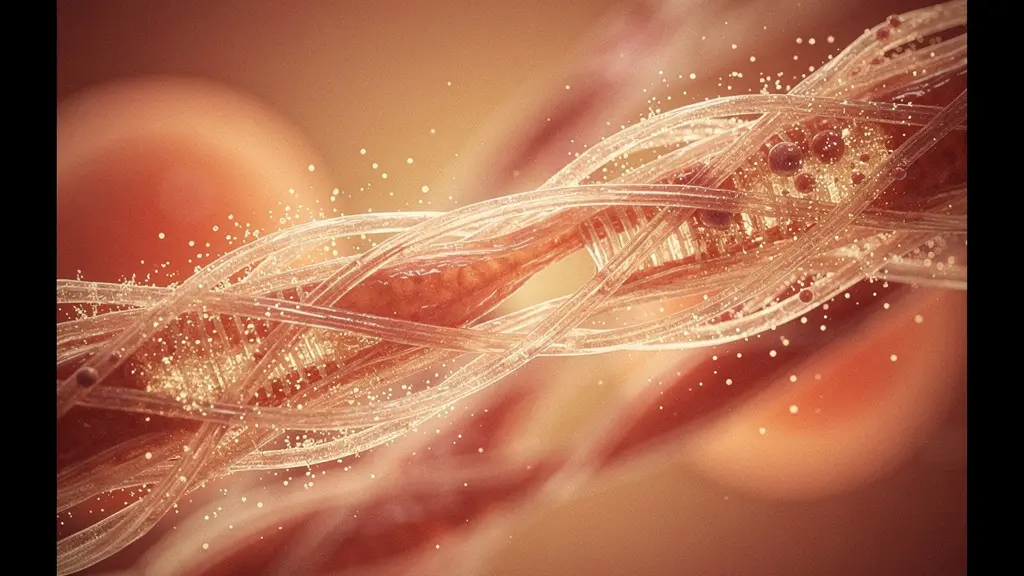
As the image metaphorically illustrates, the synthesis of a strong tendon matrix requires the interweaving of these essential components. A diet rich in high-quality protein (providing amino acids like glycine and proline), supplemented with hydrolyzed collagen peptides and whole-food sources of Vitamin C (like citrus fruits, bell peppers, and kiwi), provides the complete toolkit for your fibroblasts to build a durable tissue scaffold.
Acupuncture vs. Massage: Which stimulates blood flow deeper?
Delivering the building blocks for repair is one part of the equation; ensuring they reach the injury site is another. Soft tissues like tendons and ligaments often have a poor blood supply, which can make them slow to heal. Manual therapies are excellent tools for enhancing local circulation and influencing the nervous system to create a pro-repair state. However, different techniques work through distinct mechanisms and are best applied at different times.
As the Venus Treatments Research Team notes in their article on Different Types of Healing Technologies for Soft Tissue Injuries, “Massage and pulse-based therapies release tension in nerves and deeper connective tissues while relaxing soft tissue for a reduction in pain and inflammation”. While gentle massage is beneficial in the early stages for fluid dynamics, acupuncture often provides a deeper, more systemic stimulus appropriate for later stages. The key is to match the therapy to the biological phase of healing.
| Treatment Type | Mechanism | Best Timing | Primary Benefits |
|---|---|---|---|
| Gentle Massage (MLD) | Mechanical stimulus for fluid dynamics | Immediate acute phase (0-72 hours) | Clears inflammatory byproducts, manages swelling |
| Acupuncture | Neurological stimulus affecting pain gates and ANS | Later stages (after 72 hours) | Stimulates endogenous opioids, shifts to parasympathetic state |
| Deep Tissue Massage | Breaks up adhesions, improves tissue glide | Remodeling phase (3+ weeks) | Prevents tissue shortening, improves range of motion |
Ultimately, the choice isn’t about one being universally “better” but about which is most appropriate for the current state of the tissue. Gentle massage is for early fluid management, while acupuncture offers a powerful tool to shift the autonomic nervous system toward a “rest and repair” parasympathetic state, crucial for deep, systemic healing.
The “too soon” mistake: Why returning before remodeling completes causes re-injury?
One of the most common and damaging mistakes an athlete can make is returning to full activity too soon. This often happens because the pain has subsided, creating a false sense of security. However, the absence of pain does not equal the completion of healing. The final and longest phase of tissue repair is the remodeling phase, a period where the body works to transform fragile, disorganized tissue into a strong, functional structure.
During the initial proliferation phase, the body quickly lays down a “patch” made of weaker Type III collagen. It’s disorganized and fragile. The remodeling phase is the slow, meticulous process of replacing this with robust, highly organized Type I collagen—the kind that makes up healthy, strong tendons. This process requires a specific signal: appropriate mechanical load. Gentle, progressive stress tells the body how to align the new fibers to withstand future forces. But too much load, too soon, will tear the delicate new scaffold apart, sending you right back to square one. This process is incredibly slow; research published in 2024 indicates the remodeling phase may take 1-2 years to fully complete for a tendon to regain its original strength.
This extended timeline is why so many re-injuries occur. An athlete feels good after 6-8 weeks and jumps back into intense training, only to rupture the still-vulnerable tissue. Patience during this phase, guided by a professional who understands how to apply progressive load, is non-negotiable for a full and resilient recovery.
When does the body release the most growth hormone during sleep?
While nutrition and physical therapies are crucial, the most potent repair agent your body produces is Human Growth Hormone (HGH). This powerful hormone orchestrates cellular repair and regeneration throughout the body, and its release is deeply tied to our sleep cycles. The vast majority of HGH is released not during the day, but during the deepest stages of sleep. Specifically, sleep research confirms that the primary HGH pulse occurs within the first 1-2 hours after falling asleep.
This means that the quality of the first part of your night’s sleep is paramount for physical repair. Any disruption during this critical window—such as from blue light exposure, late-night meals that spike insulin, or an uncomfortable room temperature—can blunt this vital HGH release and significantly slow down your recovery. To maximize this natural repair cycle, you must be strategic about your sleep hygiene. It’s not just about the quantity of sleep, but the uninterrupted quality of those first few hours. Prioritizing a consistent “wind-down” routine is one of the most effective, yet overlooked, strategies for accelerating soft tissue repair.
Your Pro-Repair Sleep Protocol
- Begin your 60-minute wind-down routine at the same time each night.
- Block all blue light from screens and devices using amber glasses or software filters.
- Lower your room temperature to 65-68°F (18-20°C) to facilitate the drop in body temperature needed for deep sleep.
- Stop eating 2-3 hours before bed to ensure insulin levels are low, preventing interference with HGH release.
- Practice 10-20 minutes of meditation or Non-Sleep Deep Rest (NSDR) to quiet the mind and shift into a parasympathetic state.
By implementing this protocol, you create the optimal hormonal environment for your body’s natural construction crew to do its most important work, all while you rest.
Why processed sugar keeps your joints inflamed 24/7?
You can have the perfect rehabilitation plan and sleep schedule, but if your diet is creating a hostile biochemical environment, your healing will be compromised. The single greatest dietary saboteur of soft tissue repair is processed sugar. Its negative impact is twofold: it promotes systemic inflammation and directly damages the very proteins you are trying to rebuild.
High insulin levels from sugar intake directly compete with and disrupt other hormonal pathways essential for repair, creating a poor systemic healing environment.
– Wellness Resources Research Team, Injury Recovery and Soft Tissue Support
Beyond the hormonal disruption, sugar causes a destructive process called glycation. This occurs when excess sugar molecules in the bloodstream attach to proteins like collagen. This bonding forms harmful compounds called Advanced Glycation End-products (AGEs). These AGEs act like cross-links of rust in a steel cable, making connective tissues stiff, brittle, and dysfunctional. In essence, a high-sugar diet is actively ‘caramelizing’ your tendons and ligaments from the inside out, making them more susceptible to injury and slower to heal. This process also fuels low-grade systemic inflammation by promoting gut dysbiosis, creating a vicious cycle that keeps your body in a constant state of alert.
How to order foam rolling, stretching, and cold water for maximum effect?
Recovery modalities are most effective when sequenced correctly to create a synergistic effect. Foam rolling, stretching, and cold water immersion each have a distinct purpose, and their order matters. The goal is to first release restrictions, then restore length, and finally manage the resulting inflammation and promote vascular flush.
1. Foam Rolling (Myofascial Release): Begin here. The purpose of foam rolling is not to “stretch” the muscle, but to address the fascia, the connective tissue web that encases your muscles. By applying pressure, you can help break up minor adhesions and improve tissue glide. This process prepares the muscle and surrounding tissue to be lengthened more effectively and safely. Think of it as untangling the knots in a rope before you try to stretch it out.
2. Stretching (Static or Dynamic): Once the fascia is more pliable, you can move on to stretching. This addresses the muscle fibers themselves, aiming to restore their optimal length and improve the joint’s range of motion. Performing this after foam rolling allows for a truer, more effective stretch of the muscle tissue, as fascial restrictions are less likely to be the limiting factor.
3. Cold Water Immersion: This should be the final step. The application of cold causes vasoconstriction (narrowing of blood vessels), followed by a reactive vasodilation (widening) after you get out. This creates a “pumping” action that helps flush out metabolic byproducts generated during the session. It’s a tool for managing the acute response and should be used judiciously. According to official guidelines, you should apply ice for up to 15 minutes with several hours between treatments to avoid damaging tissue or excessively blunting the helpful inflammatory signals.
Key takeaways
- Healing is a biological process to be supported, not a symptom to be suppressed. Inflammation is the first step.
- Your body requires specific raw materials (collagen, Vitamin C) and hormonal triggers (HGH during sleep) to rebuild tissue effectively.
- Systemic factors like sugar consumption and chronic stress create a pro-inflammatory environment that directly sabotages local tissue repair.
How to Lower C-Reactive Protein Levels Through Lifestyle Changes?
C-Reactive Protein (CRP) is a key biomarker measured in blood tests that indicates the level of systemic inflammation in your body. While a temporary spike is normal after an injury, chronically elevated CRP suggests your body is in a constant state of low-grade inflammation, which severely hampers its ability to dedicate resources to healing a specific site. Lowering your baseline CRP is a powerful strategy for creating a body-wide, pro-repair environment.
A fantastic, real-time proxy for your inflammatory state is Heart Rate Variability (HRV), which measures the variation in time between your heartbeats. Low HRV is strongly correlated with high CRP and an overactive “fight or flight” nervous system. You can actively improve your HRV through simple lifestyle interventions. For instance, controlled breathwork at a pace of 5.5-second inhales and exhales can immediately shift your autonomic nervous system toward a more relaxed, “rest and digest” state. Furthermore, simple habits like getting 10-15 minutes of morning sunlight exposure helps set your master circadian clock, which governs the body’s inflammatory cycles.
In addition to managing your nervous system, targeted nutrition can also help control inflammatory chemicals. As noted by Wellness Resources, plant-based compounds like boswellia, ginger, and curcumin have long been used to help the body manage its inflammatory response naturally. By combining these lifestyle and nutritional strategies, you can lower your systemic inflammatory load, freeing up your body’s resources to focus on the intricate task of tissue remodeling.
By embracing these principles, you shift from being a passive patient to an active participant in your recovery. The path to resilient healing involves listening to your body’s signals, providing it with the precise resources it needs, and cultivating a systemic environment that fosters repair. To put these concepts into practice, the next logical step is to build a comprehensive, personalized recovery plan that integrates these strategies into your daily life.