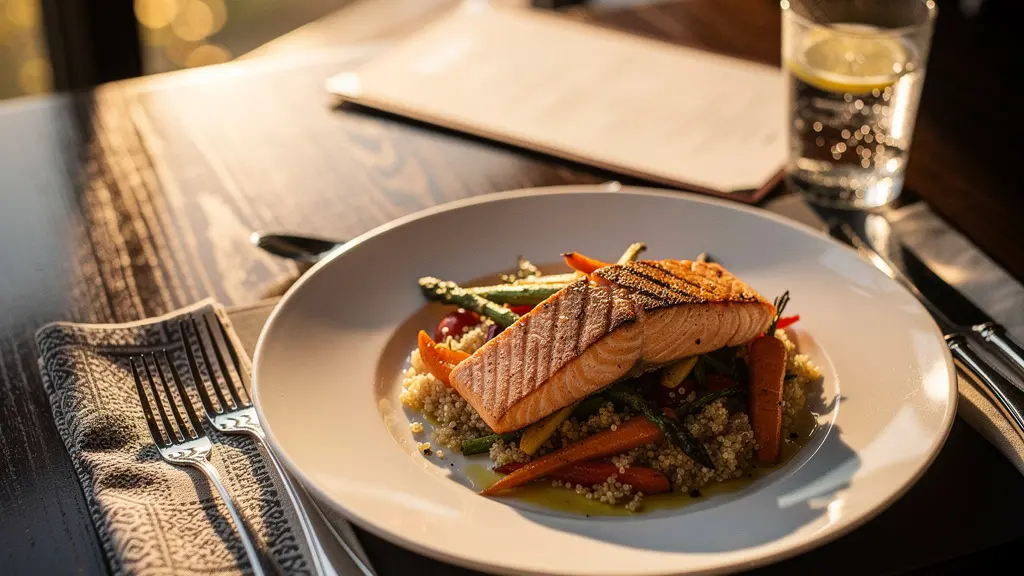
Dining out doesn’t have to be a dietary defeat; it’s a strategic opportunity to flex your culinary intelligence.
- The greatest caloric threats are often hidden in dressings, sauces, and beverages, not just the main course itself.
- Polite, informed requests for simple swaps are not an annoyance but a sign of a discerning diner that most kitchens are happy to accommodate.
Recommendation: Focus on the cooking method (grilled over fried) and strategically time your meal around your training for maximum metabolic benefit.
The moment arrives. A beautifully designed menu is placed in your hands, the ambiance is perfect, and the company is delightful. Yet, a quiet sense of dread descends. For the health-conscious club member, a restaurant menu can feel less like a list of culinary delights and more like a minefield of caloric traps, threatening to undo a week of disciplined training. The common advice—”just order a salad,” “skip the bread basket,” “drink water”—feels reductive and socially isolating. It positions healthy eating as an act of deprivation, turning a joyful social occasion into a test of willpower.
But what if this entire framework is flawed? As a nutrition-conscious food critic, I propose a different approach. The goal is not avoidance, but mastery. It’s about developing a form of culinary intelligence that allows you to deconstruct a menu, understand its hidden architecture, and make choices that align with your fitness goals without sacrificing flavor or social grace. It’s about turning the act of dining out from a source of anxiety into a tactical advantage.
This guide will not ask you to eat less; it will teach you to eat smarter. We will move beyond the obvious platitudes and delve into the science and strategy of a truly healthy restaurant meal. We will explore the caloric impact of sauces, the art of the polite substitution, the metabolic difference between cooking methods, and the crucial timing of your meals. Prepare to transform your perspective and learn to navigate any menu with the confidence of an expert.
This article provides a complete framework for making strategic decisions when dining out. The following sections break down the key areas where you can apply your culinary intelligence to enjoy your meal while staying true to your nutritional plan.
Summary: A Strategic Guide to Healthy Restaurant Dining
- Why dressings and sauces contain 50% of the meal’s calories?
- How to ask for healthy swaps without being annoying?
- Grilled vs. Fried: Measuring the lipid difference in protein options?
- The “liquid calorie” mistake that undoes a week of training
- When to eat the burger: Timing your cheat meal for metabolic recovery?
- Why eating too little kills your metabolism and performance?
- Why eating complex carbs 3 hours before is better than 1 hour before?
- Macronutrient Cycling: How to Eat for Heavy Training vs. Rest Days?
Why dressings and sauces contain 50% of the meal’s calories?
The main protein or vegetable on your plate is often not the primary caloric culprit. The true danger lies in the shadows—the dressings, gravies, and sauces that accompany it. A seemingly virtuous grilled chicken salad can quickly surpass a pasta dish in calories due to a creamy, sugar-laden dressing. This is the concept of caloric architecture: understanding that the flavor-enhancing additions often form the majority of the meal’s fat and sugar content. While a 2024 study found that nearly 49.7% of U.S. adults reported noticing calorie labels, these labels can be misleading if they don’t account for the sauces you add yourself.
As a critic, I can attest that many chefs rely on butter, cream, and oil for richness. A simple pan-sauce can easily add 200-300 calories. Your first act of culinary intelligence is to always assume the sauce is a significant caloric investment and to treat it with suspicion. The power move is to take control of this variable.

The image above perfectly captures the elegance of a simple, high-quality oil. This should be your goal: enhancing flavor without drowning your food. By requesting sauces on the side, you transform the dish from a chef’s pre-determined caloric load into a canvas you control. You can then apply just enough for taste, often using a fraction of what would have been served. Here are some smart strategies:
- Always request dressings, sauces, and gravies on the side to control portions.
- For salads, choose olive oil and vinegar or dip your fork in a creamier dressing before each bite rather than pouring it over.
- Ask your server about the cooking oils used and see if a dish can be prepared with less oil or no butter.
How to ask for healthy swaps without being annoying?
The fear of being “that person”—the difficult, high-maintenance diner—prevents many from making healthier choices. This anxiety is misplaced. The key is not *what* you ask for, but *how* you ask. It’s a matter of social grace and strategic communication. Instead of framing your request as a restriction or a demand, present it as a personal preference. This shifts the dynamic from confrontation to collaboration.
Most professional kitchens are built for customization and are far more flexible than you might think. A polite and specific request is often seen as the mark of a knowledgeable diner, not an annoying one. For example, instead of “I can’t have fries,” try “Would it be possible to substitute the fries for the roasted vegetables? They sound delicious.” This approach is positive, complimentary, and provides a clear, easy-to-execute solution for the server and chef.
Case Study: The Power of Positive Language
Nutrition experts at Loyola Medicine have found that restaurant staff are significantly more accommodating to dietary requests when they are framed positively. Their findings show that diners using phrases like “I would love the steamed asparagus instead of the creamed spinach” receive better cooperation than those who use negative or demanding language. The case studies confirm that most establishments can easily swap starchy sides for vegetables, adjust cooking methods from fried to grilled, or modify portion sizes when the request is made politely and respectfully, positioning it as a diner’s preference rather than a kitchen’s problem.
Remember, your goal is to make the “yes” as easy as possible. Know what you want, be clear, and be courteous. Swapping fries for a side salad, asking for a protein to be grilled instead of pan-seared, or requesting no butter finish on your steak are all simple, common requests that a good restaurant will happily fulfill.
Grilled vs. Fried: Measuring the lipid difference in protein options?
Of all the choices you make from a menu, the cooking method for your protein has the most dramatic and immediate impact on its caloric and lipid profile. The difference between “grilled” and “crispy” is not merely textural; it’s a metabolic crossroads. Frying involves submerging food in hot oil, which is then absorbed, drastically increasing the fat and calorie content. Grilling, broiling, or steaming, by contrast, often require minimal to no added fat and can even help render out existing fat from the protein.
The numbers are stark. For example, at a popular chain like Buffalo Wild Wings, the grilled version of their snack-size traditional wings is a respectable choice, while the breaded and fried alternatives can be significantly higher in calories. A simple menu choice can save you hundreds of calories; choosing grilled chicken over fried can easily make a difference of over 340 calories. This is not a minor tweak; it’s the equivalent of a 30-minute run. This single choice can determine whether your meal supports muscle growth or fat storage.
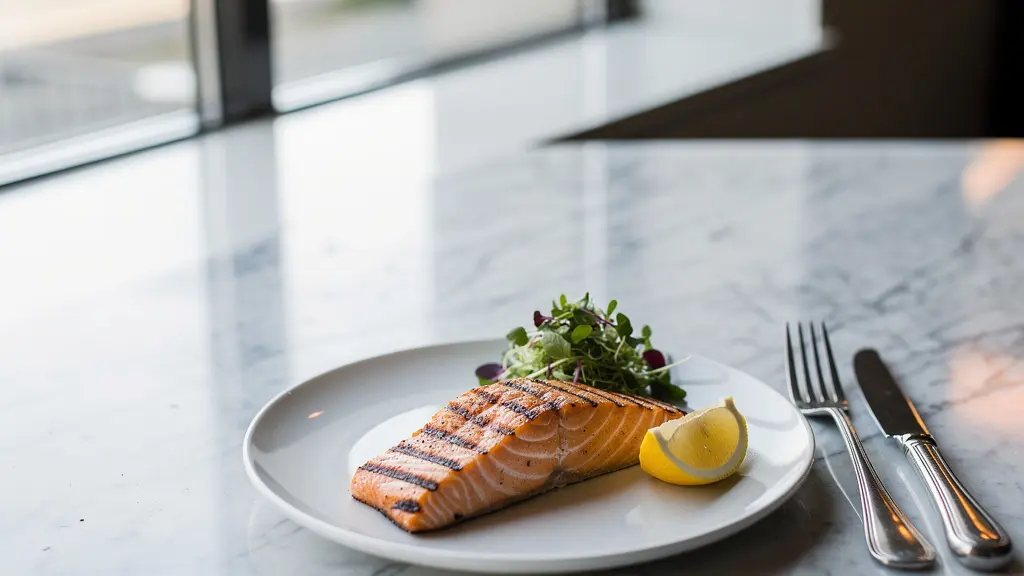
This minimalist presentation of grilled fish exemplifies the principle of clean eating. The focus is on the quality of the ingredient itself, not on masking it with heavy breading or sauces. When you scan a menu, your eyes should immediately seek out keywords like “grilled,” “steamed,” “broiled,” “roasted,” or “poached.” Conversely, be wary of “crispy,” “battered,” “breaded,” “creamy,” or “pan-fried.” The following table illustrates the dramatic difference in caloric impact based on cooking method.
| Cooking Method | Fat Content | Calorie Impact | Best For |
|---|---|---|---|
| Grilled | Minimal added fat | Lowest calorie option | Chicken, fish, lean cuts |
| Broiled | No added fat needed | Similar to grilled | Steaks, fish fillets |
| Pan-seared | Moderate oil use | +50-100 calories | Salmon, tuna steaks |
| Deep-fried | High oil absorption | +200-400 calories | Avoid when possible |
The “liquid calorie” mistake that undoes a week of training
You’ve navigated the menu perfectly: dressing on the side, grilled protein, and a double portion of vegetables. Then comes the culinary gambit that undoes it all: the beverage. Sugary sodas, sweetened iced teas, and especially alcoholic drinks are the most common form of dietary self-sabotage. These “liquid calories” are particularly insidious because they provide little to no satiety, meaning they add to your caloric total without making you feel full. A single cocktail or glass of wine can contain 150-300 calories, the equivalent of a substantial snack.
For a club member focused on performance, the impact of alcohol goes far beyond empty calories. It’s a direct inhibitor of recovery and muscle growth. Post-exercise, your body is primed for muscle protein synthesis (MPS), the process of repairing and building muscle tissue. Alcohol throws a wrench directly into this delicate machinery. A pivotal 2014 study revealed that alcohol consumption reduced muscle protein synthesis by up to 37% when consumed after a workout. This means you are actively preventing your body from reaping the benefits of your training session.
The damage is systemic. Research published in Quality in Sport (2024) provides a clear picture of how alcohol impairs athletic recovery. It disrupts sleep architecture, which is critical for growth hormone release and muscle repair. It has been shown to reduce testosterone levels and increase the stress hormone cortisol, creating a catabolic (muscle-wasting) environment. Furthermore, it directly inhibits the mTOR pathway, a central signaling network that triggers muscle growth. An evening of social drinking can effectively negate several days of hard work in the gym.
The most intelligent choice is sparkling water with a lime or an unsweetened iced tea. If you do choose to have an alcoholic beverage, consider it your primary source of carbohydrates or fat for the meal and opt for a clean choice like a light beer or a simple spirit with a zero-calorie mixer. Limit it to one, and never consume it immediately after a heavy training session.
When to eat the burger: Timing your cheat meal for metabolic recovery?
The concept of a “cheat meal” is often misunderstood. It’s not a moral failing or a complete abandonment of your goals. When planned correctly, a higher-calorie, more indulgent meal can be a powerful tool for metabolic leverage. It can replenish glycogen stores, provide a psychological break from strict eating, and even give your metabolism a temporary boost. The question isn’t *if* you should have the burger, but *when* and *how*. The timing is everything.
The ideal window for this strategic indulgence is within a few hours following your most intense training session of the week, typically a heavy resistance workout. During this post-workout period, your muscle cells are highly sensitive to insulin and are primed to absorb nutrients—particularly carbohydrates and protein—to refuel and repair. This process is known as nutrient partitioning. Consuming a calorie-dense meal during this window encourages those calories to be shuttled toward muscle glycogen replenishment and tissue repair, rather than being stored as body fat.
Therefore, scheduling your restaurant outing for the evening of a heavy leg day is far more strategic than having it on a rest day. You are essentially using the physiological state created by your workout to your metabolic advantage. To further optimize this, a small, protein-rich snack a couple of hours before the big meal can help stabilize blood sugar and prevent you from arriving at the restaurant ravenously hungry, which often leads to poor choices.
Your Action Plan: Strategic Timing for an Indulgent Meal
- Schedule your restaurant meal within 2-3 hours after your most intense training session of the week.
- Eat a small protein and complex carb snack (e.g., Greek yogurt) about 2-3 hours before dining to stabilize blood sugar.
- Choose a training day, not a rest day, for your higher-calorie restaurant meal to support recovery and glycogen replenishment.
- Take a brisk 15-minute walk after the meal to aid digestion and improve your body’s glucose uptake.
- Plan for a breakfast rich in protein and fiber the following morning to get back on track and support satiety.
Why eating too little kills your metabolism and performance?
One of the most common and counterproductive mistakes people make is drastically under-eating or skipping meals in anticipation of a big dinner out. The logic seems sound: save up calories for the main event. In reality, this strategy almost always backfires, both metabolically and behaviorally. Arriving at a restaurant in a state of extreme hunger is a recipe for disaster. Your willpower is at its lowest, and your body’s primal drive for high-calorie, energy-dense food is at its peak. You’re far more likely to over-indulge in the bread basket and order the richest, heaviest item on the menu.
Metabolically, this boom-and-bust cycle sends confusing signals to your body. Chronic under-eating or meal skipping can lead to metabolic adaptation, where your body slows down its resting metabolic rate to conserve energy. This makes it harder to lose fat in the long run. When you finally do consume that large meal, your body, sensing a period of famine has ended, is more inclined to store a larger portion of those calories as fat in preparation for the next “famine.” Given that one-third of all calories consumed by Americans now come from food prepared away from home, breaking this cycle is crucial for long-term health.
Case Study: The Restrict-Binge Cycle
Registered Dietitian Emily Field details the case of a client named Amber, an avid gym-goer who was terrified of restaurant meals. Amber would consistently skip lunch on days she planned to dine out. She would arrive at the restaurant ravenous, lose control, and consume far more calories than she would have during a normal day of eating. This led to feelings of guilt and a vicious restrict-binge cycle that sabotaged her fitness goals. The solution was strategic: implementing a balanced pre-meal snack with protein and fiber. This stabilized her blood sugar, curbed her extreme hunger, and allowed her to make mindful, controlled choices at dinner, ultimately breaking the cycle and enabling her to enjoy social dining without derailing her progress.
The intelligent approach is to eat your normal, balanced meals throughout the day. A small, protein-and-fiber-rich snack an hour or two before you leave for the restaurant is an excellent strategy. This ensures you arrive satisfied and in control, ready to make a calm, rational decision from the menu rather than a desperate, hunger-driven one.
Why eating complex carbs 3 hours before is better than 1 hour before?
The principle of nutrient timing extends beyond just your post-workout window; it’s also a critical tool for managing hunger and energy levels before a meal out. The type of carbohydrate you consume and when you consume it can significantly influence your choices at the restaurant. The goal is to arrive feeling stable and satiated, not to be on a blood sugar rollercoaster. This is where the distinction between complex and simple carbohydrates becomes paramount.
Simple carbohydrates, like those in white bread, sugary snacks, or even some fruits, are digested quickly. They cause a rapid spike in blood sugar and insulin, which is often followed by a “crash” that leaves you feeling hungry and lethargic soon after. Consuming these an hour before dinner is a poor strategy, as you’re likely to be hungry again by the time you order.
In contrast, complex carbohydrates—found in foods like oats, sweet potatoes, quinoa, and whole grains—are digested slowly. They provide a gradual, sustained release of energy and promote a longer feeling of fullness. Eating a small, balanced snack containing complex carbs (paired with protein) about 2-3 hours before you dine out is an expert-level move. This gives your body ample time to digest, stabilizing your blood sugar and ensuring you arrive at the restaurant feeling calm, clear-headed, and in complete control of your appetite.
Understanding which menu items fall into which category is a core component of culinary intelligence. The table below provides a simple guide for identifying these carbohydrates when you’re looking at a menu.
| Carb Type | Menu Examples | Glycemic Impact | Best Timing |
|---|---|---|---|
| Complex Carbs | Quinoa, sweet potato, whole grain bread | Slow, sustained energy | 2-3 hours pre-meal |
| Simple Carbs | White rice, bread basket, pasta | Quick spike and crash | Post-workout only |
| Mixed Options | Brown rice bowls, whole wheat wraps | Moderate release | Flexible timing |
Key Takeaways
- The greatest caloric impact often comes from hidden sources like sauces, dressings, and beverages, not the main ingredient.
- Strategic timing is crucial: align indulgent meals with intense training days and use complex carbs to manage hunger beforehand.
- Polite, specific requests for healthy swaps (e.g., grilled instead of fried, vegetables instead of fries) are a sign of a savvy diner and are usually welcomed.
Macronutrient Cycling: How to Eat for Heavy Training vs. Rest Days?
The ultimate expression of culinary intelligence is to stop thinking about food in terms of single “good” or “bad” meals and start viewing your nutrition through the lens of a weekly cycle. Your body’s needs are not static; they fluctuate dramatically between a heavy training day and a rest day. Applying the principle of macronutrient cycling to your restaurant choices is the final piece of the puzzle.
On a heavy training day, your body’s priority is fuel and repair. This is the time to be more liberal with complex carbohydrates to replenish glycogen stores and to ensure ample protein intake for muscle synthesis. A restaurant meal on this day could feature a lean steak with a side of sweet potato, or grilled salmon with quinoa. The higher caloric load is not just permissible; it’s productive. It’s providing the raw materials your body is actively demanding.
Conversely, a rest day is about maintenance and recovery, with much lower energy demands. Your meals on these days should be focused on protein and healthy fats, with a lower carbohydrate intake. A restaurant meal on a rest day would be an ideal time for a large salad with double grilled chicken and an olive oil-based dressing, or an omelet packed with vegetables. By matching your intake to your output, you keep your body in an optimal state for both performance and body composition.
Look for options that are less than 650 calories and at least 20 grams of protein.
– WeightWatchers Nutrition Team, Tips for Dining Out: How to Eat Healthy & Still Lose Weight
This simple guideline from the WeightWatchers team is an excellent rule of thumb, especially on rest days. It ensures you are prioritizing protein for satiety and muscle maintenance while keeping overall calories in check. Dining out is no longer a random event but a calculated part of your nutritional strategy, tailored to the specific demands of your day.
By embracing these principles, you transform every restaurant visit from a potential setback into a strategic step toward your goals. Start today by viewing your next meal out not as a challenge to be feared, but as an opportunity to apply your newfound culinary intelligence.