
Winning in competitive sports isn’t about having the best move; it’s about making your opponent’s best move worthless.
- The Minimax strategy is not passive defense but an offensive framework for psychologically funneling opponents into high-error situations.
- Consistently calculating the “percentage play” based on expected value statistically outperforms relying on risky, low-probability “hero shots”.
Recommendation: Shift your focus from merely perfecting your own plays to systematically identifying and dismantling your opponent’s most likely responses.
In any competitive arena, you have faced this opponent: physically stronger, faster, more powerful. Yet, you sense a pattern, a rigidity in their thinking. Common wisdom advises you to “focus on your own game” or “execute your strengths.” This is a fundamental misunderstanding of strategy. Against a physically dominant but mentally linear opponent, playing your best game is not enough. You must deconstruct theirs.
The key lies in a concept borrowed from game theory: the Minimax theorem. Most athletes and coaches misinterpret this as a purely defensive, damage-control calculation. They see it as a way to minimize potential losses. This is only half the equation. Its true power, especially for the tactical player, is as an offensive weapon. It’s a method for systematic psychological warfare, designed to exploit the cognitive biases that emerge under pressure.
This is the art of cognitive funneling: actively limiting an opponent’s viable choices until they are left with only bad options. It is about transforming the playing field from a test of physical prowess into a calculated, intellectual trap. Instead of reacting to your opponent, you make them react to a reality you have constructed, one where their go-to patterns become their biggest liabilities.
This guide will deconstruct the Minimax strategy from a theoretical concept into a practical, actionable weapon. We will explore how to identify an opponent’s breaking point, calculate risk versus reward in real-time, and know precisely when to inject chaos to shatter their composure. This is not about playing defense; it’s about dictating the terms of engagement.
The following sections break down this strategic framework, moving from psychological observation to tactical execution. Each part builds on the last, providing a complete system for outthinking, and ultimately outplaying, your rivals.
Summary: A Tactical Guide to Mentally Breaking Your Opponents
- Why opponents repeat patterns under pressure (and how to spot them)?
- How to calculate the “percentage play” vs the “hero shot”?
- Defensive vs. Offensive: Which yields higher ROI against a power hitter?
- The predictability mistake: How being too logical makes you easy to read?
- When to call a timeout to disrupt the opponent’s flow state?
- The positioning mistake that leaves you vulnerable after a drop shot
- When to transition from static precision to live-ball chaos?
- Simulating High-Pressure Match Scenarios to Reduce Game Day Anxiety?
Why opponents repeat patterns under pressure (and how to spot them)?
Under pressure, the human brain seeks cognitive shortcuts. Complex, creative decision-making consumes significant mental energy. When fatigued or stressed, an opponent will default to what is familiar and has worked in the past. This isn’t a sign of weakness; it’s a feature of human psychology. Their most reliable patterns become involuntary reflexes. Your first task is to identify this reflex and then weaponize it.
Spotting these patterns requires active observation. Ignore the outcome of a few points and focus on the decision-making process. Does the tennis player always serve to the same location on a critical point? Does the basketball player always drive to their dominant hand when the shot clock is low? These are not random choices; they are ingrained habits exposed by stress. You must log these occurrences mentally, building a probabilistic model of your opponent. The goal is to move from “what can they do?” to “what are they 90% likely to do in this specific situation?”.
This phenomenon is not just anecdotal; it is a predictable strategic interaction. The objective is to apply enough pressure to force your opponent into this default state, making them predictable. Once you can reliably forecast their next move, you are no longer playing against them; you are playing against their algorithm.
Case Study: MLB Pitcher-Batter Interactions
The strategic duel between a pitcher and a batter in a high-stakes count is a perfect real-world laboratory for Minimax. A batter facing a potential strikeout doesn’t have time to consider every possible pitch type and location. They must anticipate the pitcher’s most likely option. Evidence shows that in these pressure-cooker moments, most MLB players operate according to the Minimax Theorem, choosing the option that minimizes their maximum potential loss (i.e., striking out). A pitcher who understands this can exploit it by throwing the pitch that best counters the batter’s high-probability guess, effectively turning the batter’s safe, logical choice into a trap.
How to calculate the “percentage play” vs the “hero shot”?
Every decision point in a match presents a choice between the “percentage play” and the “hero shot.” The hero shot is the low-probability, high-reward action—the diving catch, the full-court pass, the shot through a triple team. It makes for great highlights but is a statistically losing strategy. The percentage play is the opposite: a high-probability, medium-reward action that, repeated over time, yields a positive return. A tactical player lives and dies by the percentage play.
Calculating this isn’t about complex math; it’s about quickly assessing Expected Value (EV). You must mentally weigh the probability of success against the potential payoff. For any given move, ask yourself: “If I attempt this 10 times, how many times will it succeed, and what do I gain when it does versus what do I lose when it fails?” A shot that has a 20% chance of winning the point outright but an 80% chance of losing it immediately has a negative EV. A shot that has a 70% chance of neutralizing the opponent and resetting the point, even without an immediate win, has a high positive EV.
The smart tactician forces the opponent into situations where all their options have a low expected value. By consistently taking the percentage play yourself, you apply relentless pressure. You are not just waiting for the opponent to make an unforced error; you are mathematically ensuring they will, as they are forced to take increasingly desperate, low-percentage “hero shots” to compete.
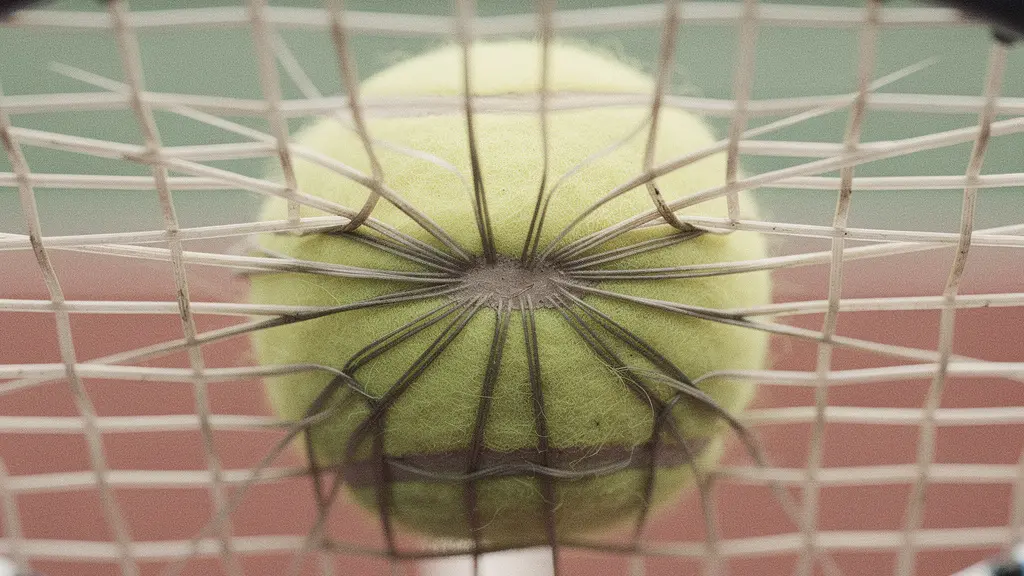
This image captures the critical moment of decision. The deformation of the strings represents the energy being transferred, but the true calculation happens in the player’s mind: choosing the shot angle and speed that offers the highest probability of a positive outcome, not necessarily the most spectacular one. It’s the disciplined execution of the optimal percentage play.
Defensive vs. Offensive: Which yields higher ROI against a power hitter?
When facing a physically dominant opponent, like a power hitter in tennis or a slugger in baseball, the default response is to play defensively. However, this can be a strategic trap. To make the correct choice, you must understand the distinction between two core game theory strategies: Minimax and Maximin. This distinction is critical for determining your return on investment (ROI) against raw power.
As a leading economics resource explains, the two concepts represent different mindsets:
The Minimax strategy aims to minimise the maximum possible loss, while the Maximin strategy involves maximising the minimum gain. Minimax is pessimistic and prepares for the worst case, while Maximin is more optimistic and prepares for the best of the worst cases.
– Vaia Economics, Maximin Strategy in Microeconomics
Against a power hitter, a purely defensive Minimax strategy (minimizing your worst-case scenario, e.g., not getting aced) can allow them to get into a rhythm. They can hit their big shots with confidence because you are only trying to return them. An offensive Maximin strategy (maximizing your minimum gain, e.g., forcing a weak reply) can be more effective. This involves jamming them, hitting at their body, or using awkward angles. It may not produce immediate winners, but it consistently prevents them from deploying their primary weapon, thus raising your baseline payoff for each exchange.
The optimal approach is often a mixed strategy, where you randomize your approach to keep the power hitter off-balance. The key is to analyze the payoff of each strategy type against their specific strengths.
A payoff matrix provides a clear framework for this decision. As this comparative analysis from Brilliant.org shows, different strategies carry different levels of risk and expected outcomes.
| Strategy Type | Against Power Hitter | Expected Payoff | Risk Level |
|---|---|---|---|
| Defensive Minimax | Force second-best shot | Minimize maximum loss | Low risk |
| Offensive Maximin | Jam/body shots | Maximize minimum gain | Medium risk |
| Mixed Strategy | Randomize approach | Equilibrium payoff | Balanced risk |
The predictability mistake: How being too logical makes you easy to read?
The Minimax strategy is built on logic. However, an opponent who also understands game theory can turn your logic against you. If you always choose the mathematically optimal move, you yourself become predictable. This is the predictability threshold: the point where your strategy is so consistent that it becomes transparent. The greatest tacticians know how to play the odds, but they also know when to defy them to maintain an element of surprise.
If you have established a pattern—for example, always hitting a defensive shot to your opponent’s weaker side—a smart adversary will begin to anticipate it. They will start to cheat towards that side, turning your high-percentage play into the setup for their winner. Your logic becomes a liability. To counter this, you must employ a “mixed strategy.” This means deliberately introducing randomness into your decisions.
This doesn’t mean playing recklessly. It means that in certain situations, you must consciously choose the second-best option to keep your opponent guessing. If the optimal play is A (80% probability) and the secondary play is B (60% probability), you should play A most of the time, but intentionally play B occasionally. This prevents the opponent from ever being 100% certain of your intentions. You sacrifice a small amount of optimality on a single point to maintain a much larger strategic advantage over the entire match.
This is not just theory. Studies on elite sports confirm that the best performers utilize mixed strategies to remain unreadable. Analysis of high-level competition shows that tennis serve locations and baseball pitch selections align with Minimax mixed strategy equilibrium. The players are not just guessing; they are randomizing in a calculated way to exploit their opponent’s ability to recognize patterns.
When to call a timeout to disrupt the opponent’s flow state?
An opponent in a flow state is operating on a subconscious, highly efficient level. Their patterns are smooth, their decisions are instantaneous, and they seem to be one step ahead of the game. They are not consciously calculating probabilities; they are feeling them. This is a dangerous state to compete against. A strategic timeout is one of the most effective tools to shatter this rhythm. However, its timing is critical.
Calling a timeout randomly is useless. It must be deployed as a precise surgical instrument. The ideal moment is immediately after your opponent has had a significant success executing their primary pattern. For example, a basketball team’s shooter hits two three-pointers in a row, or a tennis player wins a long, grueling rally with their signature cross-court forehand. At this peak moment of confidence, their brain is flooded with positive reinforcement, hardwiring that successful pattern.
A timeout at this exact juncture does two things. First, it introduces a forced pause, breaking their physiological and psychological momentum. Second, it forces them out of their subconscious “flow” and back into their conscious, analytical brain. It makes them think about what they were just doing so successfully. Often, this act of conscious reflection is enough to disrupt the effortless nature of the flow state. When they return to play, they are no longer just “doing”; they are “trying to do,” which is a far less efficient state. You’ve introduced a seed of self-awareness and doubt, which is often enough to cause a mistake on the very next play.
The positioning mistake that leaves you vulnerable after a drop shot
A specific tactical application of Minimax thinking is court positioning, especially during recovery. After executing a drop shot in tennis or a similar finesse play in other sports, the most common and dangerous mistake is incorrect recovery positioning. Players often retreat directly backward or stand still to admire their shot, leaving them critically vulnerable to the opponent’s counter.
Applying a Minimax mindset means you don’t position yourself based on where your shot landed. You position yourself based on your opponent’s least-bad option. After a successful drop shot, the opponent has a limited set of high-percentage replies. They can either dink it softly cross-court or drive it hard down the line. A lob is a lower-percentage, riskier “hero shot.” Therefore, your recovery path should not be straight back, but diagonally toward the center of the angle created by those two most likely replies. This is your Minimax position: the spot that minimizes your maximum vulnerability, covering both high-probability counters as effectively as possible.
By positioning for your opponent’s best options, you are communicating that you have already calculated their move. This creates immense psychological pressure. You are taking away their “solution” before they even execute it. Many points are won not by the initial drop shot, but by the superior recovery positioning that smothers the opponent’s reply and forces an error on their next shot.

As seen from this high angle, the player’s shadow indicates their recovery path. A poor recovery is a straight line back. The optimal recovery path is a curve towards the geometric center of the opponent’s likely return angles, cutting off their options and demonstrating superior strategic foresight.
Key takeaways
- Force Predictability: Use pressure to make opponents revert to simple, readable patterns, turning their comfort zone into a trap.
- Calculate Expected Value: Consistently prioritize high-probability “percentage plays” over low-probability “hero shots” to win the statistical battle.
- Break the Logic: Once you’ve established a pattern and the opponent adapts, inject calculated chaos to shatter their mental model of you.
When to transition from static precision to live-ball chaos?
Establishing a predictable, logical pattern is the first step of the Minimax gambit. You lull your opponent into a rhythm. You hit your spots with machinelike precision. Your opponent adapts, gets comfortable, and starts to anticipate your “logical” moves. This is exactly where you want them. The moment you spot their adaptation—their movement becoming more efficient but less varied—is the moment to trigger the transition from precision to chaos.
Chaos injection is the deliberate and sudden introduction of a high-variance, unpredictable play designed to shatter the opponent’s mental model. It’s not about making a mistake; it’s about making a move that doesn’t compute with the game you’ve been playing for the last 10 minutes. This could be an unexpected serve-and-volley, a wild scramble that extends a point that should have been over, or a shot to an illogical, low-percentage target. The goal is not necessarily to win the point with that single move.
The true objective is to force a system reset in your opponent’s brain. They have built a predictive algorithm for you, and you have just fed it a piece of data that breaks the entire model. The resulting confusion and hesitation will persist for several points afterward. During this window of adaptation stress, they are highly susceptible to errors. Once you see them recalibrating, you can return to your precise, high-percentage game, having successfully used chaos as a temporary, devastating weapon.
Action Plan: Chaos Injection Framework
- Establish a predictable precision pattern for 3-5 points to condition the opponent.
- Identify opponent rigidity signals, such as reduced movement variation or predictable positioning.
- Execute a sudden tempo change with an unexpected scramble or radical angle variation.
- Focus on presenting the most awkward possible next shot for your opponent rather than perfect placement.
- Return to precision play once the opponent shows signs of adaptation stress or makes an error.
Simulating High-Pressure Match Scenarios to Reduce Game Day Anxiety?
The ability to execute these complex cognitive strategies under the extreme pressure of a real match is not an innate talent; it is a trained skill. Game day anxiety often stems from a fear of the unknown and a lack of confidence in one’s decision-making process when it matters most. The most effective way to combat this is through high-fidelity simulation in training.
This means going beyond simple physical drills. You must practice the mental processes of Minimax. Create scenarios in training that replicate the pressure of a real match. Play tie-breakers where every point has a consequence. Set up drills where you are deliberately put in a losing position and must use “percentage plays” to claw your way back. Practice identifying a partner’s patterns and then verbally call them out before they happen. This isn’t just practice; it’s physiological state rehearsal. You are training your nervous system to remain calm and your brain to stay analytical when your heart rate is maxed out.
This type of strategic training is proven to be effective. Studies show that even younger athletes can develop sophisticated strategic thinking through repeated play in controlled environments. One study on zero-sum games found that strategic sophistication in adolescents was consistent with adult populations, and this skill was developed through the process of repeated play and adaptation, not just raw cognitive ability. By simulating these scenarios, you build a library of solved problems in your mind, reducing anxiety because you’ve “been there before.”
Ultimately, the goal is to make strategic thinking as much of a reflex as your physical technique. The pressure of the match becomes just another variable in your calculation, not a source of panic.
Stop training just your physical movements; start training your decision-making process. The first step is to analyze your next opponent not for their strengths, but for the predictable patterns they reveal under pressure. Begin your Minimax gambit today.