
The key to a faster serve isn’t adding crude weight; it’s precisely engineering your racket’s dynamic properties to amplify your unique biomechanics.
- Static weight is a misleading metric; swing weight dictates how a racket accelerates and transfers momentum.
- Strategic lead tape placement and grip selection alter the racket’s inertial profile for stability and feel.
- Incorrect modifications can degrade performance and cause injury like tennis elbow within weeks.
Recommendation: Begin by establishing a precise baseline of your current racket’s specifications—static weight, balance point, and swing weight—before making any adjustments.
For the intermediate player, hitting a performance plateau is a common point of frustration. Your technique is solid, but the “off-the-shelf” racket in your hand feels like a limiting factor, unable to translate your physical effort into the explosive serve speed you see at higher levels. The conventional wisdom often suggests simplistic solutions: add some lead tape, or switch to a heavier frame. While not entirely wrong, this advice misses the fundamental principle that governs power and control: a tennis racket is not a blunt instrument, but a complex dynamic system.
The difference between a stock racket and a professionally tuned one is the difference between an approximation and a precision instrument. The true source of power isn’t raw static weight, but the meticulous manipulation of its dynamic properties—swing weight, balance, twistweight, and stiffness. These factors determine how the racket behaves *in motion*, interacting with the kinetic chain of your body to either amplify or inhibit force generation. Thinking you can increase serve speed by just making a racket heavier is like thinking you can make a car faster by just bolting on metal plates.
But what if the path to unlocking that extra 10 MPH on your serve wasn’t about adding more, but about adding smarter? This guide abandons platitudes and adopts the mindset of a racket technician. We will dissect the physical properties of your equipment, demonstrating how to measure, modify, and tune each component. We will explore how to re-engineer your racket’s DNA to create an optimized system that works in concert with your swing, transforming it into a true extension of your athletic intent.
This article provides a systematic approach to racket customization, from foundational physics to advanced diagnostics. The following sections detail the precise steps and critical knowledge needed to transform your equipment from a factory product into a personalized performance tool.
Table of Contents: A Technician’s Guide to Racket Performance Tuning
- Why two rackets with the same static weight feel completely different?
- How to apply lead tape at 3 and 9 o’clock for stability?
- Leather vs. Synthetic: Which grip conveys better feedback to the hand?
- The modification error that causes tennis elbow within 2 weeks
- When to lower your string tension for winter play?
- Gut vs. Polyester: Which string setup allows for better short game touch?
- Why 60fps is useless for analyzing racket head speed?
- Why High-Speed Footage is Essential for Fixing Serve Mechanics?
Why two rackets with the same static weight feel completely different?
The most common misconception among players is equating static weight—the number on a scale—with a racket’s power potential or feel. The reality is dictated by swing weight, which is a measurement of how heavy a racket feels when swung. It accounts for mass and how that mass is distributed along the length of the frame. A higher swing weight indicates more mass is located towards the racket’s tip, creating a higher moment of inertia. This is why a 300g head-heavy racket will feel far more sluggish and powerful than a 300g head-light racket.
This increased inertia allows the racket to resist twisting on off-center hits (providing stability) and plow through the ball with more momentum. However, this comes at a direct cost to maneuverability and racket head speed. Your ability to generate pace is a function of accelerating the frame through contact; if the swing weight is too high for your biomechanics, you won’t be able to generate the necessary speed. In fact, research from a biomechanics study shows a 27% reduction in swing speed when swing weight is excessively increased. The goal is to find the highest swing weight you can comfortably accelerate to maximize both stability and velocity.
Understanding your racket’s complete dynamic profile is the first step in effective customization. Generic marketing terms are insufficient; precise measurement is required. Before making any changes, you must establish a baseline of your equipment’s true specifications.
Action Plan: The Trinity Check for Your Racket’s Real Feel
- Measure static weight using a kitchen scale accurate to 1 gram to get your baseline mass.
- Find the balance point using a ruler and a pivot point; this tells you where the mass is centered.
- Calculate or measure swing weight using a dedicated machine (like a Babolat RDC) at a pro shop to understand its in-motion feel.
- Test twistweight by deliberately hitting off-center shots at the 3 and 9 o’clock positions to feel the frame’s torsional stability.
- Document all measurements to create a complete and accurate profile of your racket before modification.
How to apply lead tape at 3 and 9 o’clock for stability?
Once you have your racket’s baseline profile, lead tape becomes your primary tool for surgical modification. While tape can be placed anywhere, applying it at the 3 and 9 o’clock positions on the hoop is the most effective method for increasing torsional stability without drastically compromising maneuverability. When you strike the ball off-center, the racket head wants to twist in your hand, leading to a loss of power and control. By adding mass to the extreme sides of the frame, you increase the racket’s “twistweight,” or its resistance to this twisting motion.
This placement creates a wider, more forgiving sweet spot and a more solid feel on impact, especially on service returns and volleys. The application process must be precise. Start with small increments, such as two 2-gram strips (one on each side). Cut the strips to fit inside the hoop to protect them from abrasion. Ensure they are placed symmetrically to maintain the racket’s balance. After application, shadow swing the racket to feel the change, then test it on court to evaluate the impact on your swing speed and control.
The illustration below shows the precise positioning of lead tape for maximizing this stabilizing effect. Note how the tape conforms to the inner curve of the frame.
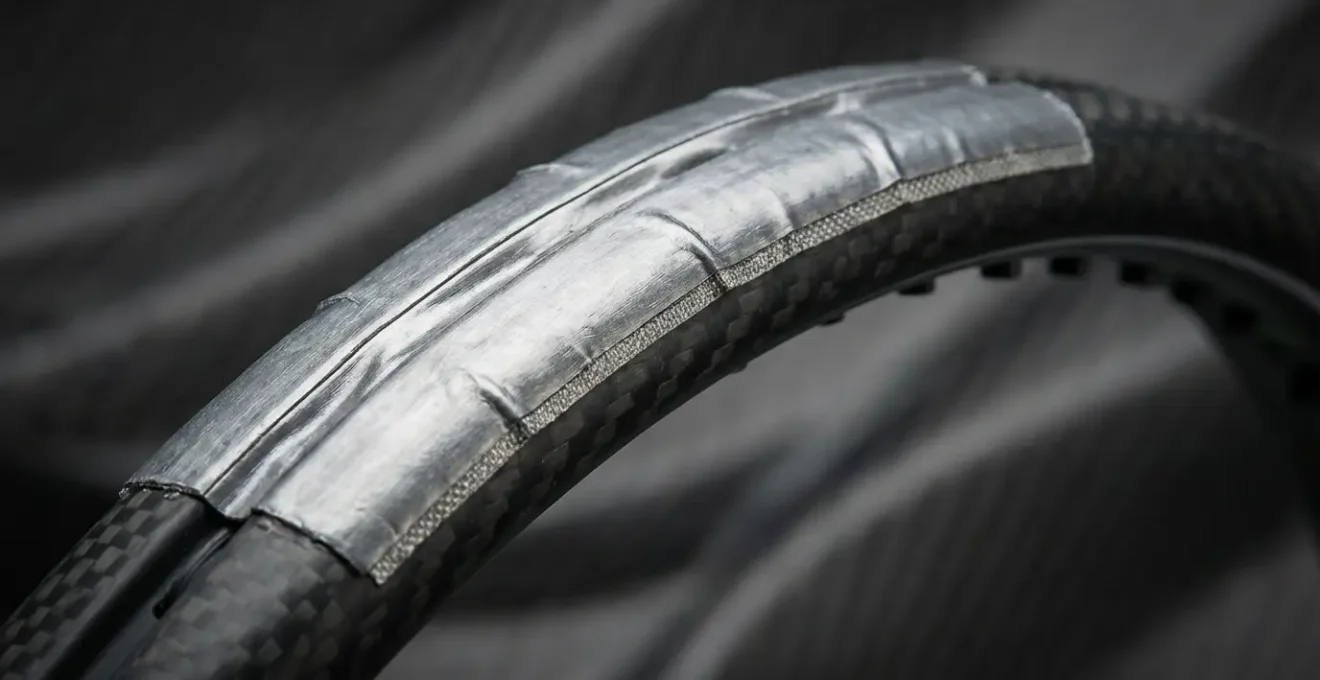
As the visual demonstrates, the goal is a clean, secure application. The choice of where to add weight is a game of trade-offs. Placing weight at 3 and 9 o’clock provides the greatest stability gain for a moderate increase in swing weight, making it the optimal starting point for most players seeking a more solid feel.
This table outlines the effects of adding 4 grams of weight at different locations, confirming the unique benefit of the 3 and 9 o’clock placement for stability. An analysis of customization options provides clear data on these trade-offs.
| Placement Location | Swingweight Increase | Stability Gain | Maneuverability Impact |
|---|---|---|---|
| 12 o’clock (2g) | +10 points | Moderate | High reduction |
| 3 & 9 o’clock (2g each) | +6-8 points | Maximum | Moderate reduction |
| Throat area (4g) | +2-3 points | Minimal | Minimal impact |
| Handle (5g) | +1-2 points | None | Slight improvement |
Leather vs. Synthetic: Which grip conveys better feedback to the hand?
Modifying the racket head is only half of the equation. The handle is your only interface with the racket system, and the grip material directly influences the quality of information your hand receives. For pure, unfiltered haptic feedback, a leather grip is mechanically superior to a synthetic one. Leather is denser, firmer, and less porous than the cushioned polyurethane (PU) used in most stock synthetic grips. This density transmits vibrations and impact forces more directly to the palm, giving a player a much clearer sensation of the ball on the strings.
This unfiltered feedback allows for more precise adjustments during a shot, especially on serves where subtle changes in wrist pronation and grip pressure are critical. You can feel the racket’s orientation and the ball’s contact point with greater acuity. The trade-off is comfort; leather offers minimal cushioning and can be harsh for players sensitive to vibration. It’s also heavier than its synthetic counterpart, which must be factored into the racket’s overall balance and swing weight calculation.
Case Study: Professional Player Grip Customization
Analysis of ATP and WTA player setups reveals that many professionals, including Novak Djokovic, use a hybrid approach. They install a base leather grip, which can be 15-20 grams heavier than a standard synthetic grip, to achieve that dense, direct feedback. They then wrap a very thin synthetic overgrip on top. This method provides the best of both worlds: the dense haptic feedback of leather for maximum proprioception and feel, combined with the moisture absorption and slight tackiness of the overgrip for secure handling.
For an intermediate player looking to enhance their connection to the racket, switching to a leather base grip is a significant upgrade. It sharpens your sense of touch and forces you to rely on clean technique rather than the dampening effect of a cushioned grip, ultimately leading to better mechanics and control of the racket’s finely-tuned mass.
The modification error that causes tennis elbow within 2 weeks
While racket customization can unlock performance, improper modification is a fast track to injury, most notably lateral epicondylitis, or “tennis elbow.” The single most common error is a drastic, imbalanced increase in swing weight. A player, chasing power, might add 10-15 grams of lead tape to the racket head in one go. This dramatically alters the racket’s inertial properties and forces the muscular-skeletal system to cope with unfamiliar forces. The forearm muscles, responsible for stabilizing the wrist at impact, become overloaded, leading to micro-tears and inflammation at the elbow tendon.
The goal of customization is to achieve biomechanical efficiency, not to simply make the racket heavier. Any change must be gradual and balanced. Adding weight to the head must often be counter-balanced with weight in the handle to maintain a familiar balance point, preventing the racket from feeling uncontrollably sluggish. A sudden increase in swing weight can disrupt the kinetic chain. A biomechanics study of elite adolescent players found that even a 10% increase in swing weight caused a significant decrease in shoulder internal rotation velocity, indicating the body is struggling to manage the new mass.
A safe customization protocol is non-negotiable. It involves incremental changes, rigorous testing, and listening to your body’s feedback. Ignoring these principles in a quest for instant power is the most reliable way to end up sidelined with a preventable injury.
- Never increase swingweight by more than 5% in a single modification.
- Always consider adding proportional weight to the handle to maintain the racket’s balance point.
- Test all modifications for at least 30-60 minutes of practice before using them in a match.
- Monitor for any early warning signs: unusual forearm fatigue, tenderness near the elbow, or a sudden loss of shot control.
- If you experience discomfort, immediately revert to the previous setup and allow your arm to rest for at least 48 hours.
When to lower your string tension for winter play?
A tuned racket is a sensitive system, and its performance is subject to environmental variables, with temperature being the most significant. As air temperature drops, two things happen: the tennis ball becomes less bouncy, and your racket’s strings become stiffer and lose tension faster. Playing with a high-tension, stiff string bed in cold weather feels harsh, reduces the sweet spot, and can exacerbate arm issues. The ball feels like a rock, and the string bed loses its “pocketing” effect.
To counteract this, a technician’s rule of thumb is to lower string tension as the weather gets colder. This adjustment helps to restore the string bed’s elasticity, providing better ball feel, a larger effective sweet spot, and more depth on your shots. The amount of adjustment depends on the temperature drop and the type of string you use. Polyester strings, which are inherently stiff, are affected most by the cold and require a larger tension drop than more elastic strings like natural gut or multifilaments.
The image below captures the essence of winter tennis, an environment where these technical adjustments become critical for both performance and arm safety.

For a player with a highly customized, high-swingweight racket, these adjustments are even more crucial. The combination of a stiff frame and cold-stiffened strings can be particularly jarring. A proactive tension drop is a necessary part of maintaining the playability and safety of your racket system throughout the year.
The following table, based on common technician guidelines featured in resources like guides from specialists like Tennisnerd, provides a practical framework for adjusting tension based on temperature.
| Temperature Drop | Standard Racket Adjustment | High Swingweight (340+) Adjustment | String Type Factor |
|---|---|---|---|
| 10°F (5°C) | -2 lbs (1 kg) | -1 lb (0.5 kg) | Poly: Full adjustment |
| 20°F (10°C) | -4 lbs (2 kg) | -2 lbs (1 kg) | Hybrid: 75% adjustment |
| 30°F (15°C) | -6 lbs (3 kg) | -3 lbs (1.5 kg) | Natural gut: 50% adjustment |
Gut vs. Polyester: Which string setup allows for better short game touch?
While swing weight and balance define the racket’s chassis, the strings are its engine. For skills that require ultimate feel and touch, such as drop shots and delicate volleys, the material properties of the string are paramount. In this domain, natural gut remains unrivaled due to its unique physical characteristics. Polyester strings are prized for spin and durability because they are stiff and low-powered. Natural gut is the opposite; it is exceptionally elastic and has low dynamic stiffness.
This means it stretches more easily and deeply upon impact, even on low-speed shots. This creates a longer dwell time—the fraction of a second the ball stays on the strings—and a pronounced “pocketing” sensation. This extended contact provides the player’s brain with more sensory data, allowing for superior control over the ball’s trajectory and spin. The world’s leading authority on racket physics, Tennis Warehouse University, describes this phenomenon with clinical precision.
Natural gut has low dynamic stiffness, meaning it deforms easily and deeply even at slow swing speeds, creating a superior ‘pocketing’ sensation that gives the player’s brain milliseconds more to process feedback.
– Tennis Warehouse University, TWU String Performance Testing
Many players mitigate the high cost and lower durability of gut by using it in a hybrid setup, typically with gut in the main strings (for feel and power) and a polyester in the cross strings (for control and spin). Data from tools like the RacquetTune app shows that these hybrid setups maintain optimal stringbed stiffness 40% longer than full polyester beds, offering a more consistent feel over time. For the player customizing their racket system, selecting the right string is as important as balancing the frame’s weight.
Why 60fps is useless for analyzing racket head speed?
After modifying the hardware, the final step is diagnostics: analyzing your swing to see the results. Many players turn to their smartphone’s standard video camera, which typically records at 30 or 60 frames per second (fps). For analyzing a tennis serve—one of the fastest motions in sport—this is functionally useless. The racket head can travel over 100 mph, and the entire impact event, from contact to the ball leaving the strings, lasts only 4-5 milliseconds. At 60fps, your camera is capturing a new frame only every 16.7 milliseconds. This means you will capture, at best, one single, blurry frame of the racket near the contact point. You will completely miss the critical details of racket head angle, pronation of the forearm, and impact location.
It’s like trying to diagnose a car engine’s misfire by taking one picture of it per minute. You see nothing of value. To properly analyze serve mechanics, you need to slow down reality. According to biomechanical analysis standards, a minimum of 240 frames per second is required to capture enough distinct images during the swing to make a meaningful assessment. At 240fps, you capture a frame every 4.1 milliseconds, giving you 1-2 frames during the actual impact and dozens throughout the swing path, allowing for a clear analysis of your technique.
For a truly granular look at complex movements like forearm pronation or string bed deformation, frame rates of 480fps or even higher are ideal. Using a low frame rate not only fails to provide answers but can be misleading, hiding the very mechanical flaws you are trying to identify. To properly diagnose your swing, you must use the correct tool for the job.
- Use a minimum of 240fps for basic serve motion analysis; 480fps is ideal for detailed pronation analysis.
- Position the camera perpendicular to the service motion, at shoulder height, to avoid perspective distortion.
- Ensure consistent, bright lighting to prevent flicker, which is common at high frame rates.
- Place reference markers on the court (such as cones) to help calibrate for distance and height.
- Capture at least 10 serves to identify consistent mechanical patterns versus one-off anomalies.
Key Takeaways
- Racket performance is governed by dynamic properties like swing weight and balance, not just static weight.
- Systematic modification involves precise, incremental changes to weight, balance, and string setup, not drastic additions.
- High-speed video analysis (240fps+) is the only effective way to diagnose the biomechanical flaws that customization aims to correct.
Why High-Speed Footage is Essential for Fixing Serve Mechanics?
The entire process of racket customization—tweaking swing weight, changing grips, selecting strings—is predicated on one goal: creating a tool that better complements your specific biomechanics. However, without an accurate method of diagnosing those mechanics, any modification is just guesswork. This is where high-speed video footage becomes the single most essential tool in a player’s development. It provides objective, undeniable evidence of what your body and racket are actually doing during the serve’s kinetic chain.
Are you pronating too early? Is your wrist snapping instead of rotating smoothly? Is your ball toss position causing you to reach and lose balance? These are questions that cannot be answered by “feel” alone, which is often deceptive. High-speed footage, slowed down and analyzed frame by frame, makes these movements clear. It allows you to freeze the moment of impact and see if the racket face is truly square, or if your customized weight is helping you maintain stability through the hitting zone. It is the ultimate feedback loop.
The evolution of racket technology itself is a testament to this principle. A comprehensive study from Sheffield Hallam University on racket evolution found that serve speeds increased by 17.5% from the wooden era to the modern era, with a significant portion of that gain coming from rackets with optimized weight distribution and lower swing weights that allow for faster acceleration. The pros and their technicians use this data, combined with video analysis, to continually refine their setup. Customization without diagnostics is flying blind; with high-speed footage, you can make informed, data-driven decisions that connect equipment changes directly to on-court results.
Begin the process by establishing an accurate, documented baseline of your current racket’s full specifications. Only then can you start making the intelligent, incremental changes that will build you a faster, more reliable serve.