Play
Competitive play in racquet sports represents far more than the simple act of hitting a ball across a net. It embodies a complex intersection of biomechanics, physiology, psychology, and tactical intelligence. Whether you’re stepping onto clay, hard court, or grass, every element—from the ground beneath your feet to the thoughts running through your mind during match point—influences your performance in measurable ways. Understanding these elements transforms intuitive play into systematic excellence.
This comprehensive exploration examines the foundational pillars that separate recreational participation from competitive mastery. We’ll navigate through the science of surface adaptation, the architecture of intelligent training periodization, the critical importance of realistic competition simulation, the fine-tuning required in the hours before performance, and the strategic frameworks that elevate tactical decision-making. Each dimension contributes to a holistic approach where physical preparation, mental readiness, and strategic acumen converge.
For players seeking to extend their competitive longevity, avoid common training pitfalls, or simply understand why certain preparation methods yield superior results, these principles provide the roadmap. The goal isn’t merely to play more, but to play smarter—building a sustainable foundation that supports both immediate performance and long-term athletic health.
Understanding Court Surfaces and Their Impact on Performance
The playing surface represents your primary interface with the sport, yet many players underestimate its profound influence on everything from joint stress patterns to tactical effectiveness. Each surface category—hard court, clay, grass, and synthetic variations—creates distinct biomechanical demands that require specific adaptations.
Surface Reaction Forces and Movement Adaptation
When your foot contacts the playing surface, ground reaction forces travel through your kinetic chain, affecting everything from ankle stability to shoulder mechanics. Hard courts generate higher impact forces but provide consistent bounce characteristics. Clay surfaces absorb more energy, reducing acute impact but demanding longer sliding recoveries that stress different muscle groups. Grass creates the lowest friction coefficient, requiring rapid directional changes with minimal warning.
Adapting your movement patterns means more than simply “adjusting your game.” It requires neuromuscular reprogramming—teaching your body to anticipate different deceleration demands, modify your split-step timing, and adjust your weight transfer mechanics. Players who fail to make these adaptations face significantly elevated injury risk, particularly during surface transitions.
Surface-Specific Injury Prevention and Transition Timing
The most common mistake involves abrupt transitions without adequate preparation. Research consistently demonstrates that players need between 7 to 14 days of surface-specific exposure to fully adapt their movement patterns and reduce injury risk. This timeline isn’t arbitrary—it reflects the period required for proprioceptive recalibration and the strengthening of surface-specific stabilizer muscles.
For older players particularly, surface selection becomes a longevity strategy. Clay’s force-absorption properties make it notably more forgiving on joints over decades of play, while hard courts, despite their consistency, accumulate more cumulative stress on cartilage and connective tissue. Understanding these trade-offs allows for informed decisions about training surface allocation throughout different career phases.
Periodization and Long-Term Training Architecture
The single greatest training error across all competitive levels is the absence of systematic periodization—the strategic manipulation of training volume, intensity, and focus across time. Many players operate in a perpetual state of moderate effort, never reaching true peak performance while accumulating chronic fatigue.
Managing Volume and Intensity Over Multi-Month Periods
Effective periodization follows a fundamental principle: you cannot simultaneously maximize all physical qualities. Attempting to improve power, endurance, technical precision, and tactical complexity concurrently leads to mediocre results across all domains. Instead, intelligent training architecture involves priority shifting—dedicating specific blocks to particular adaptations.
A typical competitive season might include:
- Base phase: Higher volume, lower intensity, emphasis on aerobic foundation and movement quality
- Build phase: Moderate volume, progressive intensity increases, sport-specific conditioning
- Competition phase: Reduced volume, maintained intensity, sharpness and tactical focus
- Transition phase: Active recovery, movement variety, psychological regeneration
Maintenance Physiology and Micro-Dosing Training
During competitive periods, the goal shifts from building new adaptations to maintaining existing capabilities while managing fatigue. This requires micro-dosing—delivering the minimum effective stimulus to preserve qualities without inducing additional stress. A physical quality that took eight weeks to develop might require only 20-30% of that training volume to maintain.
The “play-only” mistake becomes particularly costly here. Players who abandon structured training entirely during competition seasons experience measurable declines in qualities like maximum speed, power output, and movement efficiency. Conversely, those who maintain intelligent supplementary work—even in minimal doses—sustain their physical platform throughout demanding competitive schedules.
Tapering and Post-Season Transition
The taper represents the final preparation phase before major competition, typically lasting 7 to 21 days depending on the event’s importance and the athlete’s accumulated fatigue. Effective tapering reduces training volume by 40-60% while maintaining intensity, allowing physiological supercompensation and psychological freshness.
Equally critical is the post-season transition—a planned period of reduced structure that prevents burnout and allows both physical and mental recovery. This phase isn’t about complete inactivity but rather movement diversity, reduced competitive pressure, and psychological restoration. Skipping this transition accelerates burnout and increases injury risk in subsequent seasons.
The Simulation Principle: Bridging Practice and Competition
Perhaps no training concept is more misunderstood than competition simulation. The gap between practice performance and competitive execution often stems from inadequate exposure to the psychological and physiological demands unique to competitive environments. Training that fails to replicate these stressors produces “gym heroes”—players who perform brilliantly in practice but underdeliver when stakes increase.
Effective simulation extends beyond simply “playing practice matches.” It requires systematically recreating the environmental variables, decision-making pressure, and physiological arousal states present in actual competition. This might include practicing with spectators present, implementing consequences for errors, or deliberately training during times when fatigue mirrors late-match states.
The physiology of pressure manifests through elevated heart rate, altered breathing patterns, increased muscle tension, and modified perceptual processing. Players who never experience these states in training lack the familiarity to maintain technical execution when they occur in competition. Progressive exposure—gradually increasing simulation intensity—builds the psychological resilience necessary for consistent performance under stress.
Creating realistic simulations requires attention to specific environmental variables: court surface, lighting conditions, temperature, background noise, and even the time of day. Research demonstrates that performance decrements often result not from lack of skill but from context-dependent learning—your nervous system becomes optimized for practice conditions that differ substantially from competitive reality.
Pre-Competition Optimization Protocols
The final 24 hours before significant competition require meticulous attention to details that, while individually small, collectively determine your readiness state. This period isn’t about last-minute improvements but rather eliminating variables that could compromise your existing preparation.
Digestive timing becomes critical, as gastrointestinal distress represents one of the most common performance impediments. Your final substantial meal should occur 12-16 hours before competition, allowing complete digestion while maintaining glycogen stores. Pre-competition meals should emphasize familiar foods with minimal fiber, moderate protein, and easily digestible carbohydrates.
Warm-up sequencing follows a specific progression: general movement to elevate core temperature, dynamic stretching to optimize range of motion, sport-specific movement patterns to activate neuromuscular pathways, and finally intensity progression to reach competitive readiness. This sequence typically requires 20-35 minutes, with individual variations based on age, injury history, and personal preference.
Caffeine strategy deserves particular attention. When used strategically, caffeine enhances reaction time, decision-making speed, and fatigue resistance. However, timing matters significantly—consumption approximately 45-60 minutes before competition optimizes blood concentration during play. Habitual users should maintain their normal intake to avoid withdrawal symptoms, while occasional users should practice with caffeine before implementing it in competition.
Sleep anxiety frequently undermines pre-competition rest, creating a self-reinforcing cycle where worry about sleep prevents actual sleep. Understanding that one night of reduced sleep has minimal impact on physical performance (though potentially affecting mood and decision-making) often reduces this anxiety. The nights occurring two and three days before competition actually matter more for physiological readiness.
Equipment checks, while seemingly mundane, prevent the psychological disruption of equipment failures during competition. This includes verifying string tension, grip condition, shoe tread, and ensuring backup equipment is readily available. The mental cost of equipment concerns during competition far exceeds the time invested in thorough preparation.
Strategic Intelligence and In-Game Decision Making
Tactical mastery separates players of similar physical capabilities. While technical execution provides the tools, strategic logic determines when and how those tools are deployed. Superior decision-making often matters more than superior shot-making.
Predictive modeling represents the cognitive skill of reading patterns in your opponent’s behavior—serve placement tendencies under pressure, preferred rally structures, movement limitations, and tactical preferences in specific score situations. Developing this skill requires deliberate attention during competition, mentally cataloging patterns rather than reacting instinctively to each individual shot.
Shot selection mathematics involves understanding risk-reward ratios in different game situations. A low-percentage aggressive shot might be mathematically optimal at 30-0 but disastrous at 15-40. Players with superior strategic intelligence continuously calculate these probabilities, adjusting their tactical aggression based on score context, momentum direction, and their own confidence state.
The pattern trap occurs when players become predictable in their tactical sequences, allowing opponents to anticipate and neutralize their preferred structures. Strategy evolution requires continuously introducing variation—changing serve patterns, altering approach shot selection, or modifying defensive positioning. This variation prevents opponents from settling into comfortable defensive rhythms.
Momentum management acknowledges the psychological reality that confidence states influence execution quality. When momentum shifts against you, the optimal response often involves simplifying your tactics, reducing unforced errors, and extending rally length—disrupting your opponent’s rhythm rather than attempting low-percentage winners. Conversely, capitalizing on positive momentum means maintaining tactical aggression while your opponent experiences doubt.
Integrating these performance dimensions—surface awareness, periodized training, competition simulation, pre-match protocols, and strategic intelligence—creates a comprehensive approach to competitive play. Each element reinforces the others, building a foundation where preparation meets opportunity. The players who consistently perform at their capability ceiling aren’t necessarily the most talented, but rather those who systematically address each component of the performance equation. Excellence in competitive play emerges not from singular focus but from the intelligent orchestration of multiple preparatory domains.
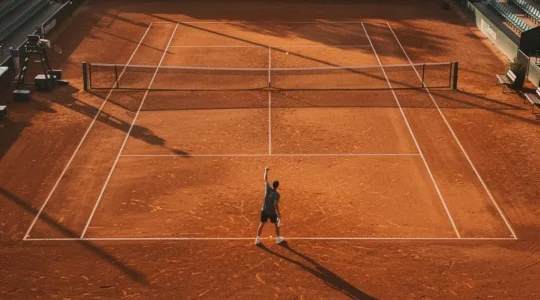
How to Use Minimax Strategy to Systematically Exploit an Opponent’s Weaknesses
Winning in competitive sports isn’t about having the best move; it’s about making your opponent’s best move worthless. The Minimax strategy is not passive defense but an offensive framework for psychologically funneling opponents into high-error situations. Consistently calculating the “percentage…
Read more
The 24-Hour Protocol: What to Eat and Do Before a Major Final?
Winning the final 24 hours before a major competition is not about motivation, but about precise, non-negotiable execution of a timed protocol. Optimal performance hinges on timing: eating complex carbs 3-4 hours out prevents both digestive distress and energy crashes….
Read more
How to Adjust Training Volume During a 3-Month Competitive Season?
In summary: Stop all strength training and you’ll see significant performance drops in just two weeks; the key is not cessation, but strategic reduction. Maintain your hard-earned strength and muscle with as little as one-ninth of your original training volume,…
Read more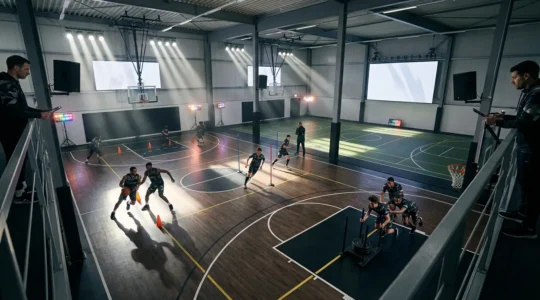
How to Simulate High-Pressure Match Scenarios and Eliminate Game Day Anxiety
Contrary to popular advice, the key to overcoming competition anxiety isn’t to calm down—it’s to systematically expose yourself to that exact pressure in training until it becomes normal. Your body’s stress response in a match is a physiological reality that…
Read more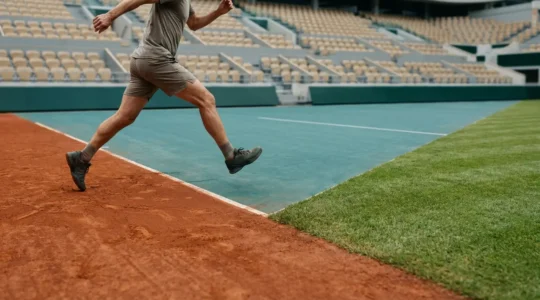
A Surgeon’s Analysis: Which Tennis Surface Truly Protects Your Knees After 40?
For the veteran player, choosing a court surface is not about finding a “safe” option, but about understanding and managing specific biomechanical risks. Clay courts statistically offer the lowest injury rates but require mastering specific sliding techniques to prevent muscle…
Read more