
Winning the final 24 hours before a major competition is not about motivation, but about precise, non-negotiable execution of a timed protocol.
- Optimal performance hinges on timing: eating complex carbs 3-4 hours out prevents both digestive distress and energy crashes.
- Mental control is a trainable skill, from reframing pre-competition insomnia to implementing a strategic “bag check” ritual that eliminates last-minute panic.
Recommendation: Stop leaving performance to chance. Adopt this structured countdown to transform anxiety into a state of absolute readiness and control.
The final 24 hours before a major competition are a minefield of anxiety. For every ambitious competitor, the fear of making a wrong move—eating the wrong thing, sleeping too little, or training too much—can be as paralyzing as the opponent themselves. Common advice is to “eat well” and “get some rest,” but these generic platitudes offer no comfort when your heart is pounding and your mind is racing. You are told to stay hydrated, but not precisely how fluid intake affects thermoregulation. The real battle, in these crucial hours, is not against your opponent; it’s against uncertainty.
But what if you could replace that uncertainty with a precise, evidence-based script? What if every action, from your last full meal to your final warm-up sprint, was part of a meticulously timed protocol designed to deliver you to the starting line at your absolute physiological and psychological peak? This is not about finding more motivation; it is about establishing unwavering control. The key isn’t simply *what* you do, but *when* and *why* you do it. This protocol is your blueprint for turning pre-competition jitters into a focused weapon.
This guide deconstructs the 24-hour countdown into a sequence of non-negotiable actions. We will cover the exact timing for nutrition to fuel your body without fail, the structure of a warm-up that guarantees peak readiness, the science of managing sleep anxiety, and the strategic mindset that dismantles your opponent before the first whistle. Follow this protocol, and you will not just be prepared; you will be in command.
This article provides a detailed, step-by-step timeline to guide your final day of preparation. Below is a summary of the key phases we will explore to ensure you achieve a state of peak performance.
Summary: The 24-Hour Protocol for Peak Performance
- Why Eating Complex Carbs 3 Hours Before Is Better Than 1 Hour Before?
- How to Structure the 45 Minutes Before Kickoff to Hit Peak Body Temperature?
- Coffee vs. Pills: Which Provides a Stable Kick Without the Jitters?
- The Sleep Mistake: Why Worrying About Insomnia Hurts You More Than the Insomnia Itself
- The “Bag Check” Ritual: What Emergency Items Save You from Forfeit?
- The 3-Day Countdown: When to Stop Hard Sparring Before the Tournament?
- When to Eat the Burger: Timing Your Cheat Meal for Metabolic Recovery?
- How to Use Minimax Strategy to Exploit Opponent Weaknesses?
Why Eating Complex Carbs 3 Hours Before Is Better Than 1 Hour Before?
The single biggest nutrition mistake an athlete makes on game day is poor timing. Eating a large meal one hour before competition is a recipe for disaster, forcing your body to choose between digesting food and fueling muscles. This leads to cramping, sluggishness, and gastrointestinal distress. The key is to top off your glycogen stores without creating a digestive burden. This is achieved by respecting the glycogen window—the 3 to 4-hour period before your event.
Eating complex carbohydrates like pasta, rice, or whole grains 3-4 hours pre-competition allows your body ample time for digestion. This process converts the carbs into glycogen, the high-octane fuel stored in your muscles and liver, ready for explosive use. Eating too close to the event, especially simple sugars, can trigger a rapid spike in insulin, followed by a performance-killing crash right when you need to be at your sharpest. Conversely, high-fat or high-fiber foods should be avoided in this window, as they slow digestion significantly.
This principle is not just theory; it is a cornerstone of elite athletic preparation. As research from Johns Hopkins Medicine highlights, their work with collegiate athletes confirms this strategy’s effectiveness. According to dietitian Rayven Nairn, a protocol that combines carb-loading in the 24-48 hours prior with a well-timed pre-event meal is the definitive method. This approach ensures glycogen stores are maximized while preventing digestive issues that can sabotage performance. The 3-hour mark is the sweet spot where fuel is made available without a metabolic penalty.
By treating your pre-game meal with this level of precision, you eliminate a major variable and build the physiological foundation for success.
How to Structure the 45 Minutes Before Kickoff to Hit Peak Body Temperature?
The 45 minutes before the start of competition are not for “getting loose”; they are for executing a precise warm-up protocol designed to elevate core body temperature and prime the nervous system. A well-structured warm-up increases blood flow, improves muscle elasticity, and sharpens reaction time. The goal is a process called Post-Activation Potentiation (PAP), where a brief, explosive movement potentiates, or “wakes up,” the muscles for maximum power output. A generic jog and a few static stretches will not achieve this.
A professional warm-up is a multi-phase process that systematically builds in intensity. You begin with light cardio to increase circulation, then move to dynamic mobility exercises that take your joints and key muscle groups through their full range of motion. Only then do you progress to sport-specific drills, gradually increasing the speed and intensity to mimic competition demands. The final piece is the PAP trigger: a short, near-maximal effort like a single heavy lift or a short, all-out sprint to achieve peak neural activation.

This structured approach ensures that you arrive at the starting line physiologically optimized. The following five-phase, 45-minute protocol, adapted from performance enhancement guidelines, is a proven framework:
- Phase 1 (0-5 min): Light cardio (jogging, cycling) to increase heart rate and blood flow.
- Phase 2 (5-20 min): Dynamic mobility exercises such as leg swings, torso twists, and walking lunges targeting your sport’s key muscle groups.
- Phase 3 (20-30 min): Sport-specific drills performed at progressively higher intensity.
- Phase 4 (30-35 min): A brief, explosive PAP movement (e.g., a box jump or a short sprint).
- Phase 5 (35-45 min): Active recovery and mental visualization, calming the body while keeping the mind sharp.
This systematic progression leaves you feeling powerful and ready, not fatigued. It’s the difference between starting cold and starting with your engine already at redline.
Coffee vs. Pills: Which Provides a Stable Kick Without the Jitters?
Caffeine is one of the most proven ergogenic aids in sports, enhancing endurance, focus, and power output. However, for the anxious competitor, the fear of “the jitters”—that over-stimulated, shaky feeling—is a major concern. The choice isn’t simply between coffee and caffeine pills; it’s about the dose and, more importantly, the formulation. Coffee’s caffeine content can be notoriously inconsistent, making precise dosing impossible. Caffeine pills offer accuracy, but on their own, they can still provoke anxiety in sensitive individuals.
The optimal dose for performance benefits is generally agreed to be between 3-6 milligrams of caffeine per kilogram of body weight, taken about 60 minutes before competition. But the real secret to a stable, focused kick without the anxiety lies in a powerful combination: caffeine and L-Theanine. L-Theanine is an amino acid found in green tea that promotes a state of calm focus without drowsiness. When paired with caffeine, it smooths out the harsh edges, mitigating the jitters and anxiety while preserving the cognitive and physical benefits.
This isn’t folk wisdom; it’s backed by rigorous science. A groundbreaking 2023 double-blind study on elite curling athletes provides definitive proof. Researchers found that combining 6 mg/kg of caffeine with 6 mg/kg of L-Theanine didn’t just prevent anxiety; it significantly improved both shooting accuracy and cognitive performance compared to caffeine alone. Participants reported feeling focused and alert, but not agitated. This combination is the answer for any athlete who wants the competitive edge of caffeine without the psychological downside.
For the anxious competitor, this strategic supplementation turns a potential source of stress into a reliable tool for enhanced focus and performance.
The Sleep Mistake: Why Worrying About Insomnia Hurts You More Than the Insomnia Itself
One poor night’s sleep has a minimal impact on performance if sleep in the preceding 3-4 nights has been solid.
– Will McAuley, Innervate Performance – How to Peak for Competition
No element of pre-competition preparation causes more anxiety than sleep. The fear of lying awake for hours, tossing and turning, is a self-fulfilling prophecy for many athletes. Here is the critical truth you must internalize: the psychological stress of worrying about not sleeping is far more detrimental to your performance than the actual lack of sleep itself. This is the performance paradox. If you have prioritized sleep in the 3-4 nights leading up to the final, one night of poor sleep will have a negligible effect on your physical output.
The goal is not to force sleep, but to achieve a state of quiet rest. If you find yourself unable to sleep after 20 minutes, get out of bed. Lying there stressing about it only reinforces a negative association between your bed and anxiety. Instead, engage in a non-stimulating activity in very low light, such as reading a boring book or performing light stretches. The objective is to quiet the mind, not to induce unconsciousness. When you feel genuinely sleepy, return to bed.
You can create a “Quiet Rest Protocol” to manage pre-competition insomnia effectively. This isn’t about sleep; it’s about control:
- Practice 4-7-8 Breathing: Inhale through your nose for 4 seconds, hold your breath for 7 seconds, and exhale completely through your mouth for 8 seconds. This calms the nervous system.
- Take a Warm Bath: A warm bath with Epsom salts (magnesium sulfate) about 90 minutes before your desired bedtime can help relax muscles and lower core body temperature, signaling to your body it’s time to rest.
- Consider Magnesium Glycinate: This form of magnesium is known for its calming properties and can aid in achieving a state of rest without the grogginess of sleep aids.
By shifting your focus from “I must sleep” to “I will rest,” you strip the anxiety of its power and give your body and mind the recovery they truly need.
The “Bag Check” Ritual: What Emergency Items Save You from Forfeit?
A competition bag is more than a container for your gear; it is a tool for psychological security. The act of methodically checking its contents is a powerful ritual that eliminates a huge source of last-minute panic and anxiety. Knowing you are prepared for any minor contingency—a broken shoelace, a small cut, a forgotten ID—frees up mental bandwidth to focus exclusively on performance. A disorganized bag is a direct reflection of a disorganized mind.
The most effective approach is to structure your bag in three tiers of importance. Tier 1 contains the non-negotiables: the items that, if forgotten, result in immediate forfeit. This includes your identification, competition license, and essential, regulation-approved gear. Tier 2 is for performance savers: backup equipment, a basic first-aid kit with blister packs, emergency snacks for delays, and extra clothing. Tier 3 is your “sanctuary kit”: items that help you create a personal bubble of focus amidst the chaos, such as noise-canceling headphones, a familiar scent, or a personal good-luck charm.
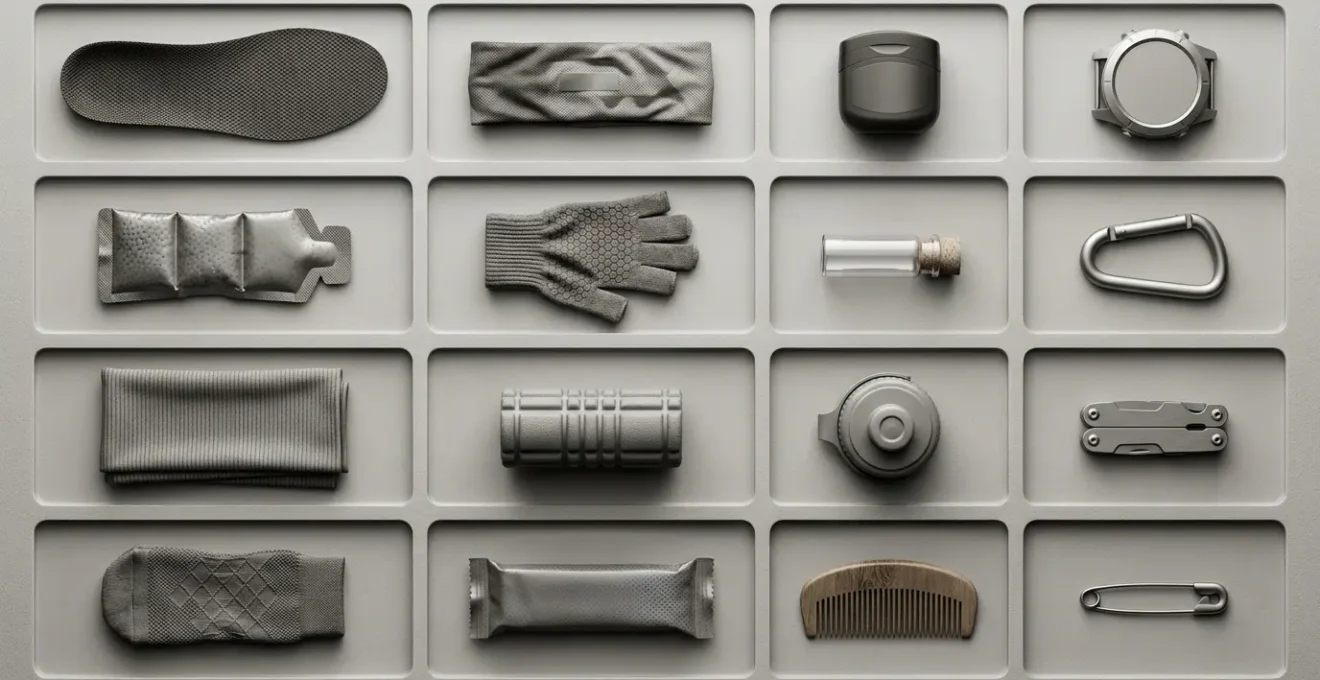
Finally, a crucial and often-overlooked component is your Digital Go-Bag. This involves taking offline screenshots of the venue map, the competition schedule, the rulebook, and key emergency contacts on your phone. In a crowded venue with spotty cell service, this simple preparation can be a lifesaver. This meticulous organization transforms your bag from a simple utility into an anchor of certainty. It’s your statement to yourself that you have controlled every controllable variable.
When you walk into the venue, you carry with you not just equipment, but the profound confidence that comes from being utterly and completely prepared.
The 3-Day Countdown: When to Stop Hard Sparring Before the Tournament?
The final days before a competition are not for building fitness; they are for shedding fatigue to allow for peak performance. This process is known as tapering. The most common mistake athletes make is overtraining in the final week, arriving at the competition tired and with accumulated micro-trauma. For combat sports athletes, this is particularly critical: all hard contact and sparring must cease 5-7 days out. This allows the body sufficient time to heal the small bruises, strains, and inflammation that are an inevitable part of intense training.
The 3-day countdown has a specific purpose each day:
- Day -3: Technical Refinement. Training should be light, no more than 50% intensity. The focus is exclusively on perfect form and reinforcing key movement patterns. You are sharpening the blade, not forging it.
- Day -2: Active Recovery. The goal is to promote blood flow and aid recovery without adding any new training stress. This can include light mobility work, foam rolling, or a short, brisk walk. Intense training on this day is forbidden.
- Day -1: Neural Activation or Total Rest. The day before competition should be either complete rest or a very brief (15-minute) session focused on neural activation. This involves a few light, explosive movements to keep the nervous system “switched on” without causing any muscular fatigue.
This tapering strategy isn’t about laziness; it is a calculated physiological process. Elite endurance athletes who train 30+ hours a week will taper their volume dramatically over one to two weeks to achieve a state of “supercompensation,” where the body has fully recovered and adapted, ready for a peak effort. Reducing volume while maintaining a hint of intensity ensures you arrive at the competition feeling fresh, powerful, and fast.
By respecting this structured deload, you ensure that you are bringing your absolute best, fully-recovered self to the competition, not a depleted version.
When to Eat the Burger: Timing Your Cheat Meal for Metabolic Recovery?
The post-competition “cheat meal” is often seen as a purely psychological reward. While the mental reset is valuable, a strategically timed indulgent meal can have significant physiological benefits. The key is to leverage the unique metabolic state your body is in immediately following intense exertion. After a competition, your muscles are severely depleted of glycogen, and your insulin sensitivity is at its peak. This creates a powerful window for nutrient partitioning.
Nutrient partitioning is the process by which your body decides where to “send” the calories you consume—to muscle cells for repair and refueling, or to fat cells for storage. In the hours following a grueling event, your body is desperate to replenish its muscle glycogen stores. As research with CrossFit competitors at Industry Athletics shows, this heightened insulin sensitivity means a large meal high in carbohydrates and protein is preferentially partitioned toward muscle repair. The calories from that burger and fries are far more likely to be used to rebuild muscle tissue than to be stored as fat.
However, this is not a license for an all-out binge. A “smart” cheat meal follows a framework:
- Time it correctly: It should be the first large meal after your competition ends to take full advantage of the metabolic window.
- Prioritize macros: A combination of protein (for muscle repair) and carbohydrates (for glycogen replenishment) is ideal.
- Limit inhibitors: Minimize excessive trans fats and alcohol, as they can hinder the body’s inflammation control and rehydration processes.
- Maintain protein intake: Ensure your total protein needs for the day are still met, aiming for 20-30g every few hours to support continuous recovery.
This transforms the cheat meal from a simple indulgence into a calculated part of your recovery protocol, kickstarting the repair process for your next training block.
Key Takeaways
- Your pre-competition routine is a system of control; precision in timing (nutrition, warm-up, tapering) is more important than the actions themselves.
- Mental anxiety is a performance variable that can be managed with specific protocols, such as reframing sleep and using rituals like a “bag check” to eliminate uncertainty.
- Strategic thinking extends beyond the physical, using frameworks like the Minimax strategy to dismantle an opponent’s strengths and control the terms of engagement.
How to Use Minimax Strategy to Exploit Opponent Weaknesses?
Preparation extends beyond your own body and mind; it involves a strategic plan to dismantle your opponent. For high-stakes finals or when facing a superior adversary, the most powerful tool is the Minimax strategy. Borrowed from game theory, its goal is simple: to minimize your maximum possible loss. In a sports context, this means identifying your opponent’s single greatest strength—their “A-game”—and structuring your entire game plan around neutralizing that specific weapon.
This approach requires a fundamental shift in thinking. Instead of trying to impose your own strengths, you focus on strategic denial. You force your opponent off their best-laid plans and into their less comfortable B- or C-game scenarios. For example, in wrestling, if an opponent has a dominant takedown, a Minimax strategy would involve maintaining distance, controlling the specific grips they need, and forcing the match into scrambles where their primary weapon is useless. You are not just defending; you are dictating the terms of the engagement by making their best tool irrelevant.
Implementing this requires methodical analysis before the competition. You must become a student of your opponent, breaking down their patterns to find the linchpin of their success. By removing that linchpin, their entire structure can crumble, leaving them frustrated and operating in unfamiliar territory where you hold the advantage.
Your Action Plan: Auditing Your Opponent’s A-Game
- Contact Points: List all game situations and scenarios where your opponent is able to deploy their primary, most effective technique.
- Collection: Gather and inventory specific video examples of them using this “A-game” weapon successfully to understand its mechanics.
- Coherence: Confront the footage with your own strategy, analyzing the specific setup conditions and criteria that must be met for their weapon to be effective.
- Memorability: Pinpoint the unique, critical moment of their technique’s execution versus their other, more generic movements to identify the key moment to disrupt.
- Integration Plan: Develop and prioritize a game plan with specific drills designed to deny the setup conditions or counter the execution of their primary weapon.
This protocol completes your preparation by giving you a powerful intellectual framework to control not just yourself, but the dynamics of the competition itself. To put all these pieces together, it is essential to remember the physiological foundation we started with.