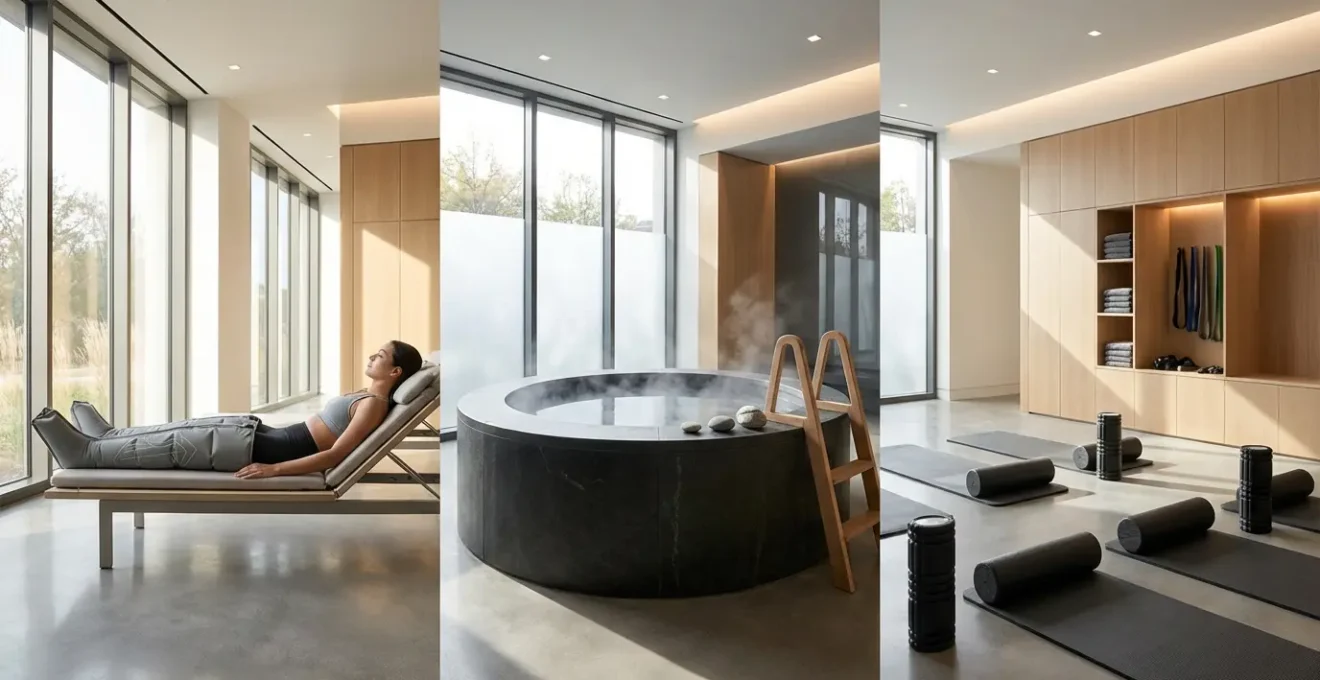
Your day-two collapse is not due to a lack of effort, but a failure of process.
- Recovery is a timed sequence: Active cooldown is followed by myofascial release, static stretching, and then cold exposure. The order is critical.
- Physiological repair is governed by timed inputs: Nutrient windows and sleep architecture are non-negotiable components, not optional extras.
Recommendation: Execute this protocol with military precision. Stop hoping for recovery and start programming it. Your performance on day two depends on the discipline you apply today.
For the serious tournament player, the scenario is brutally familiar: a dominant performance on day one, followed by a physical collapse on day two. The body feels heavy, the mind is slow, and explosive power has vanished. You’ve followed the generic advice—you stretched a bit, ate a meal, and tried to sleep. Yet, the deep, performance-killing soreness still set in. This is because conventional wisdom treats recovery as a casual checklist of suggestions rather than what it truly is: a strict, time-sensitive system of physiological inputs designed to control specific biological responses.
The common approach fails because it ignores the foundational principle of high-performance recovery: the sequence and timing of your actions are more critical than the actions themselves. The transition from a high-stress, “fight-or-flight” sympathetic state to a “rest-and-digest” parasympathetic state is not automatic; it must be engineered. A haphazard approach—stretching before foam rolling, or eating before rehydrating—can actively sabotage your body’s ability to clear metabolic waste and initiate repair.
This is not a list of tips. This is a protocol. It’s a systematic framework that moves beyond the platitudes of “rest and recover.” We will deconstruct the process, from the first five minutes after the final whistle to the critical deep sleep cycles hours later. This guide provides an executable system to manage inflammation, accelerate metabolic clearance, and program your body for next-day readiness. For the athlete who demands consistent, elite performance, adherence to this system is non-negotiable.
To navigate this protocol effectively, we will detail each critical phase in a specific, actionable sequence. The following sections outline the precise steps and the science behind them, ensuring you understand not just what to do, but why and when.
Summary: A Systematic Protocol for Elite Post-Match Recovery
- Why Sitting Still After a Match Is the Worst Thing for Lactic Acid Removal?
- How to Order Foam Rolling, Stretching, and Cold Water for Maximum Effect?
- Compression Boots vs. Active Jogging: Which Clears Waste Products Faster?
- The Alcohol Mistake That Neutralizes Your Recovery Protocol Instantly
- How to Adapt Your Protocol When Stuck in a Hotel Room Without Equipment?
- Cryo Chamber vs. Ice Bath: Which Is More Effective for Acute Soreness?
- Why “Deep Sleep” Repairs Muscles While “REM” Repairs Technique?
- Does 3 Minutes of Cryotherapy Really Accelerate Muscle Repair?
Why Sitting Still After a Match Is the Worst Thing for Lactic Acid Removal?
The most damaging instinct a tournament player can have after a grueling match is to immediately sit or lie down. While it feels like a deserved rest, it is the most inefficient way to handle the metabolic byproducts flooding your system. Stopping all movement causes blood to pool in the extremities, trapping lactate, hydrogen ions, and other waste products within the muscle tissue. This stagnation is a primary driver of acute soreness and prolonged recovery times. The key is to initiate an active cooldown, a process that uses light, continuous movement to maintain elevated circulation.
This sustained blood flow acts as a “vascular flush,” actively transporting metabolic waste away from the muscles and toward the liver and kidneys for processing and clearance. Think of it as keeping the engine running at a low idle to clear out the exhaust, rather than shutting it off abruptly. This process not only addresses muscle soreness but also helps in downregulating the nervous system. Research demonstrates that active recovery protocols lead to a 37% faster clearance of stress hormones like cortisol and adrenaline compared to passive rest. This managed transition from a high-stress sympathetic state to a recovery-focused parasympathetic state is the first critical step in a successful protocol.
The active cooldown should begin within five minutes of match completion and consist of 10-15 minutes of low-intensity aerobic activity, such as a light jog, cycling, or even brisk walking. The goal is to keep your heart rate at approximately 60% of your maximum. This is not another workout; it is a controlled, physiological “off-ramp” that kick-starts the entire recovery cascade. Ignoring this step means you begin your recovery from a significant deficit.
How to Order Foam Rolling, Stretching, and Cold Water for Maximum Effect?
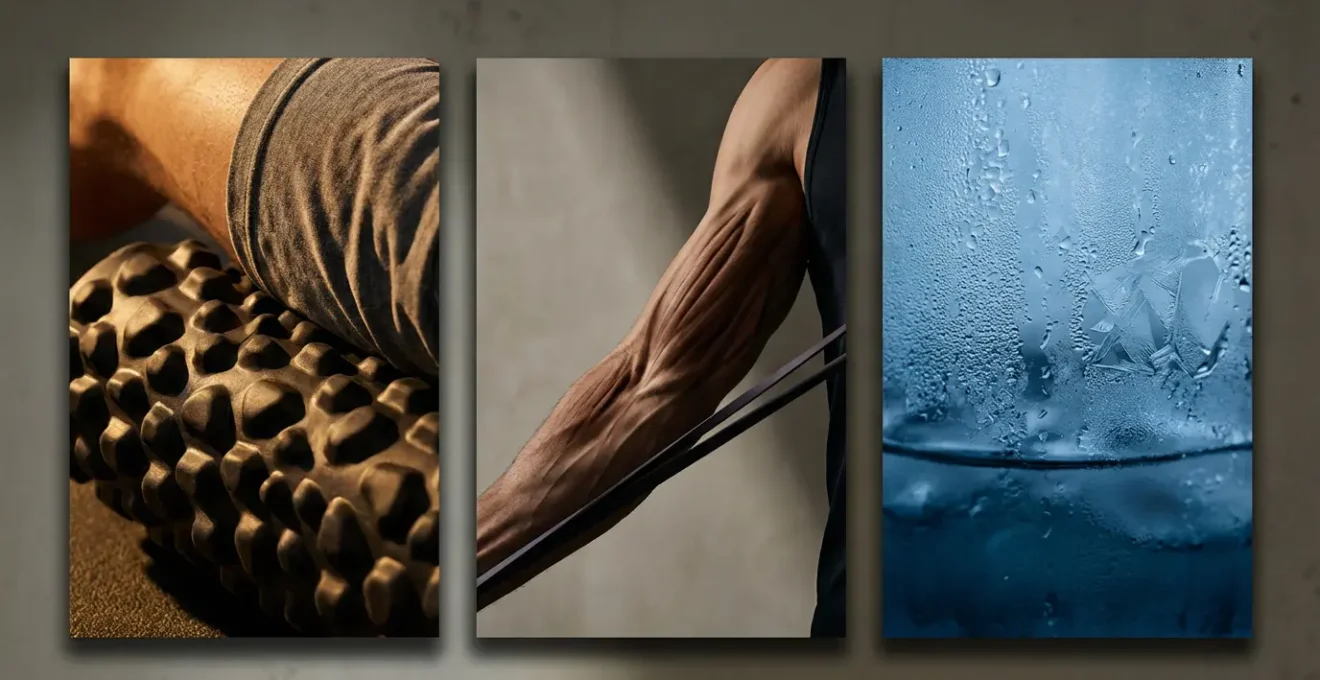
Once the active cooldown has initiated metabolic clearance, the next phase of the protocol focuses on tissue quality and inflammation control. The order in which you apply modalities like foam rolling, stretching, and cold water immersion is not arbitrary; it follows a logical progression from neurological downregulation to systemic inflammation management. Executing these steps out of order can limit their effectiveness or, in some cases, be counterproductive. The correct sequence is: Foam Rolling, then Static Stretching, and finally Cold Water Immersion.
This sequence maximizes the unique benefit of each modality. Foam rolling is performed first to address muscle hypertonicity and improve tissue quality through myofascial release. It acts as a neurological signal to the muscles, reducing tightness and preparing them for the next step. Static stretching follows, performed on now more pliable muscles, to restore the range of motion lost during competition. Stretching tight, un-rolled muscles is less effective and can increase the risk of micro-trauma. Finally, cold water immersion is used to create systemic vasoconstriction, which powerfully reduces swelling and inflammation after the tissues have been mechanically addressed.
The following table, based on established best practices, breaks down the optimal timing and physiological effect of each step in the recovery sequence. Adherence to this timeline is critical for achieving the desired outcome.
| Recovery Method | Optimal Timing | Duration | Primary Benefit | Physiological Effect |
|---|---|---|---|---|
| Foam Rolling | First (0-10 min post) | 10-15 minutes | Neurological downregulation | Reduces muscle hypertonicity, improves tissue quality |
| Static Stretching | Second (10-20 min post) | 10 minutes | Range of motion restoration | Lengthens muscles, can increase flexibility by 12+ degrees |
| Cold Water Immersion | Third (20-35 min post) | 10-15 minutes at 10-15°C | Inflammation control | Systemic vasoconstriction, reduces swelling |
| Contrast Therapy (Alternative) | Can replace CWI | 2 min hot/1 min cold x 4-5 | Vascular pumping | Alternating vasodilation/vasoconstriction for metabolite flushing |
Compression Boots vs. Active Jogging: Which Clears Waste Products Faster?
The debate between using intermittent pneumatic compression (IPC) boots and performing an active cooldown jog is based on a false premise. It assumes these modalities serve the exact same purpose and are interchangeable. A high-performance protocol understands they are complementary tools addressing different physiological needs at different times. Active jogging is superior for immediate, systemic metabolic waste clearance, while compression boots are a powerful tool for passive, localized edema reduction later in the recovery window.
An active cooldown leverages the body’s own “muscle pump” mechanism. The rhythmic contraction and relaxation of large muscle groups during a light jog actively push blood and lymphatic fluid through their respective circulatory systems, accelerating the removal of lactate and other byproducts from the muscle tissue itself. This is a systemic, active process. In contrast, compression boots provide a passive, mechanical massage that primarily targets the lymphatic system to move extracellular fluid and reduce swelling (edema) in the limbs. They are excellent for managing fluid buildup but are less effective at clearing byproducts from deep within the muscle cell.
Elite Football Teams’ Dual-Protocol Implementation
As a real-world example, professional football teams have widely adopted a dual-protocol approach. Players execute a mandatory 15-minute active cooldown jog immediately after a match to address metabolic byproduct clearance. Later, during travel or designated rest periods (typically 2-3 hours post-match), they utilize compression boot sessions. This strategy recognizes the distinct roles of each modality: the jog for immediate metabolic flushing and the boots for delayed edema management. Teams implementing this combined approach report significantly improved next-day performance metrics and reduced feelings of “heavy legs,” demonstrating the superiority of a sequenced, dual-modality protocol over an “either/or” choice.
Therefore, the question is not which is better, but when to use each. The correct protocol is to perform an active cooldown immediately post-match and integrate a compression boot session 2-4 hours later to manage swelling and enhance lymphatic drainage, especially during periods of prolonged sitting like travel.
The Alcohol Mistake That Neutralizes Your Recovery Protocol Instantly
For a tournament athlete, consuming alcohol in the hours following a match is an act of physiological self-sabotage. While it may feel like a way to unwind, alcohol directly interferes with the key processes of muscle repair and rehydration, effectively neutralizing the benefits of any recovery protocol you’ve just performed. Its primary negative impact is on Muscle Protein Synthesis (MPS), the fundamental process by which your body repairs and rebuilds damaged muscle tissue. Even moderate consumption is destructive.
Scientific evidence is unequivocal on this point. Studies show that alcohol consumption after strenuous exercise leads to a 25-35% reduction in muscle protein synthesis, even when co-ingested with adequate protein. Alcohol also impairs glycogen resynthesis, dehydrates the body by acting as a diuretic, and disrupts the architecture of sleep by suppressing REM and deep sleep stages—all of which are critical for both physical and neurological recovery. In short, alcohol creates a hostile internal environment for repair at the exact moment your body needs it most.
The non-negotiable rule for a serious competitor is total abstinence from alcohol during the critical 24-hour post-competition window. Instead, the focus must be on a precise nutrition and rehydration protocol. This involves:
- Immediate consumption of 20-40g of high-quality protein (like whey isolate) to maximize the MPS window.
- Systematic intake of carbohydrates (1-1.5g per kg of body weight per hour for 4 hours) to replenish depleted glycogen stores.
- Aggressive rehydration with an electrolyte-rich fluid, aiming to replace 150% of the body weight lost during the match.
If alcohol is consumed for social reasons, it must be delayed until after this entire rehydration and refueling process is complete, and its quantity must be strictly limited.
How to Adapt Your Protocol When Stuck in a Hotel Room Without Equipment?
A common failure point for tournament players is the inability to execute their recovery protocol due to travel and lack of access to a gym or specialized equipment. A robust protocol, however, is based on principles, not just tools. It is entirely possible to perform a highly effective recovery session in a standard hotel room using found objects and bodyweight techniques. The key is to creatively replicate the functions of your usual equipment to achieve the same physiological goals: myofascial release, range of motion, and hydrotherapy.
Myofascial release, typically done with a foam roller, can be replicated using a full, hard-sided water bottle. By rolling major muscle groups like the calves, hamstrings, and quadriceps over the bottle, you can still target trigger points and reduce muscle tonicity. For stretching, a simple bath towel becomes an invaluable tool. It can be looped around the foot to assist in proprioceptive neuromuscular facilitation (PNF) stretching for the hamstrings or used to deepen a quadriceps stretch. The edge of a desk, bed frame, or even a chair can be used as a stable surface for calf stretches and hip flexor releases.
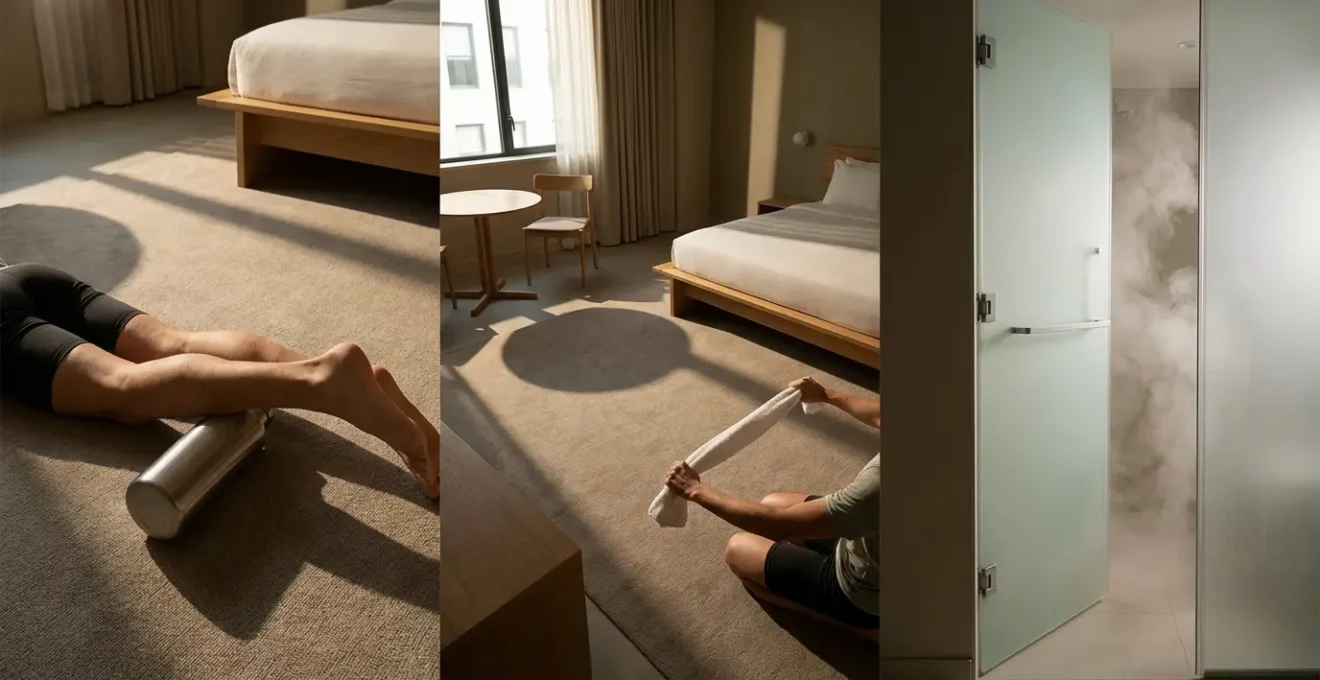
Finally, the principle of cold water immersion or contrast therapy can be applied in the shower. While less systemic than an ice bath, alternating between the coldest possible water setting for one minute and a warm setting for two minutes, repeated 4-5 times, creates a localized “vascular pump.” This alternating vasoconstriction and vasodilation still helps to flush metabolic byproducts from the tissue. This resourcefulness ensures that your recovery is never compromised by your environment.
Cryo Chamber vs. Ice Bath: Which Is More Effective for Acute Soreness?
The choice between a whole-body cryotherapy (WBC) chamber and a traditional ice bath is not about which is “better,” but which is the appropriate tool for a specific recovery goal. Both are effective for managing post-exercise soreness, but they operate through different physiological mechanisms and excel in different contexts. An ice bath provides deep, direct tissue cooling ideal for reducing inflammation in high-impact endurance sports, while a cryo chamber creates a rapid, systemic nervous system response better suited for power and speed athletes.
Cryotherapy does not directly ‘repair’ muscle fibers. Instead, it radically improves the environment for repair by triggering a massive, systemic anti-inflammatory response.
– Sports Science Support Research Team, Recovery After Football Match Analysis
An ice bath works via conduction, with cold water directly pulling heat out of the muscle and connective tissue over a 10-15 minute period. This leads to profound vasoconstriction deep within the tissue, which is highly effective at reducing swelling and inflammation after sports involving significant muscle damage, like soccer or long-distance running. Cryotherapy, by contrast, uses convection. Extremely cold, dry air (-110 to -130°C) rapidly drops the temperature of the skin for a very short duration (3 minutes). This triggers a powerful central nervous system response, including a massive release of norepinephrine, which produces a potent analgesic (pain-killing) and anti-inflammatory effect throughout the entire body. It acts more as a “system reset” than a deep tissue coolant.
The following table provides a clear comparison of these two powerful modalities, guiding the athlete on which tool to select based on their sport, goal, and accessibility.
| Factor | Ice Bath | Cryotherapy Chamber |
|---|---|---|
| Cooling Method | Conduction – direct tissue cooling | Convection – surface temperature drop |
| Depth of Effect | Deep muscle tissue penetration | Skin surface with systemic response |
| Duration | 10-15 minutes at 10-15°C | 3 minutes at -110 to -130°C |
| Best For Sports | High-impact/endurance (soccer, running) | Speed/power sports (sprinting, volleyball) |
| Primary Benefit | Deep tissue inflammation reduction | CNS reset and analgesia |
| Accessibility | High – simple equipment needed | Low – specialized facility required |
Why “Deep Sleep” Repairs Muscles While “REM” Repairs Technique?
Sleep is the single most powerful and non-negotiable recovery tool available to an athlete. However, not all sleep is created equal. A successful recovery protocol understands that different stages of sleep perform distinct and complementary functions. Put simply: slow-wave “deep sleep” is for physical repair, while Rapid Eye Movement (REM) sleep is for technical and mental consolidation. A deficiency in either stage will compromise next-day performance.
Physical restoration occurs predominantly during slow-wave sleep (SWS), specifically stages 3 and 4. It is during this period that the body does its most critical repair work. The pituitary gland is most active, and it’s estimated that during these stages, the body releases up to 80% of its daily Human Growth Hormone (HGH). This hormone is the primary driver of tissue regeneration and muscle protein synthesis. Insufficient deep sleep directly translates to incomplete physical recovery. In parallel, REM sleep is where the brain consolidates learning and motor patterns. The complex techniques, strategic decisions, and movement skills practiced during a match are “hardwired” into neural pathways during REM sleep. This is why athletes often report feeling technically “off” or slow to react after a night of poor sleep, even if they don’t feel physically sore.
A study on elite youth athletes confirmed the critical link between sleep and injury prevention, finding that those sleeping less than 8 hours per night were 1.7 times more likely to sustain an injury. Therefore, your protocol must actively program for optimal sleep architecture, not just sleep duration.
Action Plan: The Sleep Stacking Protocol for Dual Recovery
- Pre-Sleep Nutrition: 30-60 minutes before bed, consume 20-30g of slow-digesting casein protein to provide a steady supply of amino acids for overnight muscle repair.
- Environmental Control: Create an optimal sleep environment—a cool room (18-20°C), complete darkness (use blackout curtains/eye mask), and absolutely no screen time for 1 hour prior to sleep.
- Motor Pattern Priming: Perform 5 minutes of mental visualization of your ideal technique or key match moments. This “tags” the motor patterns for preferential consolidation during the subsequent REM cycles.
- Parasympathetic Activation: Use a controlled breathing technique, like the 4-7-8 method (inhale 4s, hold 7s, exhale 8s), for 5 minutes immediately before sleep to downregulate the nervous system.
- Target Duration: Aim for a minimum of 8 hours of sleep opportunity, allowing the body to complete 4-5 full 90-minute sleep cycles, ensuring adequate time in both deep and REM stages.
Key Takeaways
- Active Cooldown is Mandatory: Immediately after a match, 10-15 minutes of light, continuous movement is non-negotiable for metabolic waste clearance.
- Sequence Is Paramount: The correct order of modalities is Foam Rolling (neurological), then Static Stretching (flexibility), then Cold Exposure (inflammation).
- Sleep Is the Ultimate Repair Tool: Deep sleep drives physical repair (HGH release), while REM sleep consolidates motor skills and technique. Both are critical.
Does 3 Minutes of Cryotherapy Really Accelerate Muscle Repair?
A common misconception surrounding whole-body cryotherapy (WBC) is that the 3-minute exposure to extreme cold directly accelerates the biological rate of muscle fiber repair. This is physiologically inaccurate. The process of cellular regeneration—muscle protein synthesis—has a set biological timeline that cannot be magically sped up. The true value of cryotherapy in a recovery protocol is not in accelerating repair itself, but in radically improving the environment for repair and accelerating an athlete’s return-to-play readiness.
The intense cold shock of a cryo chamber acts as a form of hormetic stress—a beneficial stressor that triggers a powerful adaptive response from the body. The primary response is a massive release of norepinephrine and anti-inflammatory cytokines. This has two major effects. First, it produces a profound analgesic (pain-killing) effect, significantly reducing the perception of soreness. Second, it creates a systemic anti-inflammatory state, which reduces the secondary damage that can occur after intense exercise. By controlling pain and inflammation so effectively, cryotherapy allows an athlete to feel better sooner.
This feeling is the key. While the underlying muscle fibers are still on their natural repair schedule, the reduction in pain and soreness allows the athlete to engage in active recovery, train with better movement quality, and perform subsequent workouts with higher intensity than they otherwise could. An elite sports team case study found that while WBC doesn’t change the speed of cellular regeneration, it dramatically reduces pain perception, enabling athletes to return to high-quality training much faster. The conclusion is clear: you are not hacking biology; you are managing symptoms to maintain momentum. It’s a tool for accelerating readiness, not repair.
This protocol is a system, not a menu. Its efficacy depends on precise and consistent execution. Stop leaving your day-two performance to chance. Implement this system as a non-negotiable part of your competitive process and transform your ability to perform, recover, and dominate, day after day.